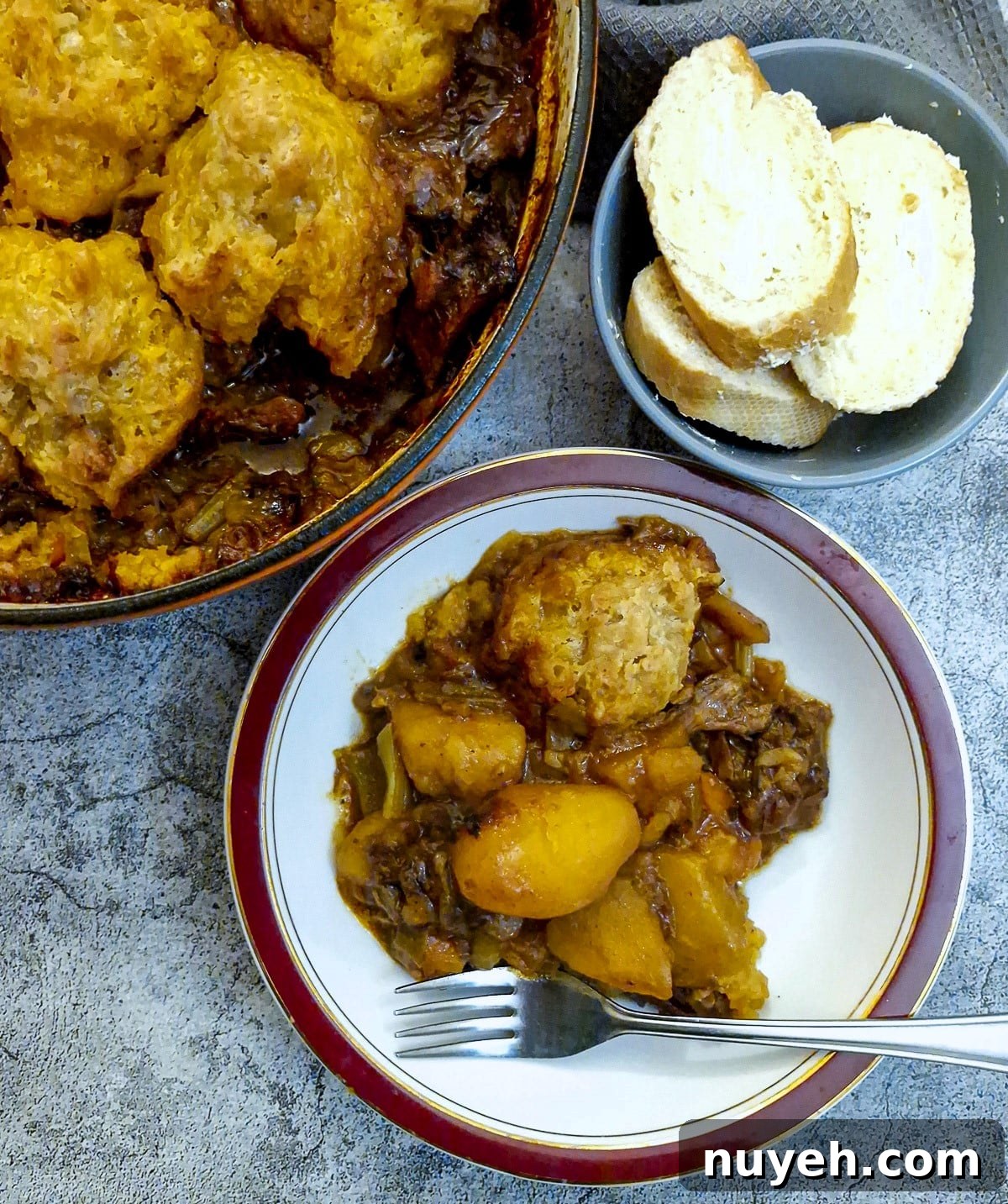
This hearty beef casserole with suet dumplings is a classic winter comfort dish. The beef is slow-braised until tender, the vegetables melt into a rich gravy, and the suet dumplings turn light and fluffy, perfect for soaking up every last drop.
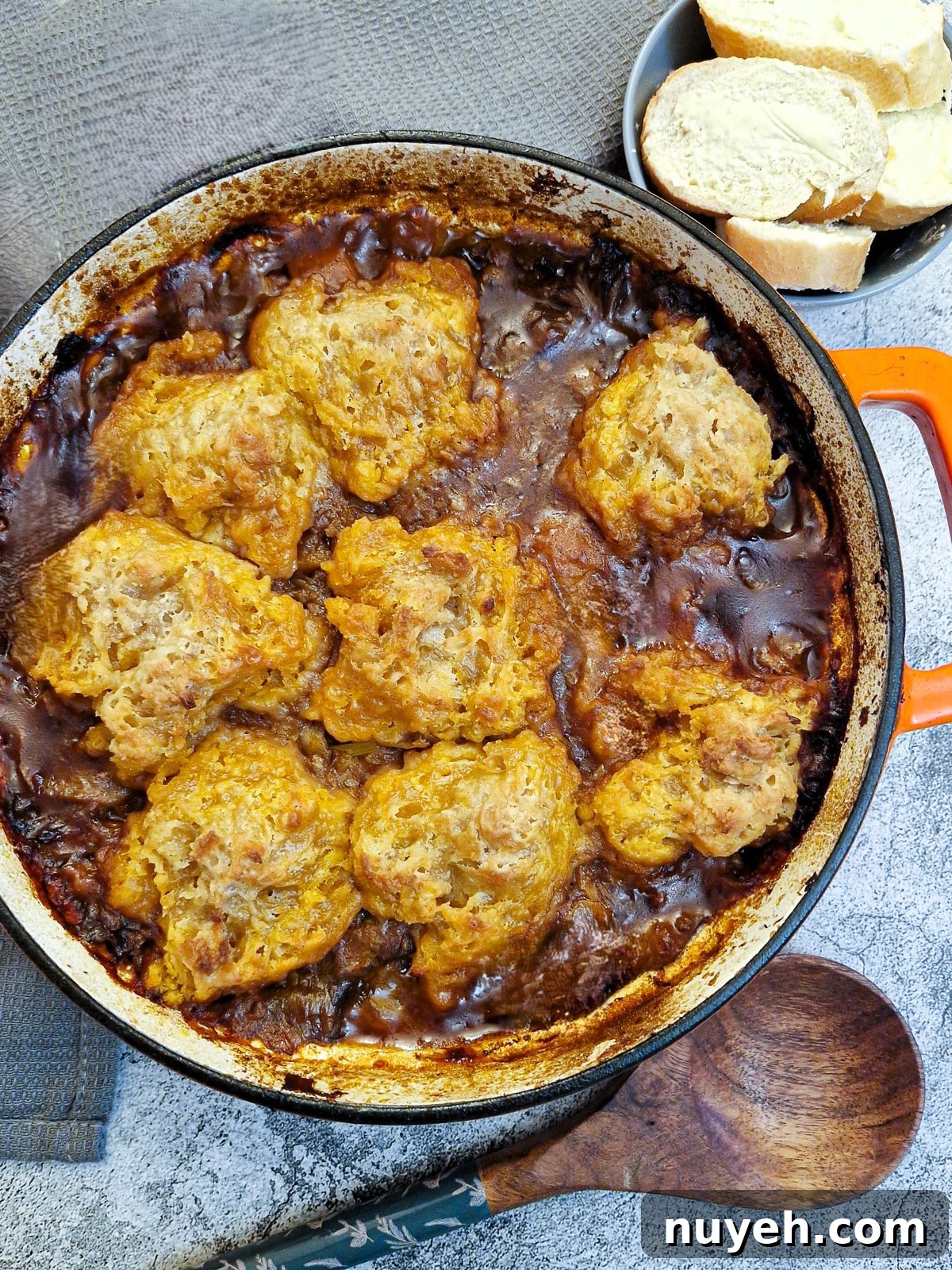
Growing up in the north of England, I learned to appreciate slow-cooked stews and casseroles — there’s nothing more welcoming on a cold evening than a steaming bowl of beef casserole with fluffy dumplings floating on top. This recipe is simple, forgiving and ideal for batch cooking: it feeds a family, reheats well, and freezes if you want to save extra portions.
Ingredients
This version serves about 4 people. Adjust quantities for fewer dumplings by halving the dumpling ingredients if preferred.
Stew
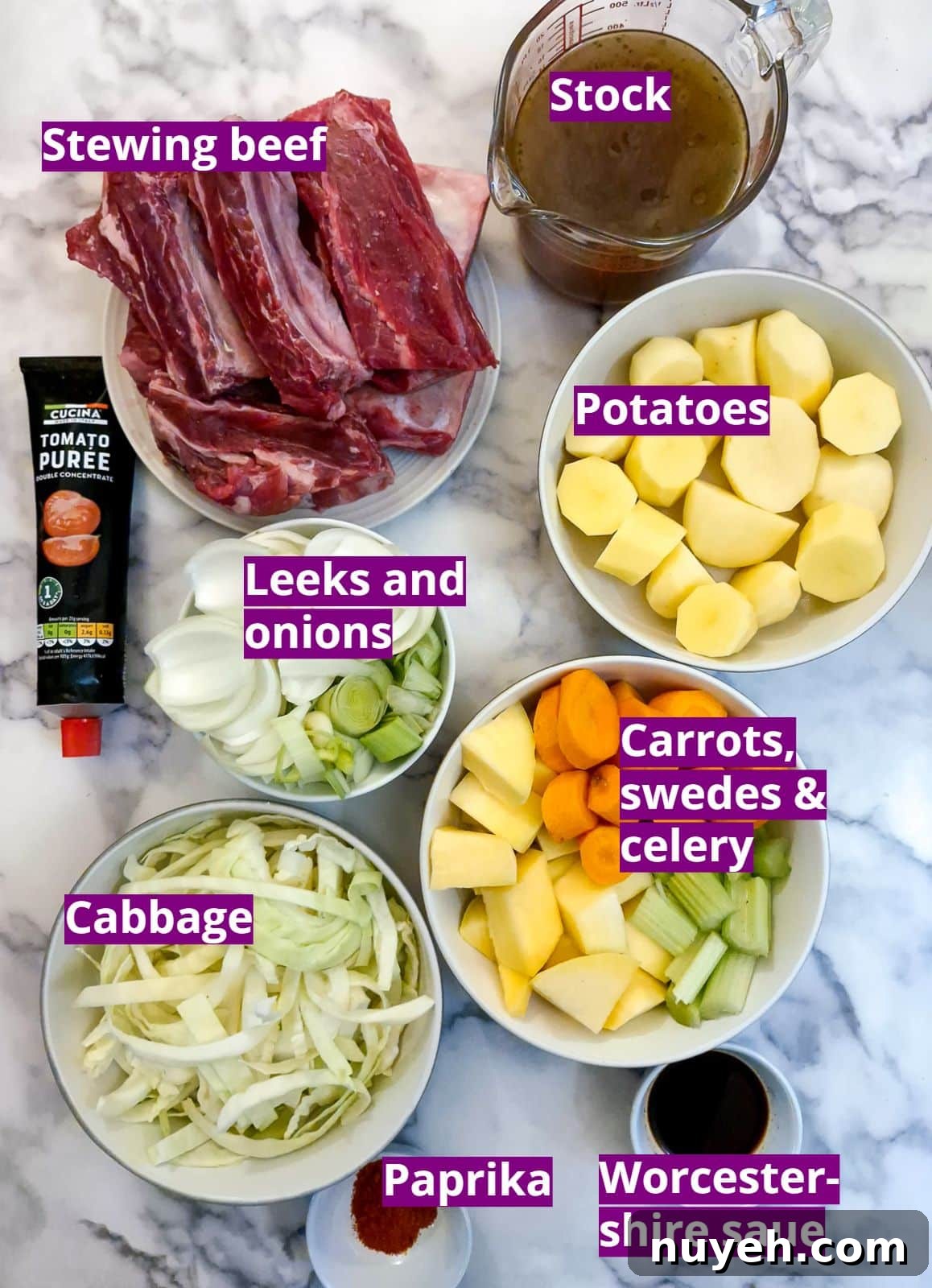
- 2 lb / 900 g bone-in beef short rib (or 1 lb / 450 g boneless stewing beef if preferred)
- 1 lb / 450 g potatoes, peeled and cubed
- 1 large leek, washed and sliced
- 1 large onion, peeled and quartered
- 2 medium carrots, peeled and sliced
- ½ small swede / rutabaga, peeled and cubed
- 2 stalks celery, sliced
- ½ small white cabbage, thinly sliced
- 1 teaspoon paprika
- 1 teaspoon salt, or to taste
- 3 tablespoons Worcestershire sauce
- 2 tablespoons tomato puree
- ½ cup / 120 ml red wine (optional)
- 5–6 cups beef stock (made from stock cubes or prepared stock) — start with 3 cups, add more during cooking as needed
- 2 tablespoons sunflower oil for browning
Dumplings
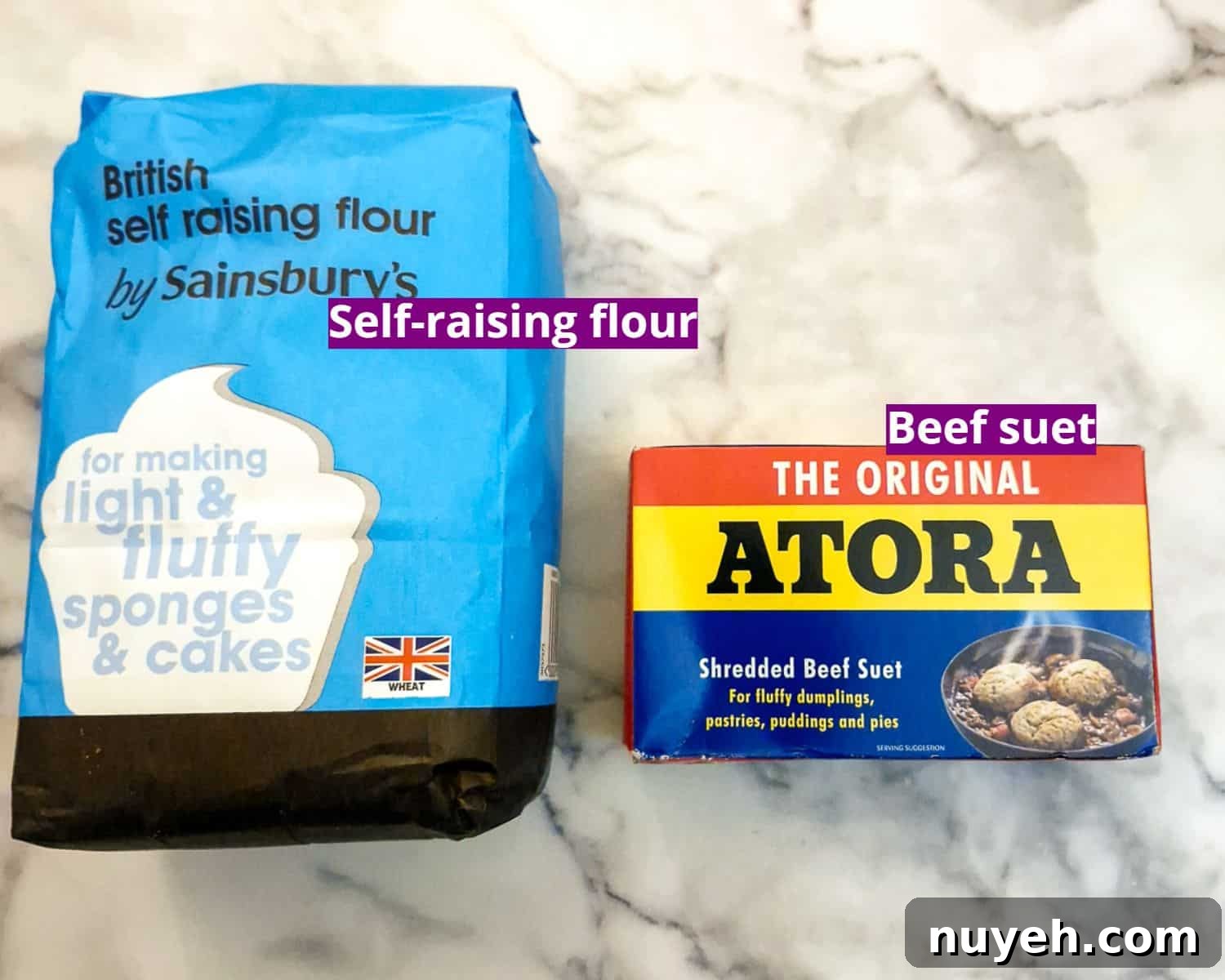
- 1½ cups / 210 g self-raising flour (or plain flour + 1 tsp baking powder per cup)
- ¾ cup / 100 g beef suet
- ½ teaspoon salt
- ½ cup water (approximately) — add most of it and reserve a little to adjust texture
Instructions
Preparation
- Preheat the oven to 175°C / 350°F.
- If using boneless beef, cut into bite-sized cubes. If using bone-in, you can leave it whole; the bones are removed partway through cooking.
- Prepare the vegetables: peel and chop root veg, slice leeks and onions, and shred the cabbage.
- Make the stock mix: dissolve stock cubes in boiling water, stir in tomato puree, Worcestershire sauce and paprika. Add red wine if using, then top up with water so you have about 3 cups ready to start.
Make the stew
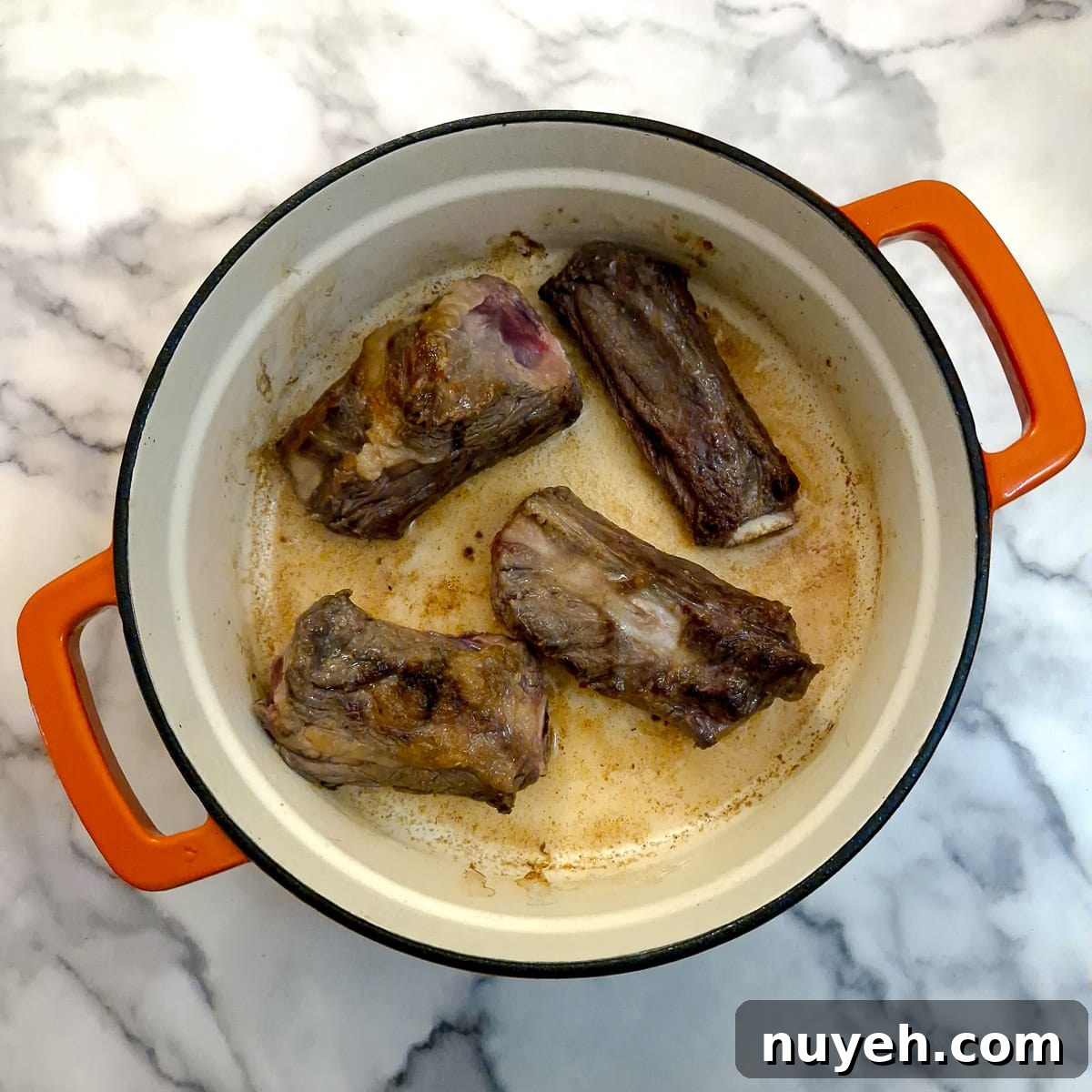
Step 1: Lightly season the meat with salt. Heat oil in a large casserole and brown the meat over high heat on all sides. Do this in batches if necessary. Remove and set aside.
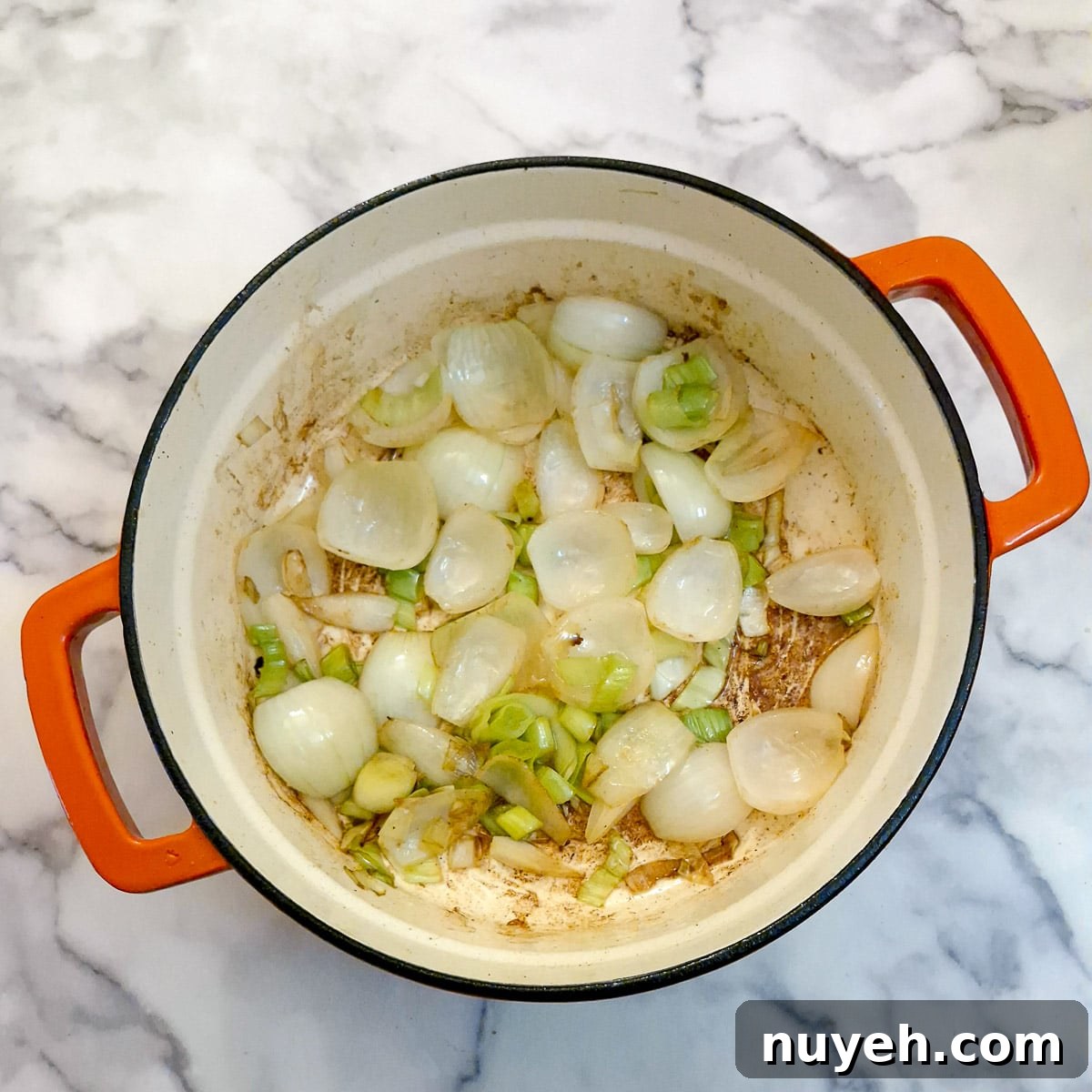
Step 2: In the same pan, gently fry the leeks and onions until softened, scraping up any browned bits for extra flavour.
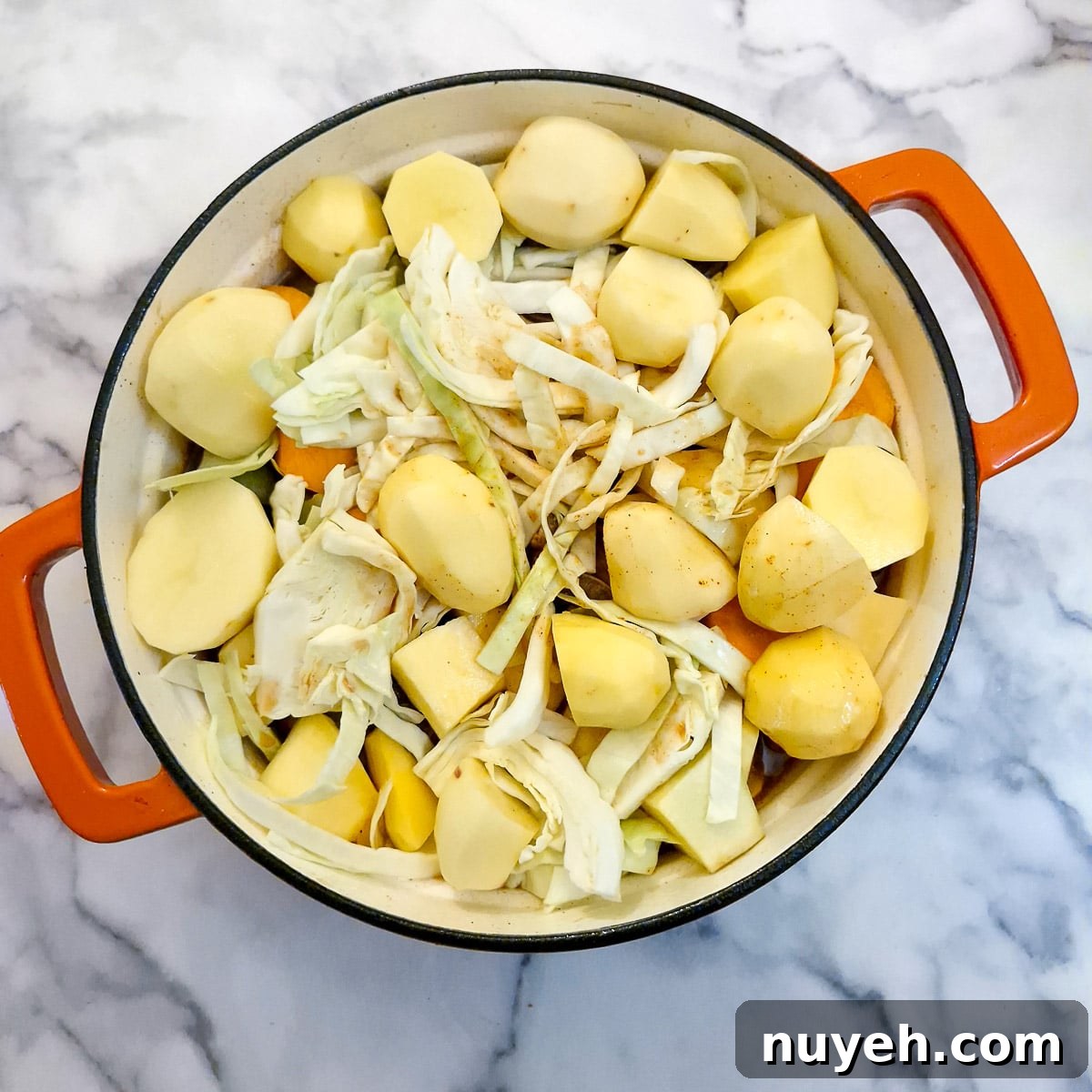
Step 3: Return the meat to the casserole and pile on the potatoes, carrots, swede, celery and cabbage. Carefully pour in 3 cups of the prepared stock so the liquid comes about halfway up the dish.
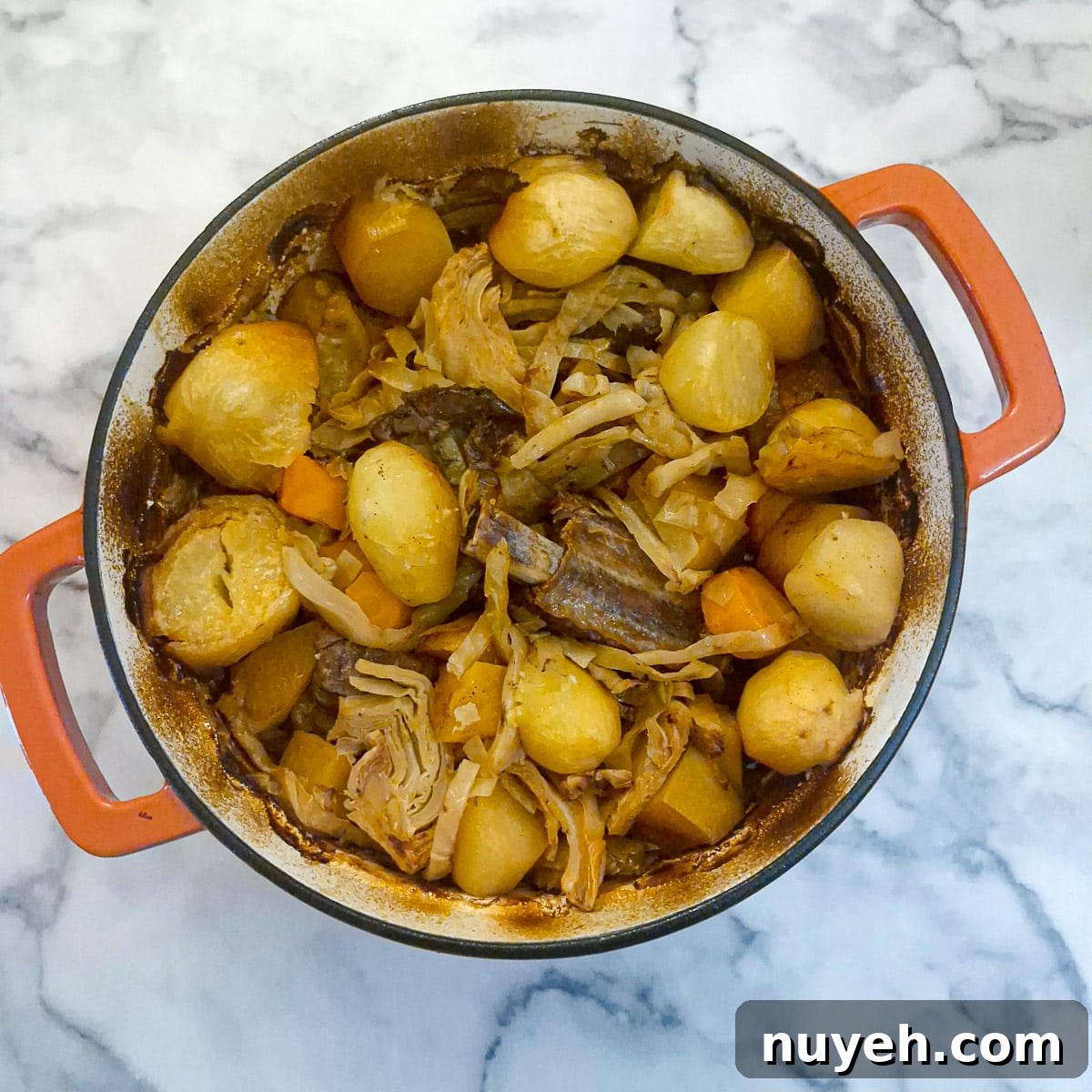
Step 4: Cover with a tight-fitting lid and bake for 2 hours.
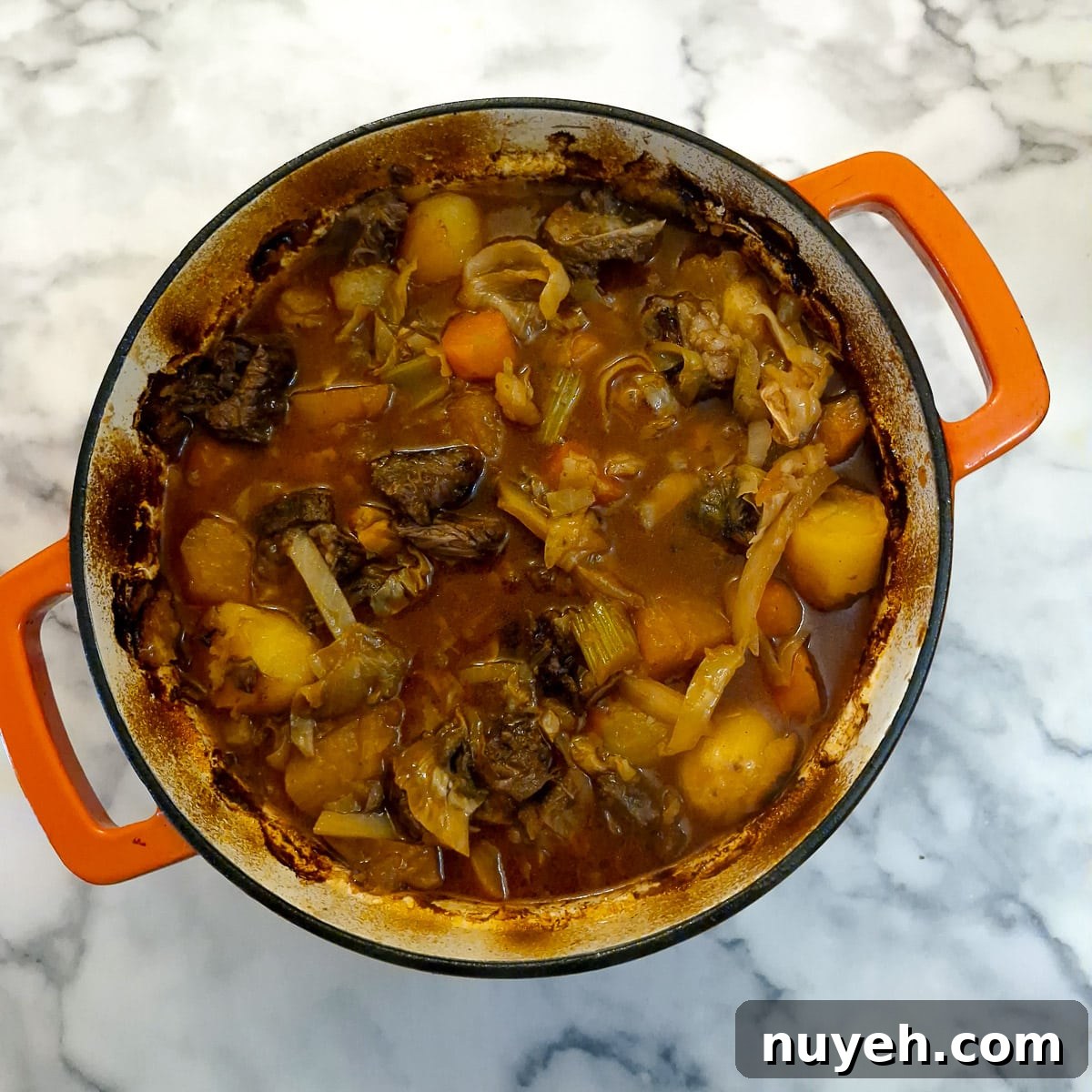
Step 5: If you used bone-in meat, remove and discard the bones once the meat pulls away easily. Top up with extra stock if the casserole is drying out — I typically add another 1–2 cups.
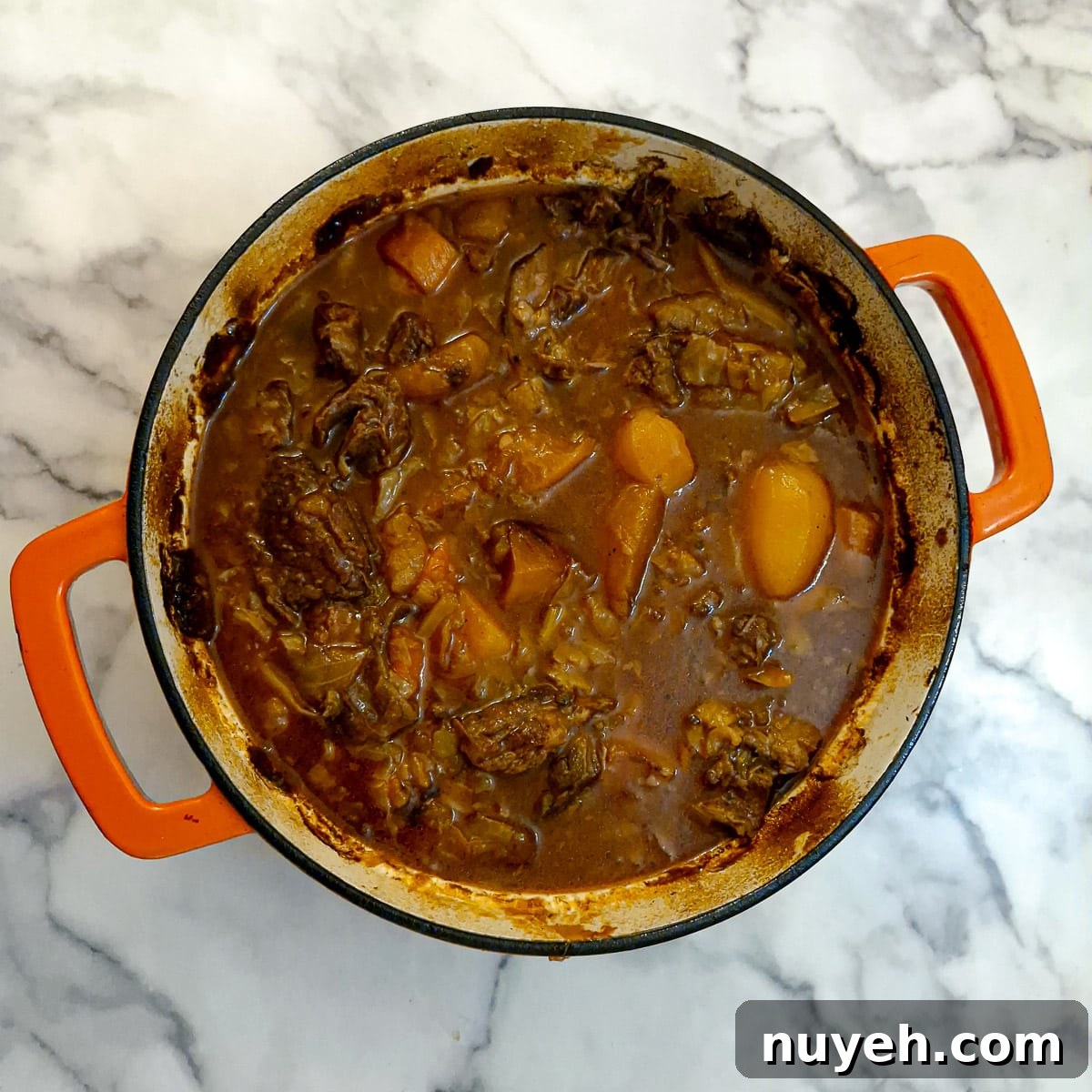
Step 6: Replace the lid and return to the oven for another 30 minutes to continue tenderising the meat and allowing the flavours to meld.
Make the dumplings
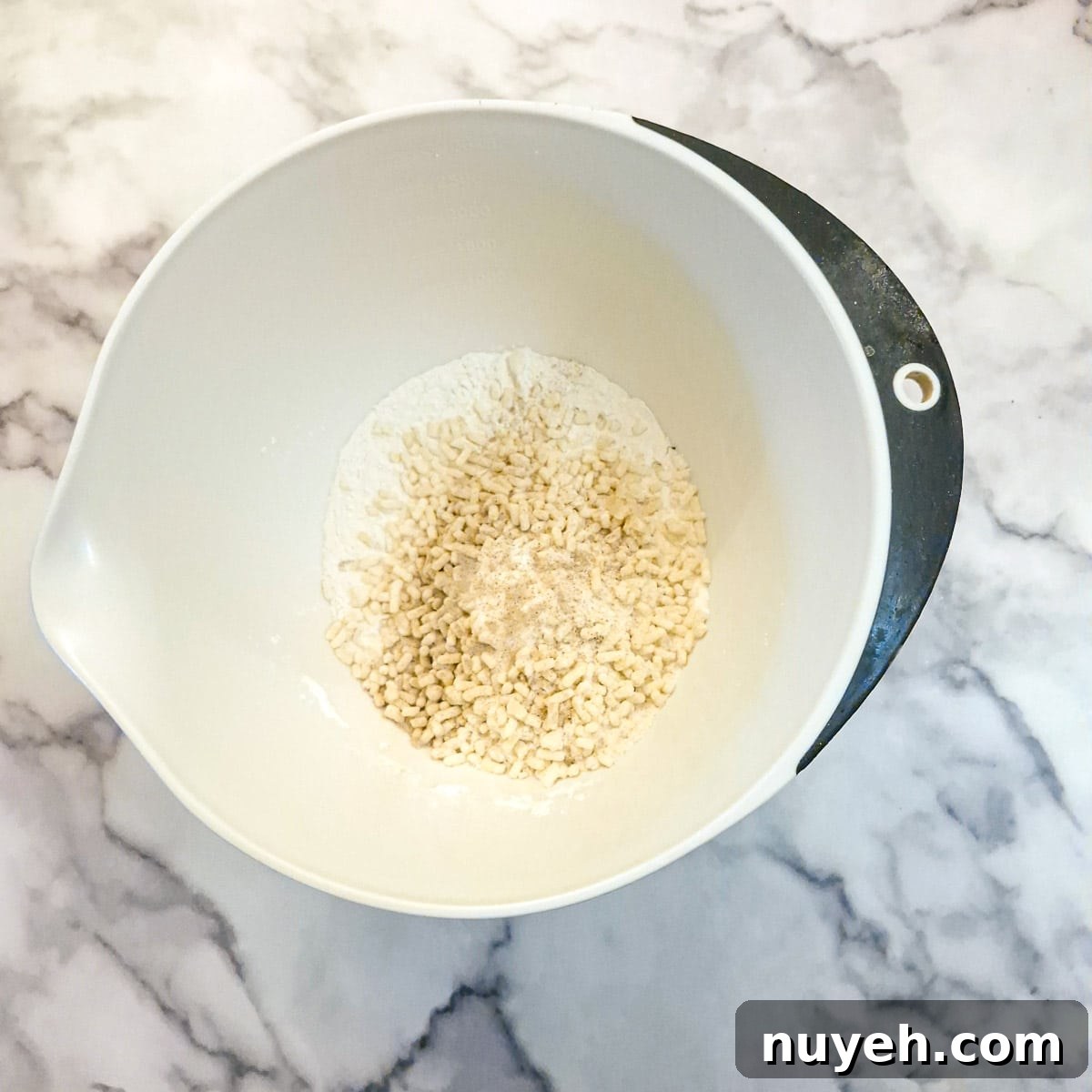
Step 7: In a mixing bowl combine the flour, suet and salt. Add most of the water.
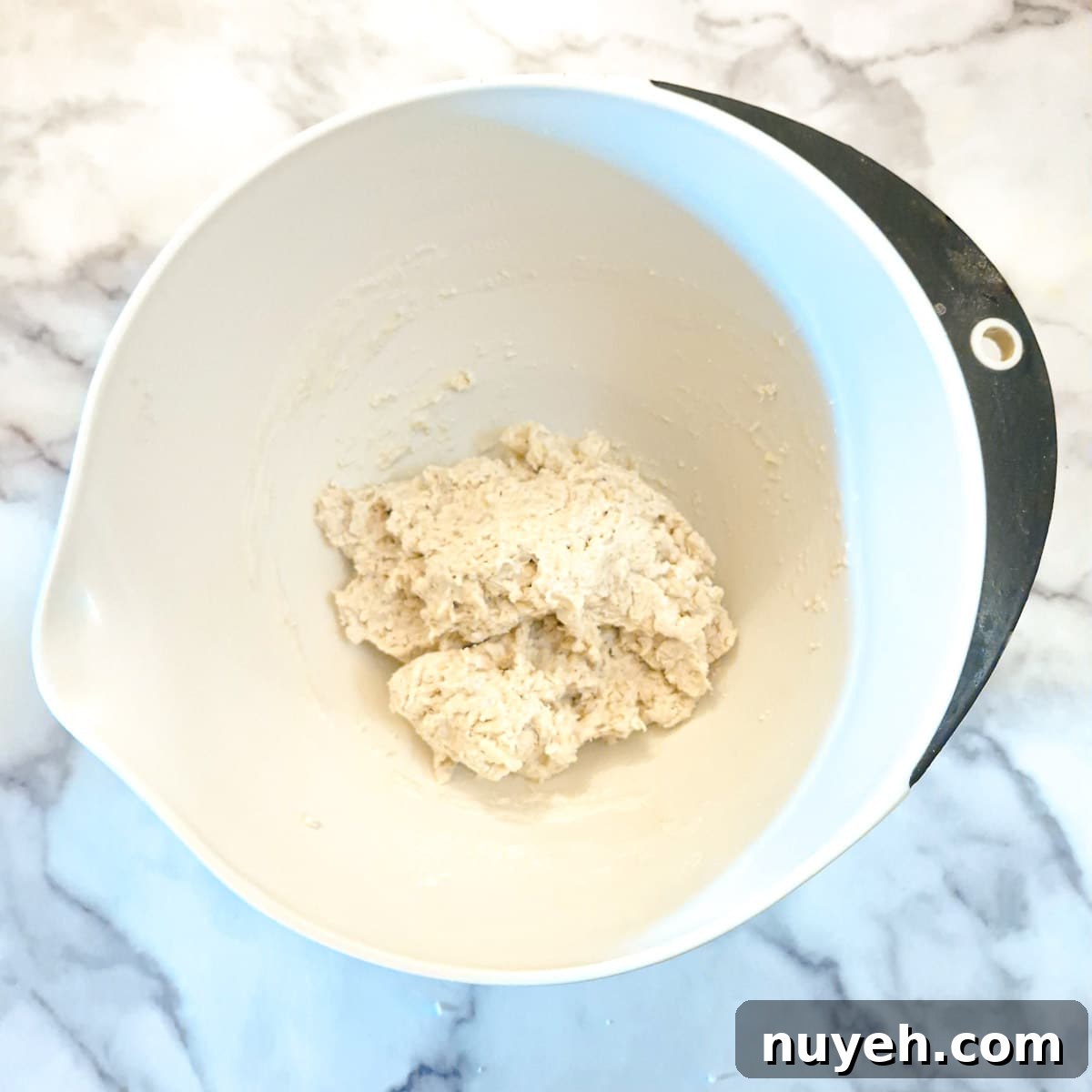
Step 8: Mix with a spatula until a soft, slightly sticky, shaggy dough forms. Add the remaining water only if needed. Small pieces of suet in the mix are normal and will melt as the dumplings cook.
Cook the dumplings
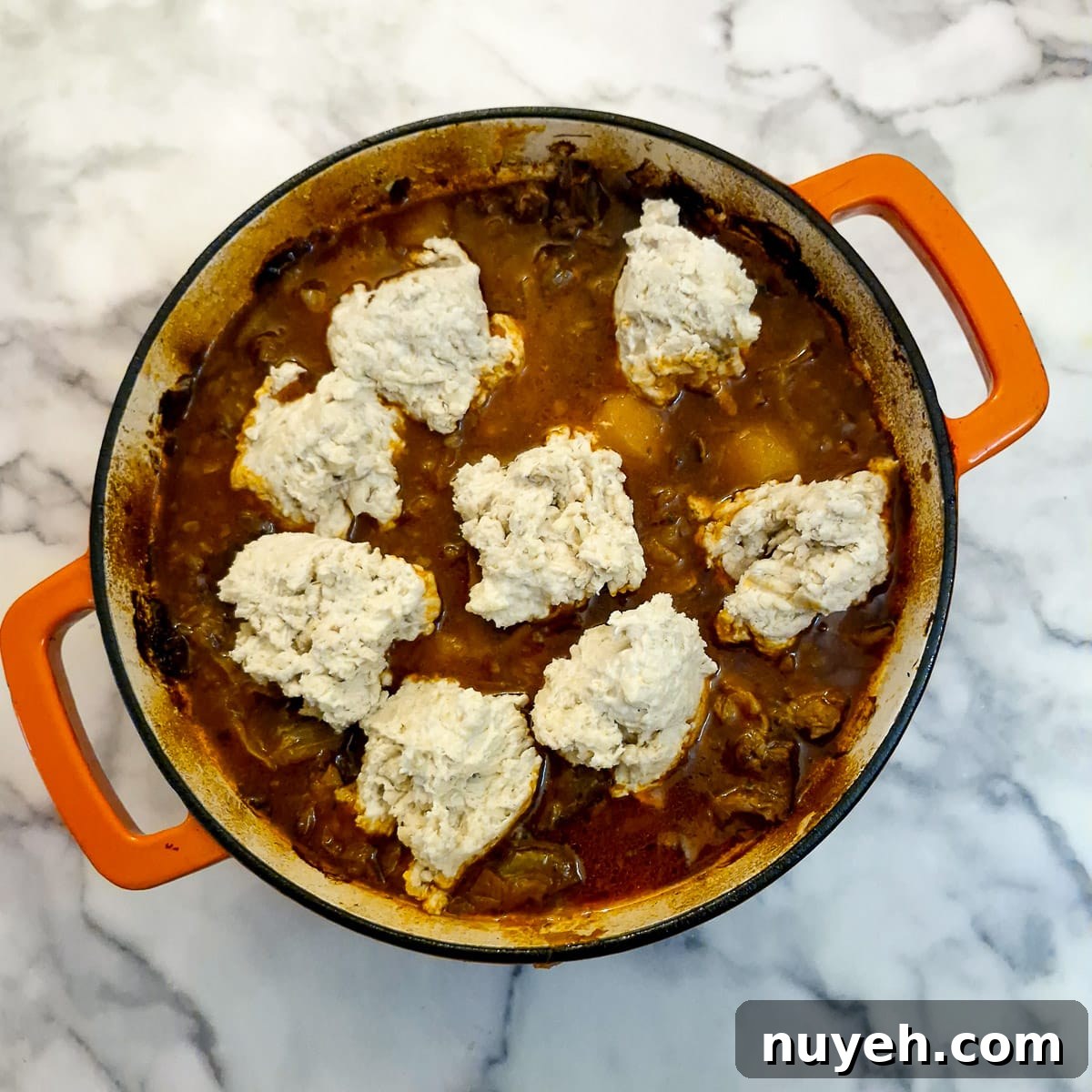
Step 9: Remove the casserole from the oven and check the gravy. Add stock if it looks low. Using a tablespoon, drop spoonfuls of the dumpling mixture on top of the casserole. Replace the lid and bake for 20 minutes.
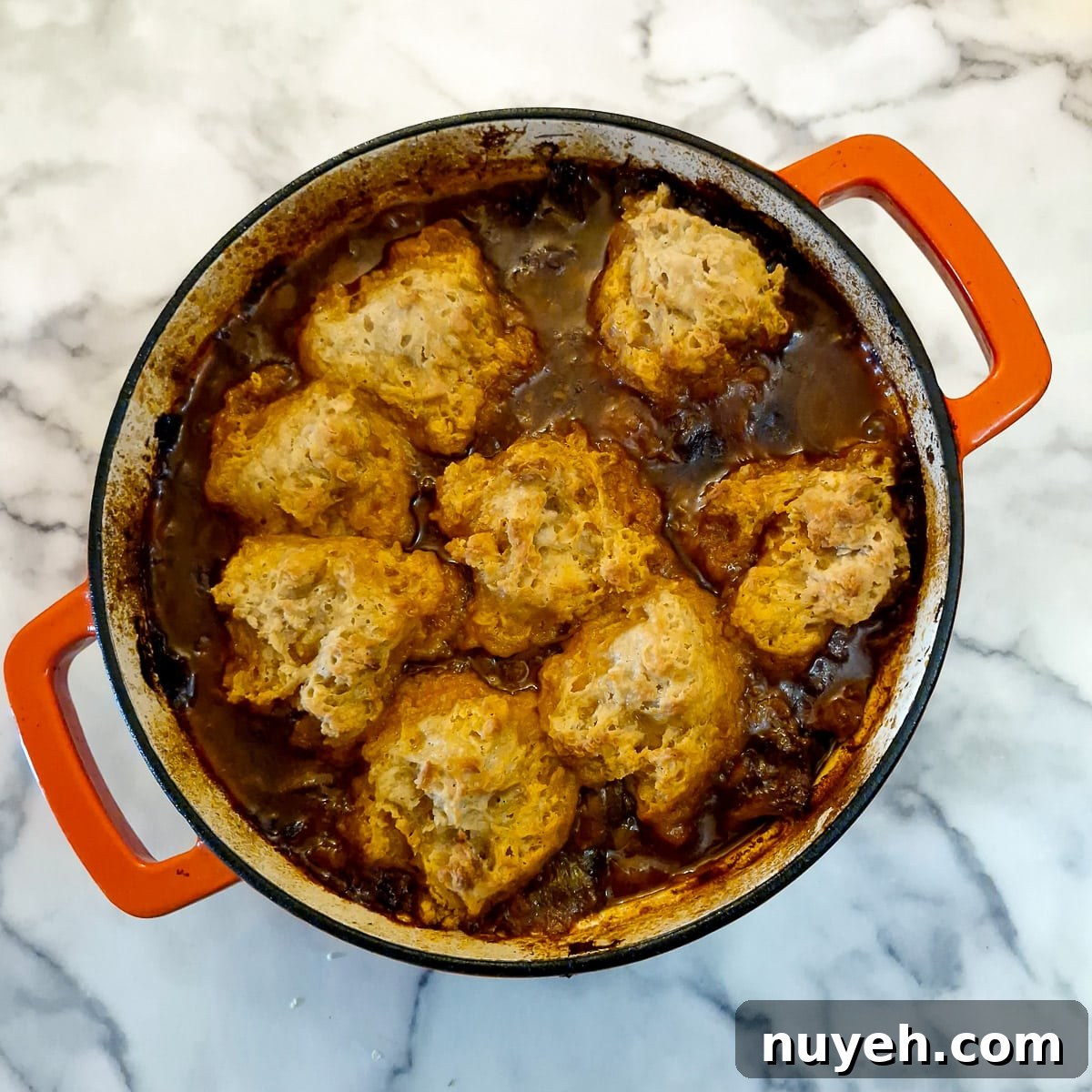
Step 10: Remove the lid and bake uncovered for another 10 minutes until the dumpling tops are golden and slightly crisp. Serve immediately while hot.
Tips for a successful outcome
- Always brown the meat first — it develops flavour and helps seal in juices.
- Don’t worry if the casserole looks overcrowded at first: cabbage wilts and levels drop as things cook.
- Remove bones once meat is tender to free up space and let you break the meat into pieces.
- Keep adding stock during the long cook; liquid evaporates and dumplings will also absorb some.
- When mixing dumplings, add water sparingly — the mixture should bind but still be slightly sticky.
- Use a spoon to portion dumplings; uneven tops become attractively crisp in the oven.
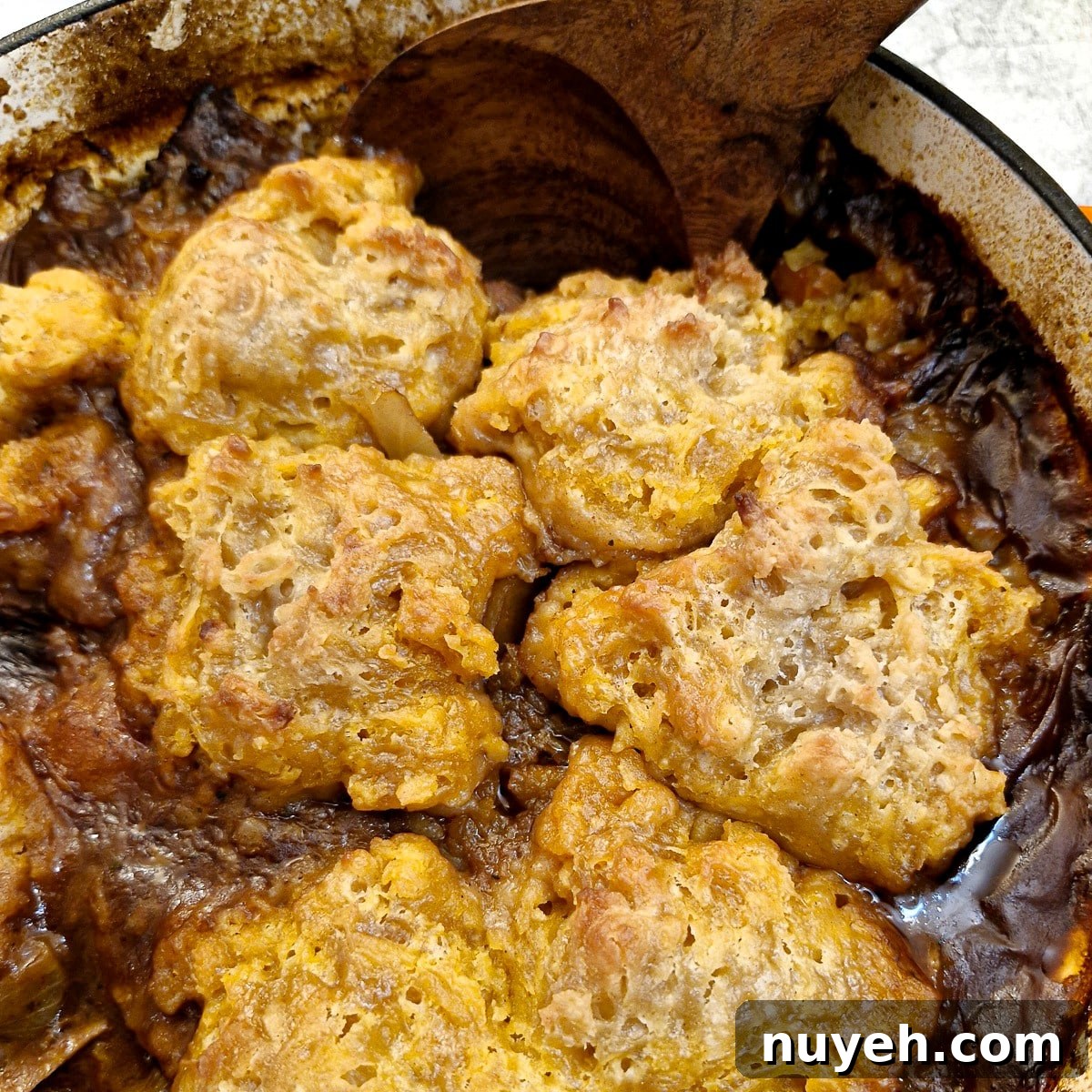
What to serve with beef and dumpling stew
This casserole is a complete meal with vegetables and dumplings included. If you want something extra, serve steamed green vegetables such as green beans or broccoli, or offer crusty bread to mop up the gravy.
Variations
- Swap or add root vegetables such as parsnips for extra sweetness.
- Add a chopped bell pepper for a slightly sweeter, more aromatic profile.
- Stir in a few cloves of minced garlic or a pinch of dried chilli flakes for more kick.
- For herby dumplings, mix in a teaspoon or two of mixed dried herbs or Italian seasoning.
Equipment
- Heavy casserole dish with tight-fitting lid (ideally cast iron) — or a casserole plus frying pan for browning.
- Mixing bowl and spatula for dumplings.
- Sharp knife and chopping board.
Storage
The stew freezes well for up to three months once cooled. Defrost in the refrigerator before reheating on the stove. Dumplings are best fresh and do not freeze well. Store leftovers in the refrigerator for up to three days.
FAQ
How do I thicken the beef stew?
The gravy usually thickens naturally from potatoes breaking down and from the dumplings. If you need extra thickness, mix 1 tablespoon cornflour (cornstarch) with 3 tablespoons cold water to form a slurry, then stir into the hot stew and simmer until it reaches the desired consistency.
If you tried this recipe and enjoyed it, please leave a comment with a star rating and any notes about your tweaks. You can also contact the recipe author by email at [email protected].