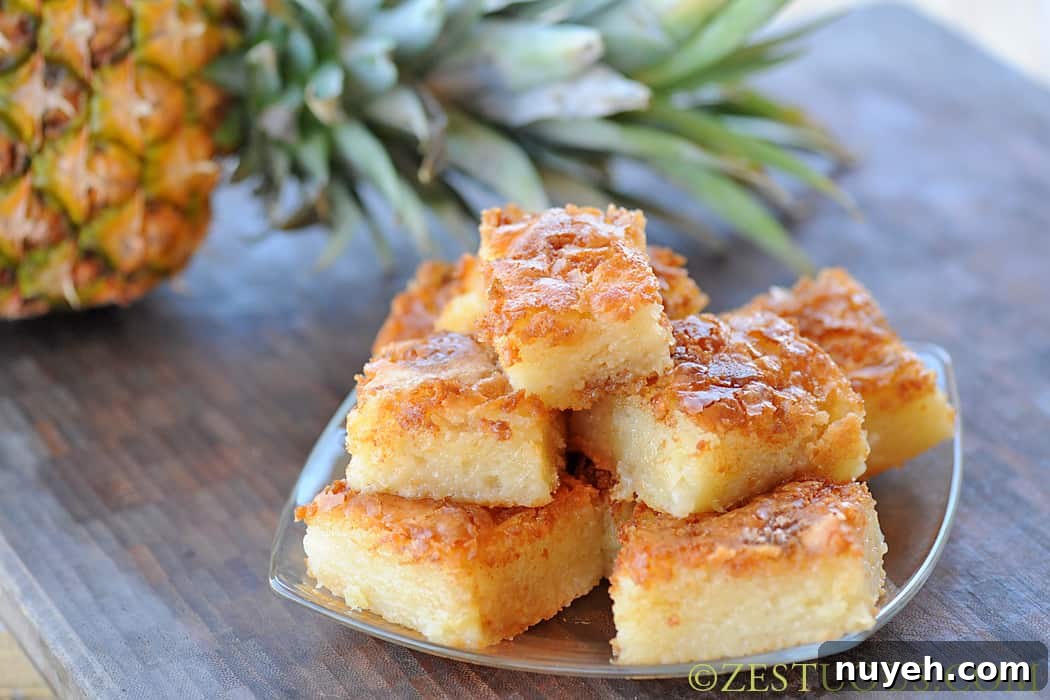
I first tasted bibingka at a Filipino family barbecue when I began dating my husband. His father showed me how to make it years ago, and now whenever our family gathers, either he or I am asked to bake this simple Filipino coconut cake. The recipe has become a favorite even though neither of us is Filipino — a testament to how comforting and delicious bibingka is.
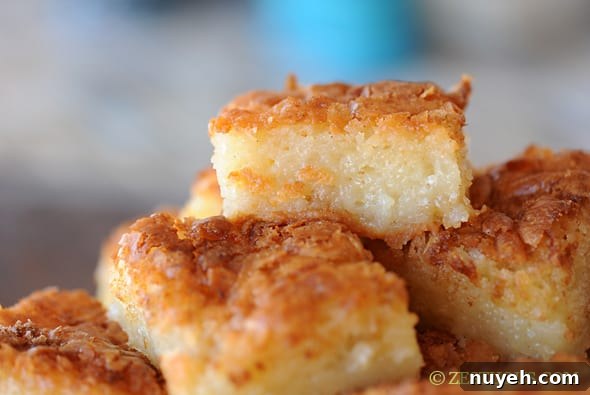
Bibingka is made with sweet rice flour, which gives it a unique texture. The flour is finely ground but retains a slight grit that, when baked, transforms into a spongy, slightly sticky crumb—somewhere between pudding and a dense cake. The result is tender, moist, and richly flavored.
My father-in-law taught me to use cream of coconut rather than coconut milk. Cream of coconut has more body, fat and sweetness, which deepens the flavor and improves texture. He also folds an undrained can of crushed pineapple into the batter for a bright, tropical note. I add a final touch by sprinkling brown sugar and a little granulated sugar on top before baking to create a caramelized, crunchy finish.
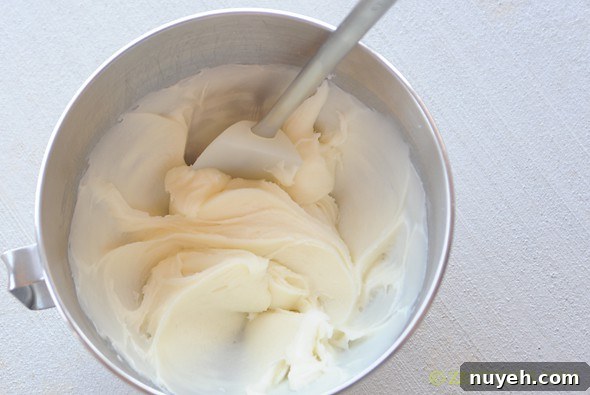
THE BATTER
This bibingka begins like many cakes: by creaming together sugar and a soft fat. Instead of butter, this recipe uses cream cheese for richness; melted butter is added later to enhance moisture and flavor. Once the cream cheese and sugar are smooth, beat in the eggs one at a time for an even, stable batter.
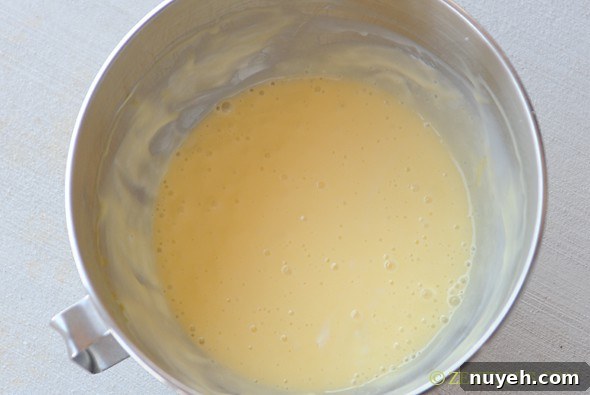
A stand mixer makes the job effortless, but a hand mixer or a sturdy whisk will also work. After the eggs, stir in the remaining ingredients — crushed pineapple with its juice, sweet rice flour, baking powder, cream of coconut, milk, vanilla, and melted butter. Fold the rice flour in gently to avoid creating a messy counter; the batter is thicker than a typical wheat-based cake batter.
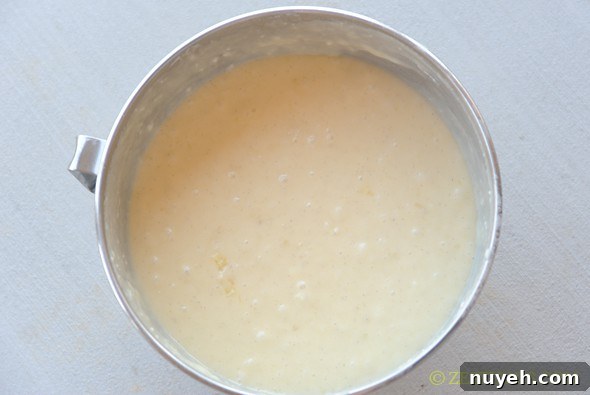
Pour the batter into a well-greased 13×9-inch pan. If you prefer individual portions, bake mini pans or muffin tins for smaller servings to give away at gatherings. Before baking, sprinkle the top with the brown sugar and granulated sugar mixture to achieve that signature caramelized crust.
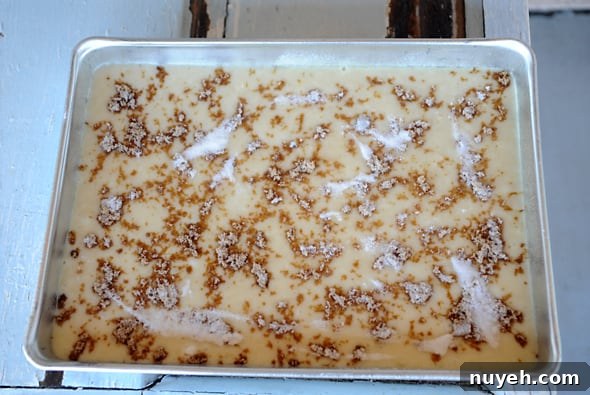
Bake until the edges are set and the center is cooked through. Bibingka is denser and stickier than a typical American cake; expect an ooey-gooey, irresistible texture rather than a light, airy crumb. Let it cool slightly before cutting so the pieces hold together.
This cake is wonderfully simple and expressive of Filipino flavors. I hope you give it a try and let a fork take you on a small culinary trip to the Philippines.
More Filipino Inspired Recipes
- Chicken and Pork Adobo
- Lumpia (Filipino Egg Rolls)
- Quick Adobo Fried Rice Omelets
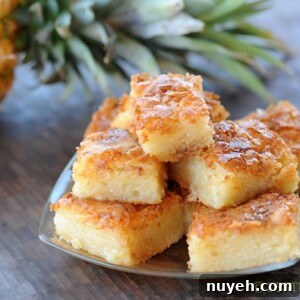
Bibingka – Filipino Coconut Cake
15 minutes
1 hour
20
Ingredients
- 8 oz cream cheese
- 2 cups granulated sugar
- 3 eggs
- 3 1/2 cups sweet rice flour (about 1 lb.)
- 1 tbsp baking powder
- 1/2 cup butter, melted
- 1 tbsp vanilla
- 15 oz can cream of coconut
- 1 cup milk
- 8 oz can crushed pineapple (undrained)
Topping
- 1/4 cup brown sugar
- 2 tbsp granulated sugar
Instructions
- Preheat the oven to 350°F (175°C). Grease a 13×9-inch baking pan.
- In a large bowl, cream together the cream cheese and granulated sugar until smooth.
- Beat in the eggs one at a time until fully incorporated.
- Mix in the sweet rice flour, baking powder, crushed pineapple (with juice), cream of coconut, milk, vanilla, and melted butter. Stir until smooth.
- Pour the batter into the prepared pan. Sprinkle the top evenly with the brown sugar and the 2 tablespoons granulated sugar.
- Bake at 350°F for about 1 hour, or until the edges are set and the center is cooked through. Allow to cool before cutting into squares and serving.
Video
A step-by-step video demonstration is often available with the original recipe; look for a visual guide if you prefer to follow along.
Nutrition
Calories: 392 kcal
Carbohydrates: 64 g | Protein: 3 g | Fat: 13 g
Saturated Fat: 8 g | Cholesterol: 50 mg | Sodium: 103 mg
Potassium: 140 mg | Fiber: 1 g | Sugar: 40 g
Vitamin A: 355 IU | Vitamin C: 1.1 mg | Calcium: 63 mg | Iron: 0.4 mg
Nutrition information is automatically calculated and should be used as an approximation.
Additional Info
Course: Dessert
Cuisine: Filipino
Rate it, leave a comment, and save it so you can make it again. Share your results and variations to help others discover this beloved Filipino coconut cake.