Do you have a few go-to recipes you make every week? Keeping them organized so you can find them in a minute makes cooking less stressful and more enjoyable. Below are practical, easy-to-maintain methods I use to organize recipes, plus a few additional ideas to consider for your own recipe organization system.
1. My recipe box
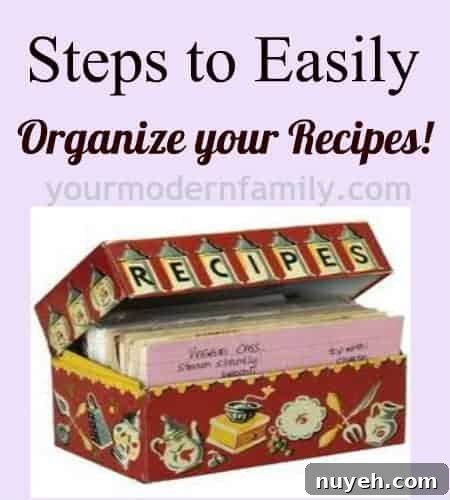
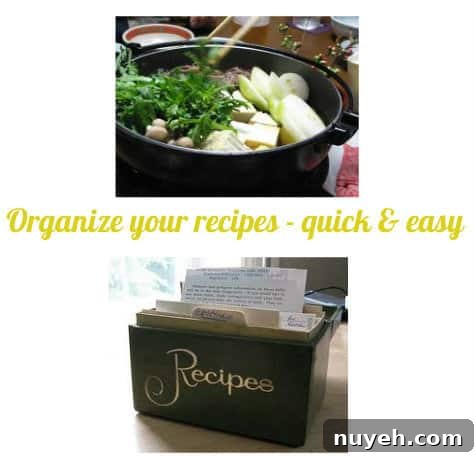
I received a recipe box as a wedding shower gift, and it quickly filled with favorite cards from family, friends, and myself. I organize it by category—breads, casseroles, poultry, desserts, and so on—so I always know where to look. Recipe cards are compact, portable, and ideal for handwritten notes or small edits. If you prefer tactile organization and quick access, a recipe box is a classic and reliable choice for recipe organization.
2. A recipe binder or album
I also use an 8×10 photo album with plastic sleeves that allow recipes to slide in and out easily. This is where I keep recipes cut from magazines and any pages that are larger than a recipe card. It’s sturdy, protects printed pages from spills, and is simple to update when you find new favorites. I keep holiday menus and special-occasion recipes in the binder—so Thanksgiving staples like a favorite pineapple casserole sit right next to the pumpkin pie recipe. If you want a neat, protected collection of clippings and printed recipes, a binder with page protectors is an excellent option for recipe organization.
3. Online recipe collections
I maintain a couple of recipe boards on Pinterest to save ideas and easy weeknight meals. Online collections are useful for quick searching, tagging, and saving recipes you find across blogs or websites. Use clear board names and consistent tags or categories to make retrieval fast. Backing up favorite recipes to a cloud folder or saving them to a dedicated notes app can provide an extra layer of security and access from your phone while cooking.
4. Favorite cookbooks
I only keep a handful of cookbooks—mostly community or group cookbooks (church, school, or club cookbooks) and a few personal favorites that I refer to often. When I find a recipe in a cookbook that I want to keep, I copy it onto a recipe card or print a copy to slip into my binder or box. Keeping only the books you use regularly reduces clutter while preserving recipes you love.
Other recipe organization ideas
Here are additional methods you might try, depending on how you like to work in the kitchen:
- Rewrite favorite recipes into a single blank cookbook. A handwritten recipe book becomes a treasured family keepsake and allows space for notes, adjustments, and personal tips.
- Create a three-ring binder with page protectors. This keeps printed pages safe from spills and lets you reorganize sections easily as your collection grows.
- Use a recipe management app. Many apps let you clip recipes from websites, scale ingredients, and generate shopping lists—useful for busy cooks who rely on digital devices.
- Maintain a folder on your computer or cloud drive. Organize recipes into folders by category or meal type and include a simple naming system for fast searching.
Tips for an efficient recipe organization system
– Decide on one primary storage method (box, binder, or digital) and use it consistently for new recipes. Mixing systems is fine, but designate a “home” for your most-used recipes so you know where to look.
– Use clear categories and dividers. Whether physical or digital, consistent categories (breakfast, soups, mains, sides, desserts) speed up retrieval.
– Add notes and date changes. When you modify a recipe—reduce sugar, swap an ingredient, or adjust cooking time—write that change directly on the card or in the notes section so the improved version is easy to replicate.
– Keep backups. Scan handwritten cards or take photos of recipe pages and store them in a cloud folder so you don’t lose treasured recipes to spills or loss.
Organizing recipes doesn’t need to be complicated. Pick the methods that match how you cook—whether you prefer tactile recipe cards, a protected binder, or searchable online collections—and develop a simple, consistent routine to keep things tidy and accessible. Happy cooking and organized recipe collecting!