In February I began collaborating with a new Italian cooking magazine about to launch, Ci piace cucinare. Monica has been my contact since the start and we exchange long conversations about food styling, ingredients and editorial ideas. Every week we agree on themes and recipes based on seasonality, special occasions and the magazine’s needs.
I prepared, styled and photographed my first assignment and the feedback surprised me. The comment was kind but clear: I like it, but I think you’ll have to reshoot it.
That criticism struck my pride, yet it became the catalyst for growth. Over eight months I developed as a food stylist, photographer and recipe developer. I learned to clarify my goals and to define the concrete steps needed to reach them.
Above all, two lessons shaped my approach.
No recipe is trivial
Food bloggers can sometimes live in a bubble of curiosity and experimentation: long projects, multiple pots, thermometers and stand mixers. That urge to research and to experiment is precious—cooking is art and creativity. Yet not everyone has hours to spend in the kitchen every evening. Many people need practical, reliable recipes that fit a busy life.
Creating recipes for people who come home late, who want something warm and homemade but can’t spend hours on dinner, is deeply satisfying. On blogs we often start conversations with other bloggers, forgetting the home cooks who must feed hungry mouths, set crowded tables or prepare a simple dinner for one. It is a mistake to dismiss a recipe as too simple.
Working daily—during classes, workshops and assignments for clients and magazines—has given me the chance to revisit classic Tuscan dishes and to design quick weekday meals. My work now covers everything from roasts and fresh pasta to cheesecakes, but also humble fare like chicken breasts, cutlets, skewers and burgers.
Constraints—time, difficulty and limited ingredients—can be freeing.
I put myself in the shoes of someone who has ten minutes to cook a chicken breast: what can they realistically have in the fridge or pantry? Will the dish keep for a lunchbox? Can it be reheated successfully? Those questions reshaped the recipes I publish. I fell in love with everyday recipes—those I hoped to find on the table after school or work, the dishes my partner appreciates after a long day.
Practice makes you better
The second lesson was an acknowledgement of something I learned long ago: you improve by doing, by making mistakes and trying again. My parents and my first teacher taught me that learning requires practice. As my mother always said, nobody is born learned.
Working steadily for months on the magazine helped me refine technique and achieve consistent results. I came to value small but crucial details: the right pan size, visual references rather than purely timing, a pinch of nutmeg in a filling or salting meat ahead of time. Those little adjustments change the outcome and make recipes easier to replicate in different kitchens.
Now I approach roasts, meatballs, fresh pasta and cakes with renewed confidence—not due to some natural talent but because of repeated practice: tying a pork loin many times until the motion felt right, learning to season and to judge cooking times by look and touch. After many experiments—burnt, undercooked, overcooked—there comes a moment when things fall into place and you take a mental note.
Consistency is the real achievement.
True success is being able to reproduce positive results reliably. The real joy comes from sharing a recipe so someone else can cook it without repeating the mistakes you fixed. A home cook, a busy parent, a student or a retiree can make it their own, adapt it and give it new life in another kitchen. That is why I love what I do.
The same happens with photography
Reflecting on the feedback for my first assignment, I now understand it clearly. It takes time to learn what a new client expects. Assuming you’ll get everything perfect on the first shot can lead to misunderstandings. Time, practice, patience and steady work do wonders.
After eight months of collaboration, I recognise tangible improvements in my photographs. I control light, composition and styling better, and I enjoy the technically challenging assignments—roasts, burgers and complex setups—because they push me to learn. That same mindset applies across cooking, photography, food styling, writing, baking and bread making. With practice, most skills improve.
Pasta alla boscaiola with mushrooms
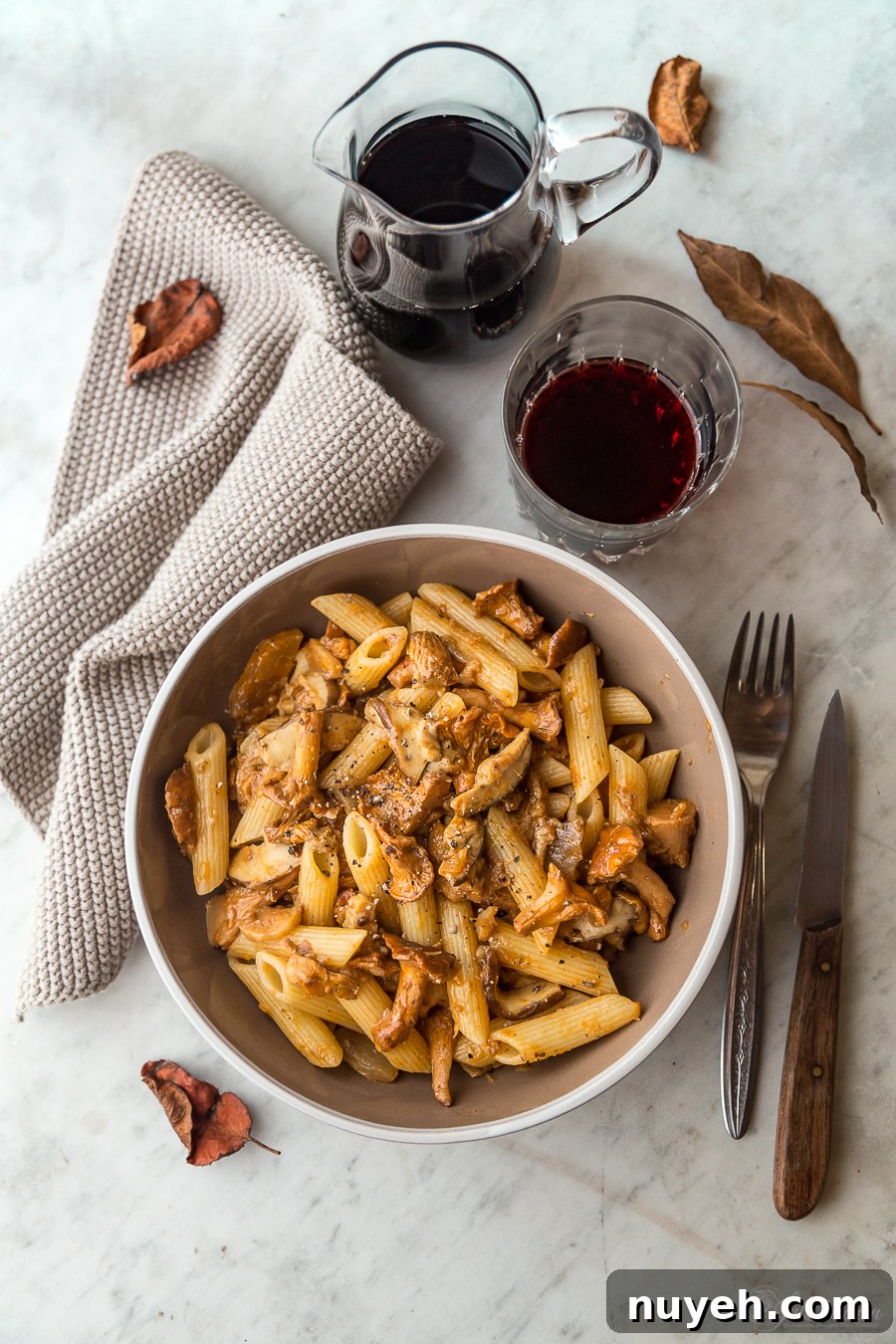
I wanted to share these reflections and then get back to the table. So here is a seasonal, comforting recipe: pasta alla boscaiola, a mushroom-based sauce in the woodland style. It has a slightly retro affinity with cream-based dishes, and there are countless regional variations. One constant is mushrooms—everything else can change: tomato, cream, sausage, peas or olives may appear in different versions.
This particular version uses porcini and chanterelles, along with onion and shallot, a spoonful of tomato paste for color, cubed guanciale (or pancetta) for savory depth and a splash of whole milk to soften the sauce.
Pasta alla boscaiola with mushrooms — Quick Recipe
Author: Giulia | Course: First course | Cuisine: Tuscan | Serves: 4 | Prep: 10 mins | Cook: 20 mins | Total: 30 mins
Ingredients
- 1 white onion, finely sliced
- 1 shallot, finely sliced
- 2 tablespoons extra virgin olive oil
- 150 g guanciale or pancetta, cubed
- 350 g fresh porcini mushrooms
- 150 g chanterelles
- 1 tablespoon tomato paste
- 150 ml whole milk
- Salt and freshly ground black pepper
- 350 g dried penne or other short pasta
Instructions
- In a large frying pan, warm the olive oil and add the sliced onion, shallot and guanciale. Cook over medium heat for about 5 minutes until the onion and shallot are soft and translucent.
- Brush the mushrooms clean, cut into pieces and add them to the pan. Season with salt and black pepper. Reduce the heat to low and cook for about 10 minutes, stirring frequently.
- Add a spoonful of tomato paste, then pour in the milk and stir to combine. Continue cooking for about 10 more minutes until the mushrooms are tender and the milk has created a thick, creamy sauce. Taste and adjust seasoning.
- Meanwhile, bring a pot of salted water to a boil and cook the pasta according to package instructions until al dente. Reserve a cup of the pasta cooking water before draining.
- Toss the drained pasta with the mushroom sauce, adding a little cooking water if needed to loosen the sauce and make it silky. Serve immediately.
Link love
- A classic alternative version of pasta alla boscaiola appears on Serious Eats, combining porcini, bacon and tomato.
- Dianne Jacob’s reflections on persistence and writing are encouraging for anyone improving a craft; her essay reminds us that progress can take time.
- An article on Bon Appétit discusses how practice leads to confidence in the kitchen and that making mistakes is part of learning.