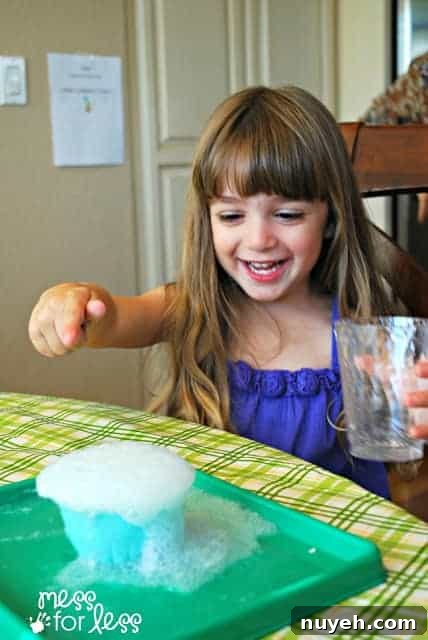
Erupting Play Dough: Baking Soda and Vinegar Science for Kids
We tried a few simple and entertaining science experiments using the No Cook Lotion Dough we made last week. That lotion dough contains baking soda, which makes it perfect for fizzing reactions when it meets vinegar. We rolled the dough into balls, dropped them into cups of vinegar and watched bubbly eruptions. The activity is easy to set up, captures kids’ attention, and offers a clear visual for a basic chemical reaction.
Materials you will need:
- White vinegar (or any vinegar with acetic acid)
- Lotion dough made with baking soda (recipe linked below)
- Clear plastic cups in various sizes (large and small)
- A tray or washable surface for easy cleanup
Start by filling a large transparent cup about three-quarters full of vinegar. Roll the lotion dough into small balls roughly one inch in diameter. When you drop a dough ball into the vinegar, the baking soda in the dough reacts with the acetic acid in the vinegar and creates bubbles—carbon dioxide gas—which causes an exciting fizzing eruption.
We wondered what would happen if we kept dropping balls into the same cup. Would the fizz spill over? My daughter guessed the cup would overflow, but after dropping four balls in a row, the liquid stayed contained. The reaction produced lots of bubbles, but the size of the cup and the amount of vinegar limited how far the foam rose.
For a second experiment, we used a much smaller clear cup—the kind applesauce or single-serve fruit cups come in. We pressed the lotion dough firmly into the cup, leaving a shallow well in the center so the vinegar would pool and contact more baking soda at once. Pushing the dough up against the sides created a contained chamber for the reaction.
When we poured vinegar into the dough-lined cup, the fizz was immediate and dramatic. The trapped gas pushed bubbles up through the vinegar and over the top of the cup in an energetic display that delighted the kids. Because the dough was pressed tightly against the sides, the eruption had to escape upward through the liquid, which made the bubbling look more intense.
We repeated the pour several times; each fresh addition of vinegar produced new bursts of fizz until the baking soda in that portion of dough was used up. This is a great way to show kids that a chemical reaction depends on reactants: once the baking soda and vinegar have reacted, there’s less fizz left to produce.
For a final variation, we poured vinegar into the dough cup and quickly placed our empty vinegar cup over the top to cap it. The rapid generation of carbon dioxide built pressure and the bubbles pushed the cap off—the force of the foam actually toppled the small cup. It’s an exciting demonstration of gas production and pressure in a very kid-friendly form.
Why does this happen? The baking soda in the play dough is sodium bicarbonate, and when it meets acetic acid in the vinegar, a chemical reaction produces carbon dioxide gas. Those gas bubbles create the fizz and cause the eruption. Explaining this simple chemistry helps children connect what they see to what’s happening on a molecular level.
A few practical tips: do this over a tray or outdoors for easy cleanup, wear clothes you don’t mind getting a little splashed, and supervise young children closely to avoid getting vinegar in eyes or mouths. You can vary the size of the dough balls, the amount of vinegar, or the type of container to explore how those changes affect the eruption.
This activity is an easy way to turn pantry staples into an engaging science lesson. If you enjoyed this, try other baking soda experiments and variations to extend the learning and fun.
No Cook Lotion Dough recipe
More ideas to explore: Exploding Milk Experiment, Baking Soda Experiments.