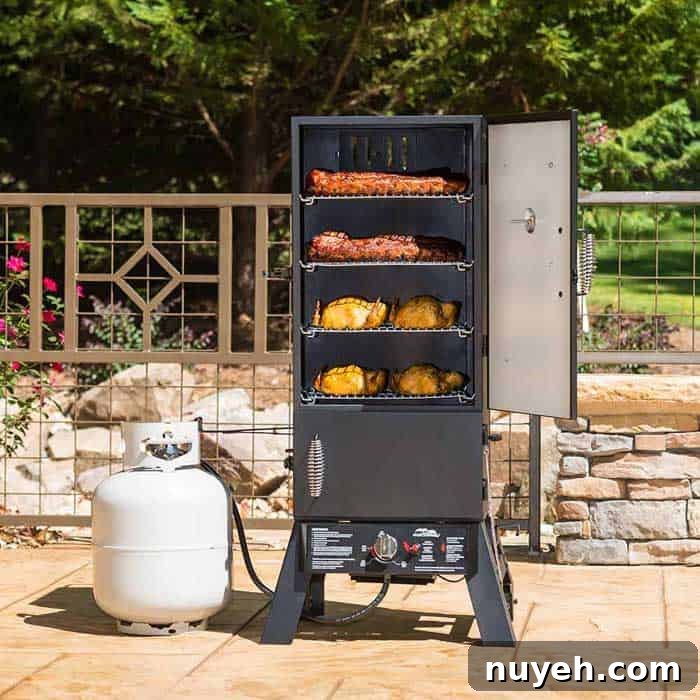
Upgrade your smoking skills with an electric smoker. This guide covers everything you need to know to get consistent, flavorful results from your electric smoker—whether you’re a beginner or want to refine your technique.
- Choose your smoker
- Season your smoker
- Insert wood chips
- Prepare the meat
- Preheat smoker and add water
- Check your smoker’s temperature
- Start cooking
- What is BBQ smoking?
- How does an electric smoker work?
- What meat works best in an electric smoker?
Smoking is one of the most rewarding methods of outdoor cooking. It encourages experimentation while delivering tender, deeply flavored results that other cooking methods can’t match.
An electric smoker is a particularly approachable option. It offers a hands-off experience similar to pellet or charcoal smokers but without the steep learning curve. Electric models are generally safer and more affordable, and many produce excellent, reliable results when used correctly.
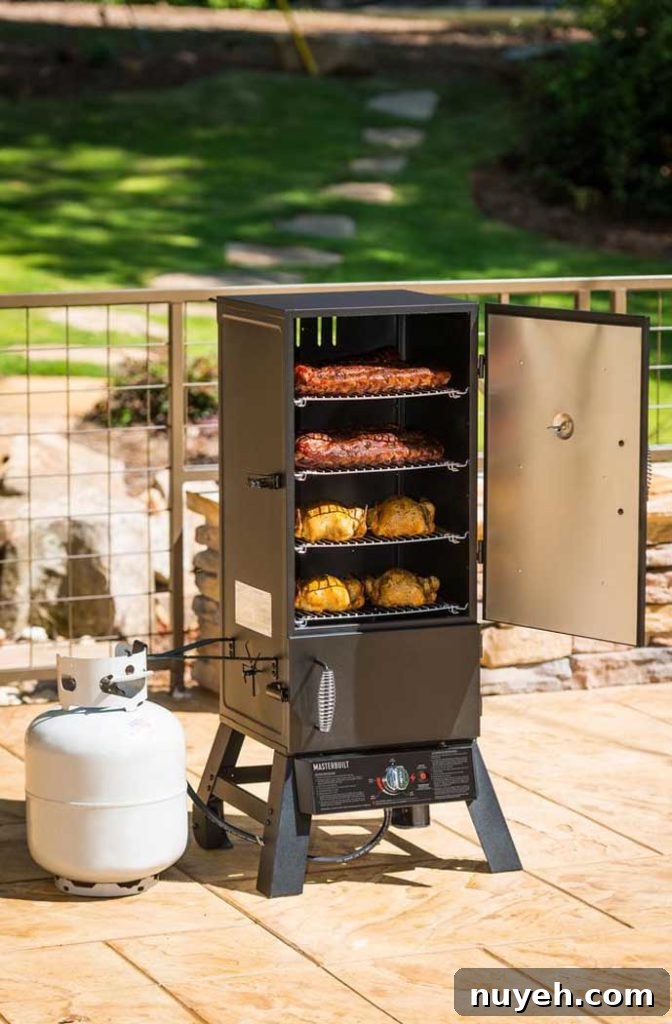
That said, getting great barbecue from an electric smoker does require attention to a few important details. Learn to manage the water pan, wood chip reservoir, temperature controls and vents and you’ll get consistently juicy, flavorful meat.
This guide walks through the key steps and best practices to help you succeed every time.
Choose your smoker
In short: Pick a cabinet-style electric smoker with a reliable digital controller, a water pan, and easy access to the wood chip tray.
Electric smokers are commonly available as vertical water smokers or cabinet-style electric smokers. Vertical water units work well in warm weather and are usually simple and compact. Cabinet models have stronger insulation and more precise temperature control, which helps in cooler conditions.
When choosing, consider how and when you’ll use the unit. For year-round smoking, a well-insulated cabinet smoker with a precise digital controller is the better choice. If you only smoke in summer, a vertical water smoker can be a good, budget-friendly option.
A quality digital control panel makes a big difference: good controls let you set and maintain temperature, program timers, and reduce the need for constant monitoring. Also check the placement of the wood chip tray—easy refill access matters because repeatedly opening the main chamber can disrupt temperature and smoke circulation.
Finally, a drip pan is important. It keeps the smoker cleaner by catching juices and also helps stabilize internal temperature.
Season your smoker
In short: Lightly oil racks and the interior, heat the smoker to set the oil, then cool and clean before cooking.
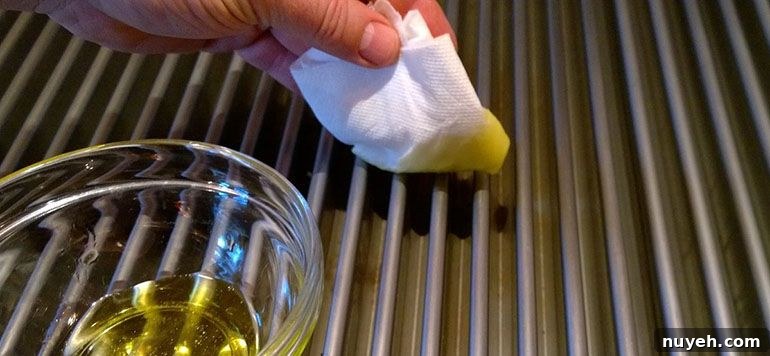
Seasoning is an essential, often-overlooked step. It removes manufacturing oils, dust and initial odors and helps protect the metal surfaces from rust.
Coat the racks and interior surfaces with a thin layer of cooking oil. Run the smoker at a moderate temperature for 1–2 hours, then turn it off and let it cool with the door open. After cooling, wipe down surfaces—some cooks like to use coarse salt or soapy water for a final clean before the first cook.
Insert wood chips
In short: Fill the chip tray or tube with your chosen wood chips (hickory, oak, pecan, apple, etc.) and place it where the manufacturer recommends.
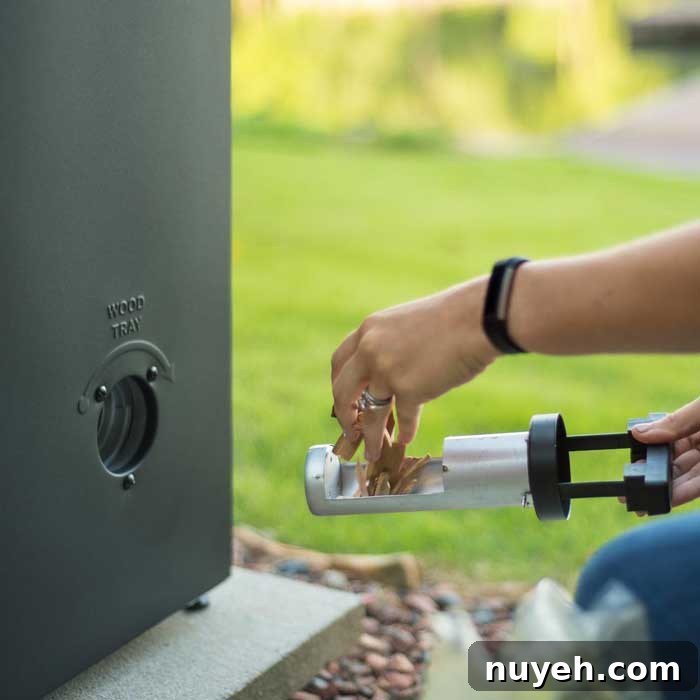
Choose wood types that suit the meat you plan to smoke. A general rule is about 4 cups of chips for every four hours, though that varies by smoker and desired smoke intensity.
If your smoker lacks a dedicated chip tray, you can improvise with a small metal tin placed near the heat source. Fill it no more than three-quarters full and fold the top edge to limit airflow so the chips smolder rather than flare.
Use tongs to position the tray or tin carefully. Once the smoker reaches cooking temperature, the chips should begin to smolder and produce steady smoke.
Prepare the meat
In short: Brine or rub your meat as needed and refrigerate while the smoker preheats.
Preparation depends on the cut. Many tougher or lean cuts benefit from brining or marinating for several hours or overnight. For quicker preparations, apply a dry rub, season generously with salt and aromatics, and let the meat rest in the refrigerator so flavors penetrate.
Plan ahead: brines and long marinades require time, so factor that into your cooking schedule.
Preheat smoker and add water
In short: Fill the water pan or reservoir; you can add cider, beer or citrus for subtle flavor. Preheat to your target temperature before placing meat inside.
The water pan provides humidity that helps keep meat moist and promotes even cooking. Adding liquids like apple cider, citrus peels, beer or wine can gently influence aroma, but don’t expect strong flavor transfer—the effect is subtle.
Keep an eye on the water level during long cooks and refill with hot water when needed to avoid sudden temperature drops.
Check your smoker’s temperature
In short: Monitor air temperature and aim for about 225°F (107°C). Use an air probe or a dedicated smoker thermometer for accurate readings.

Different smokers take different times to heat. Most electric smokers need roughly 30–45 minutes to stabilize. Use the built-in gauge if it’s reliable, or an independent air probe to verify the internal cooking environment.
Wait until the smoker is fully at the target temperature before adding meat to ensure even cooking and predictable timing.
Start cooking
In short: When the smoker reaches about 225°F (107°C), place your meat on the grates, close the door, and monitor the internal temperature of the meat with a probe thermometer.
Smoking times vary by cut and size—anywhere from a couple of hours to most of a day. Use a reliable meat thermometer to track internal doneness instead of relying solely on time. Keep the smoker’s door closed as much as possible to maintain steady temperature and smoke.
What is BBQ smoking?
Smoking is low-temperature, long-duration cooking that breaks down connective tissue and fat, producing tender meat with deep flavor. Unlike high-heat grilling, smoking allows collagen to dissolve slowly, keeping the meat moist and richly flavored. It typically involves a long cook time and is often paired with brining or marinades.
How does an electric smoker work?
Electric smokers use a heating element to warm the chamber and ignite or smolder wood chips, producing smoke that flavors the food. Because the heat source is electric, these smokers offer steady temperature control without the direct flames of charcoal or gas, which makes them user-friendly for beginners.
What meat works best in an electric smoker?
Electric smokers handle most traditional barbecue cuts very well. Pork shoulders, beef brisket, ribs and sausages are excellent choices. Cheaper, fattier cuts often produce the best results because the slow cook melts fat and connective tissue, delivering tender, flavorful meat.
With the right preparation and patience, you can achieve classic smoked textures and flavors using an electric smoker.