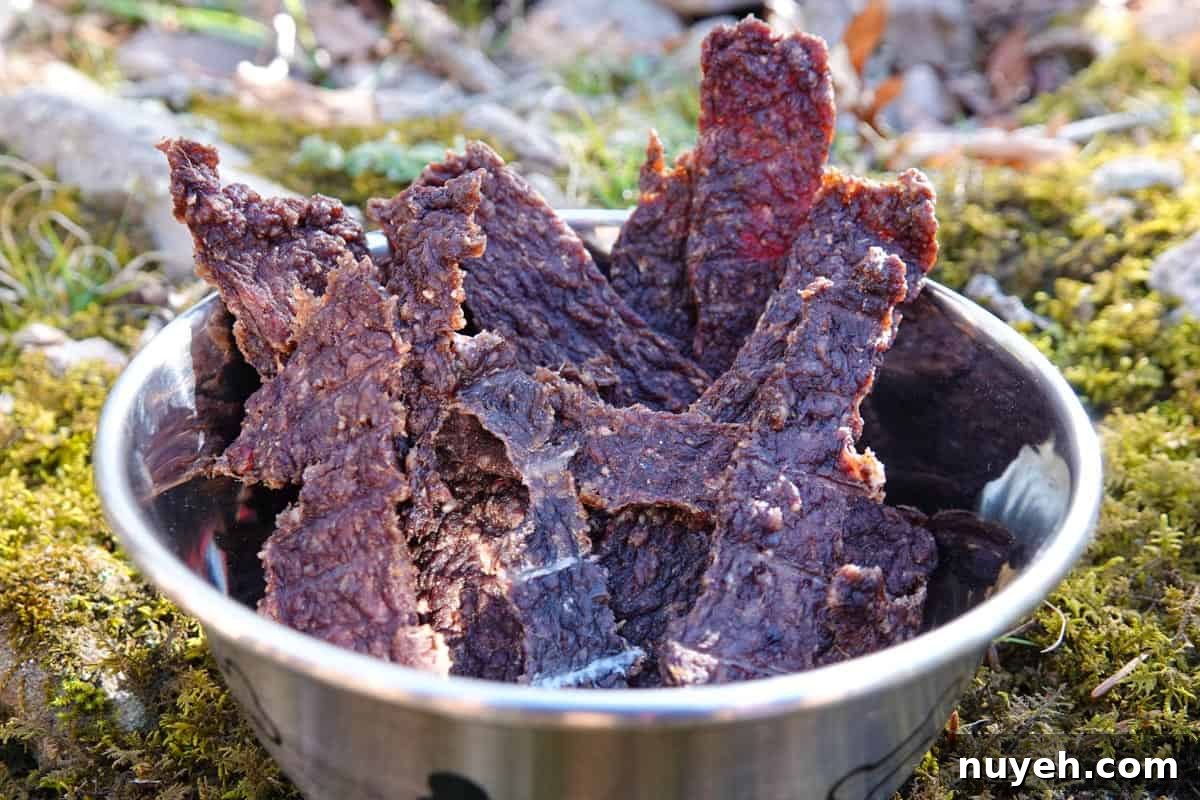
Calling all dog lovers: treat your best friend to healthy, homemade beef jerky. It’s simple to make, far healthier than many store-bought treats, and your dog will thank you. Homemade jerky lets you control ingredients and avoid fillers, excess salt, and preservatives.
Video – How to Make Jerky for Dogs
What meat to use
For the best homemade dog jerky, use lean ground meat. Choose ground beef with 10% fat or less (often labeled 90/10). Lean meat dries more predictably, produces less greasy residue, and creates longer-lasting treats.
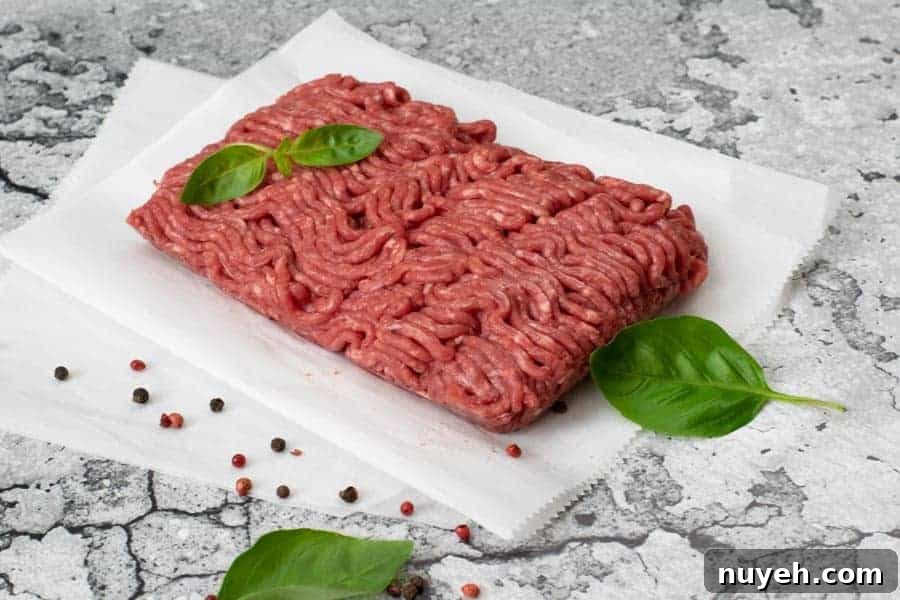
If you grind your own meat—beef, venison, or other game—consider adding a small amount of organ meat such as liver to boost flavor and nutrients. Use a lean roast (for example, round roast) and, if possible, grind through a coarser plate followed by a finer plate for a pleasant jerky texture.
Spices that are good for dogs
Dog-friendly jerky uses minimal seasoning. Unlike human jerky, it should contain little to no salt and avoid hot spices. A few safe spices can add flavor and health benefits without risking your dog’s wellbeing.
Cinnamon
- Cinnamon provides antioxidants and may support oral freshness. Use sparingly—just a small amount for flavor and potential benefits.
Turmeric
- Turmeric is popular for supporting joint, heart, and brain health. A pinch can be a healthy addition; combine with a little fat or a dash of black pepper for absorption only if advised by your vet.
Ginger
- Ginger can support digestion and help with mild nausea. Use a small amount when your dog tends to have an upset stomach.
Making Jerky for Dogs
To flavor 1 lb of ground meat, mix in two tablespoons of cold water and a teaspoon or two of one or a combination of the safe spices listed above. Use your hands to blend evenly so the meat holds together when formed.
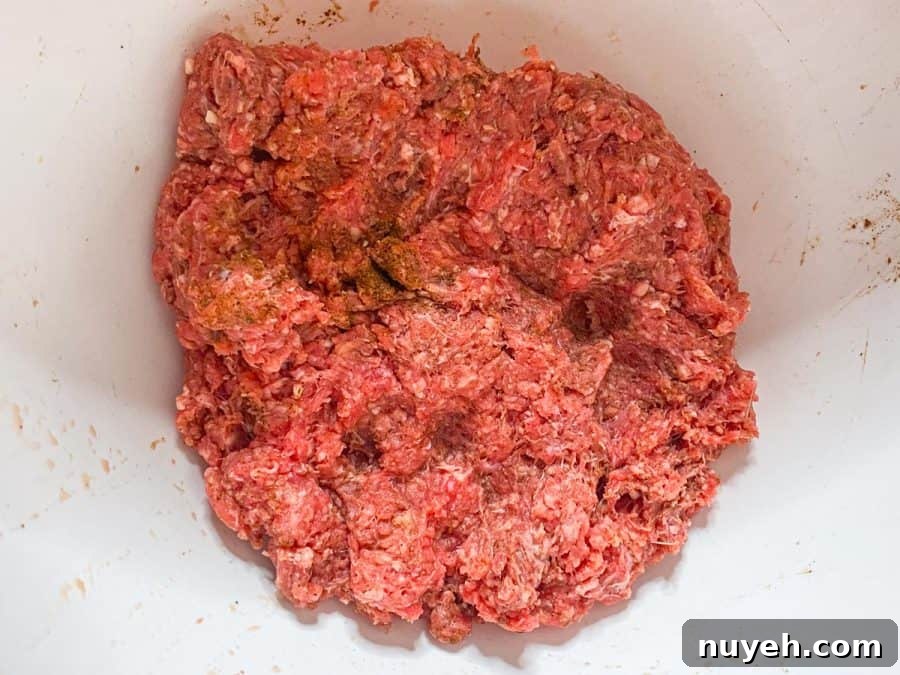
There are two common ways to shape ground meat into jerky: flattening and slicing, or extruding with a jerky gun.
Method 1 — Flatten and slice: Spread the seasoned meat between two sheets of wax paper and roll to about 1/4″ thickness. Remove the top sheet and score or slice into strips about 4–5″ long and 1″ wide. Use a dull knife or spatula to transfer strips to dehydrator trays or oven racks.
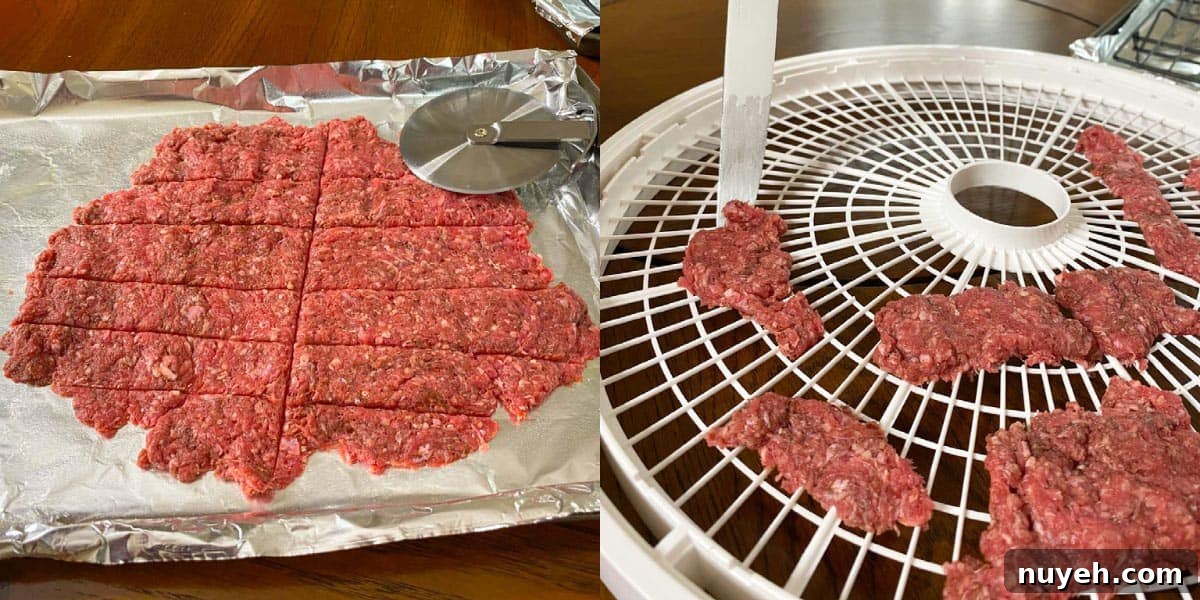
Method 2 — Jerky gun: Pack the seasoned meat into a jerky gun and extrude uniform strips directly onto trays or racks. A jerky gun speeds up the process when making larger batches.
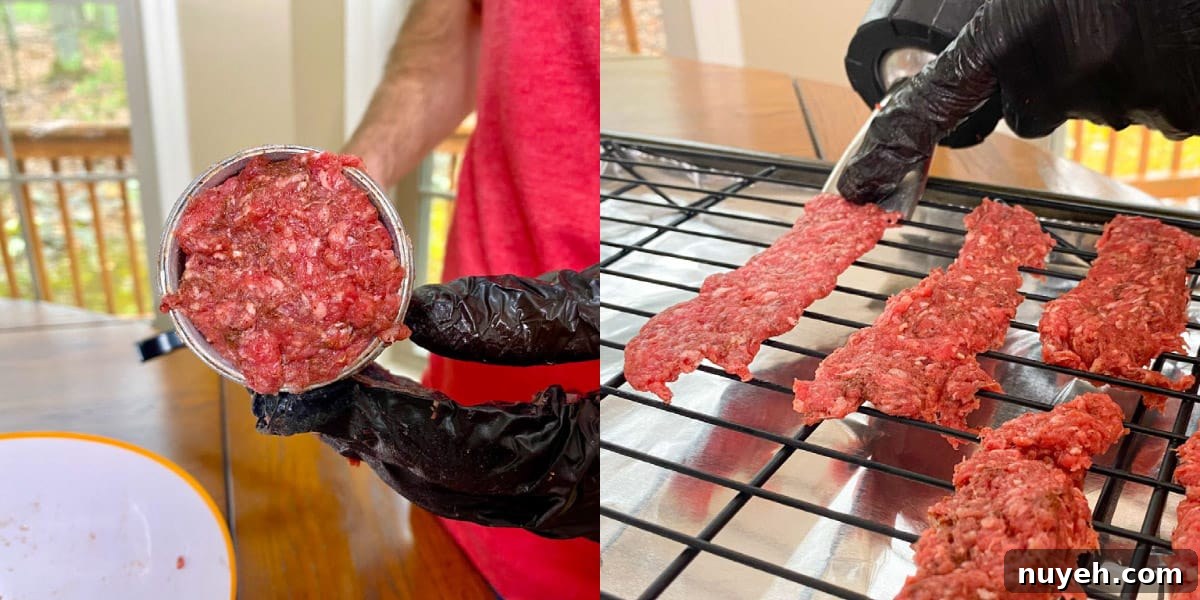
For small batches (one pound or less), flatten-and-slice works well. For larger batches, using a jerky gun saves time and produces more consistent pieces.
Dehydrating
You can dry dog jerky in either a dehydrator or a conventional oven. Both methods work; choose what’s convenient for you. For first-time makers, the oven is an easy place to start.
Dehydrator
Arrange jerky strips on dehydrator trays in a single layer and set the temperature to 160°F if available. Drying time varies by thickness and humidity but typically takes 3–5 hours. Check periodically for doneness.
Oven
To use an oven, place strips on a cooling rack set over a baking sheet so air can circulate. Heat the oven between 180°F and 200°F and prop the door open slightly (a wooden spoon works well) to let moisture escape. Dry for several hours until the jerky reaches the right texture.
Testing for when it’s finished
Finish drying when the jerky is dry to the touch, flexible, and cracks slightly when bent but does not break in half. Because these treats contain little or no preservative salt, slightly over-dried pieces are still safe and will keep longer in the refrigerator.
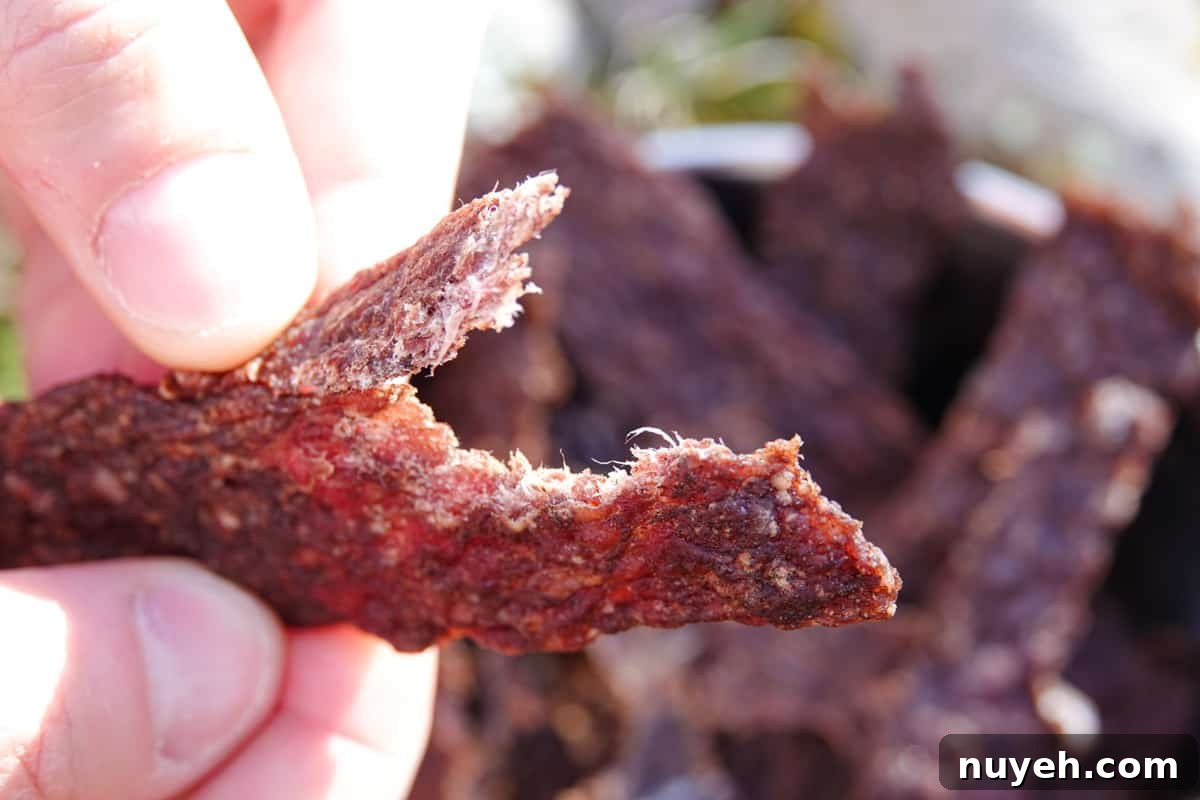
Let a test piece cool for a few minutes before bending. If it feels moist, continue drying. When finished, cut strips into 1″ pieces with scissors for bite-sized dog treats.
Storing Jerky
Store homemade dog jerky in the refrigerator in a sealed bag or container. Without added preservatives, it won’t last as long as commercial jerky, so refrigerate and use within a couple of weeks. For long-term storage, vacuum-seal portions and freeze them for several months.
FAQ
Yes. The jerky is safe for humans, though it will taste mild because it contains little or no salt and minimal seasoning.
Yes. Homemade jerky made with lean meat and a few dog-safe spices is high in protein and low in fat compared to many commercial treats.
Yes. With poultry, use a slightly higher oven temperature (around 200°F) and ensure pieces reach an internal temperature of 165°F during the drying process for food safety.
Old Pro Tips
- Line the baking sheet with aluminum foil for quicker cleanup.
- Use sharp kitchen scissors to cut finished jerky into bite-sized treats.
- If you grind meat at home, add a small amount of organ meat for flavor and nutrition.
Learn more about making jerky
-
How to Make Beef Jerky in a Dehydrator
-
Beef Jerky Recipes (75+ Homemade Jerky Recipes)
-
Chicken Jerky


Healthy Homemade Dog Jerky
30 minutes
4 hours
4 hours 30 minutes
5
128kcal
Will
Ingredients
Lean Beef
-
1
lb
Lean ground beef
(10% fat or less)
Marinade
-
2
tablespoon
cold water -
1
teaspoon
ground cinnamon
Equipment



Instructions
-
Combine the cold water and spices, then add the mixture to 1 lb of lean ground beef.
-
Mix the meat and seasonings thoroughly by hand until evenly combined.
-
Spread the mixture on a baking sheet, cover with wax paper, and roll with a rolling pin until the meat is about 1/4″ thick.
-
Slice the sheet of meat into strips about 4–5″ long and 1″ wide. Transfer to dehydrator trays or cooling racks over baking sheets.
-
Dry on high in a dehydrator (about 160°F) or in a 200°F oven for 3–5 hours, checking for doneness. If using an oven, prop the door open slightly to let moisture escape.
-
Jerky is finished when it feels dry and bends without breaking in half. If it breaks cleanly when bent, it may be over-dried.
-
Cut the strips into 1″ pieces with scissors for perfect bite-sized treats.
Video
Pro Tips
- Line the baking sheet with foil for easy cleanup.
- Cut cooled jerky with kitchen scissors into bite-sized pieces.
- When grinding meat at home, adding a small amount of organ meat increases flavor and nutrition.
Nutrition
|
Calories: 128kcal
|
Carbohydrates: 1g
|
Protein: 19g
|
Fat: 5g
Tried this recipe?
Let us know how it went!