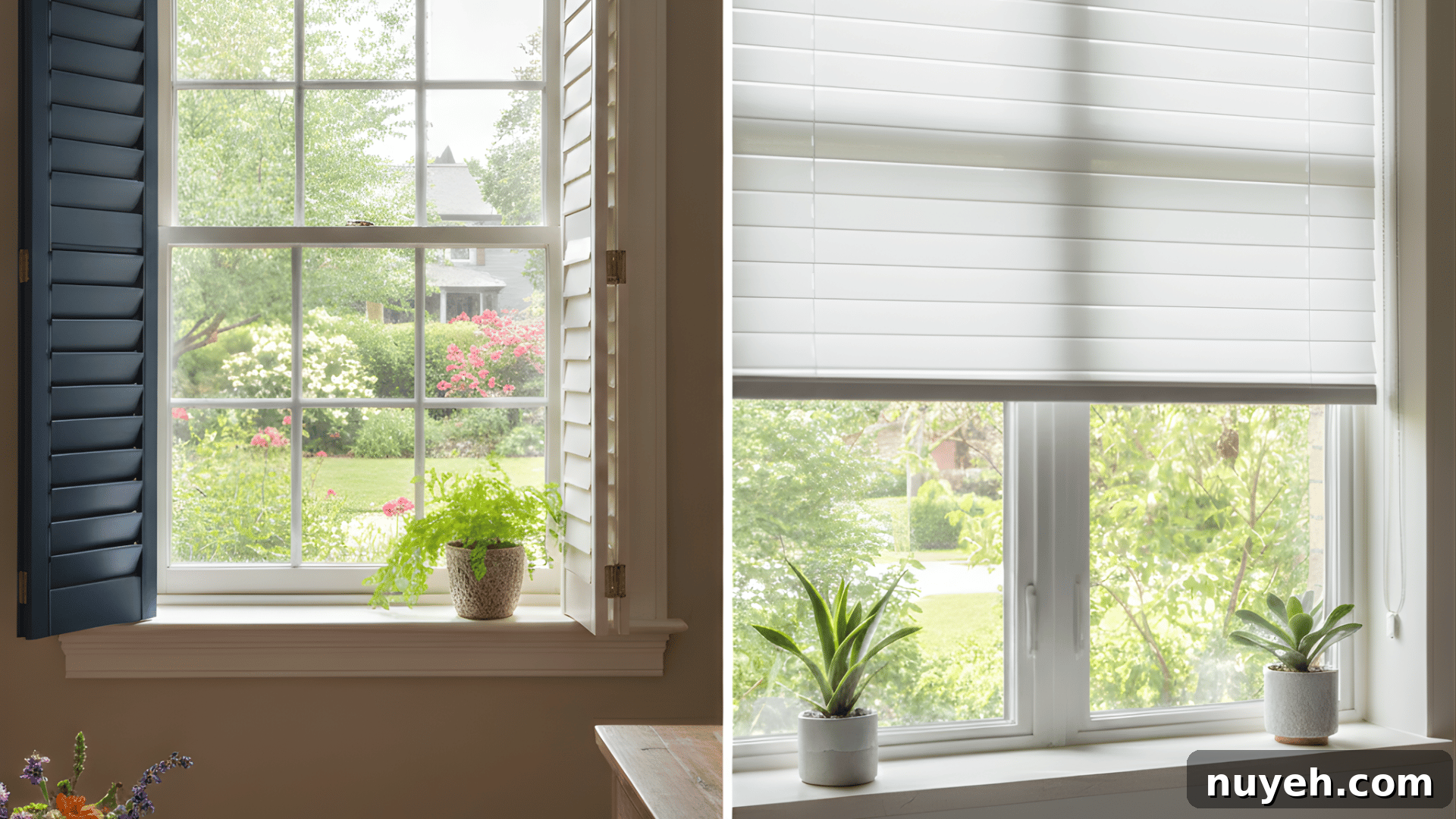
Choosing between shutters vs. blinds is one of the most common decisions homeowners face when updating window treatments. Both options offer distinct advantages for light control, privacy, and style. Knowing how they compare in cost, durability, maintenance, and energy performance helps you pick the right solution for each room.
This guide explains the key differences between shutters and blinds, outlines the main styles available, and offers practical advice to help you select the best option for your budget and design goals.
Understanding Shutters vs. Blinds
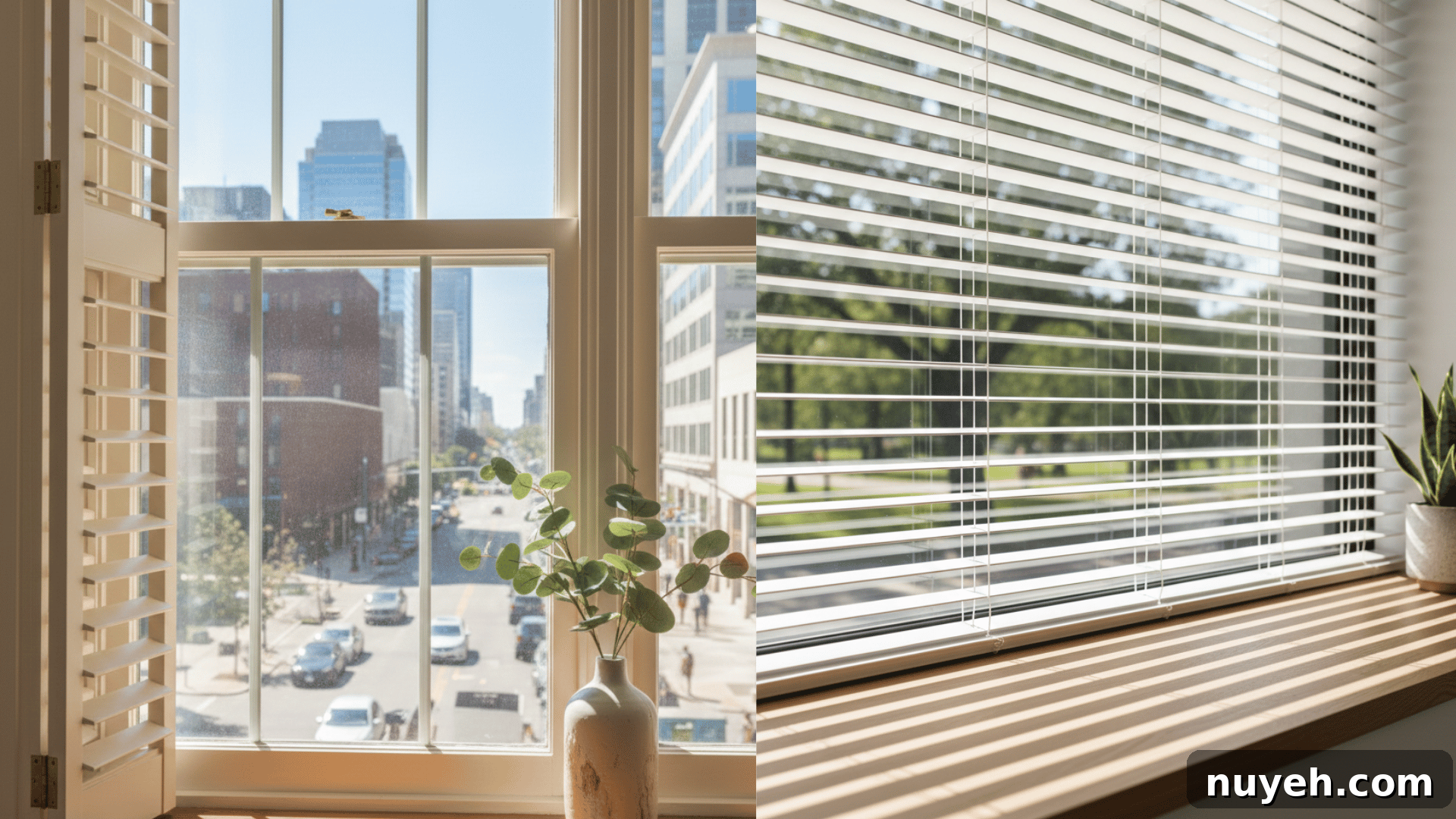
Shutters are solid window coverings typically made from wood, vinyl, or composite materials. They consist of framed panels with adjustable louvers or slats. Shutters are usually mounted inside the window frame and are known for their sturdy construction, strong light-blocking ability, and classic appearance.
Blinds are window treatments made up of horizontal or vertical slats in materials such as wood, aluminum, or fabric. Blinds are designed to tilt, raise, or lower to regulate light and privacy. They tend to be lighter in weight than shutters and are often easier and quicker to install or replace.
Types of Shutters
Shutters provide a durable, polished look and can improve insulation and privacy while boosting aesthetic appeal.
Plantation Shutters
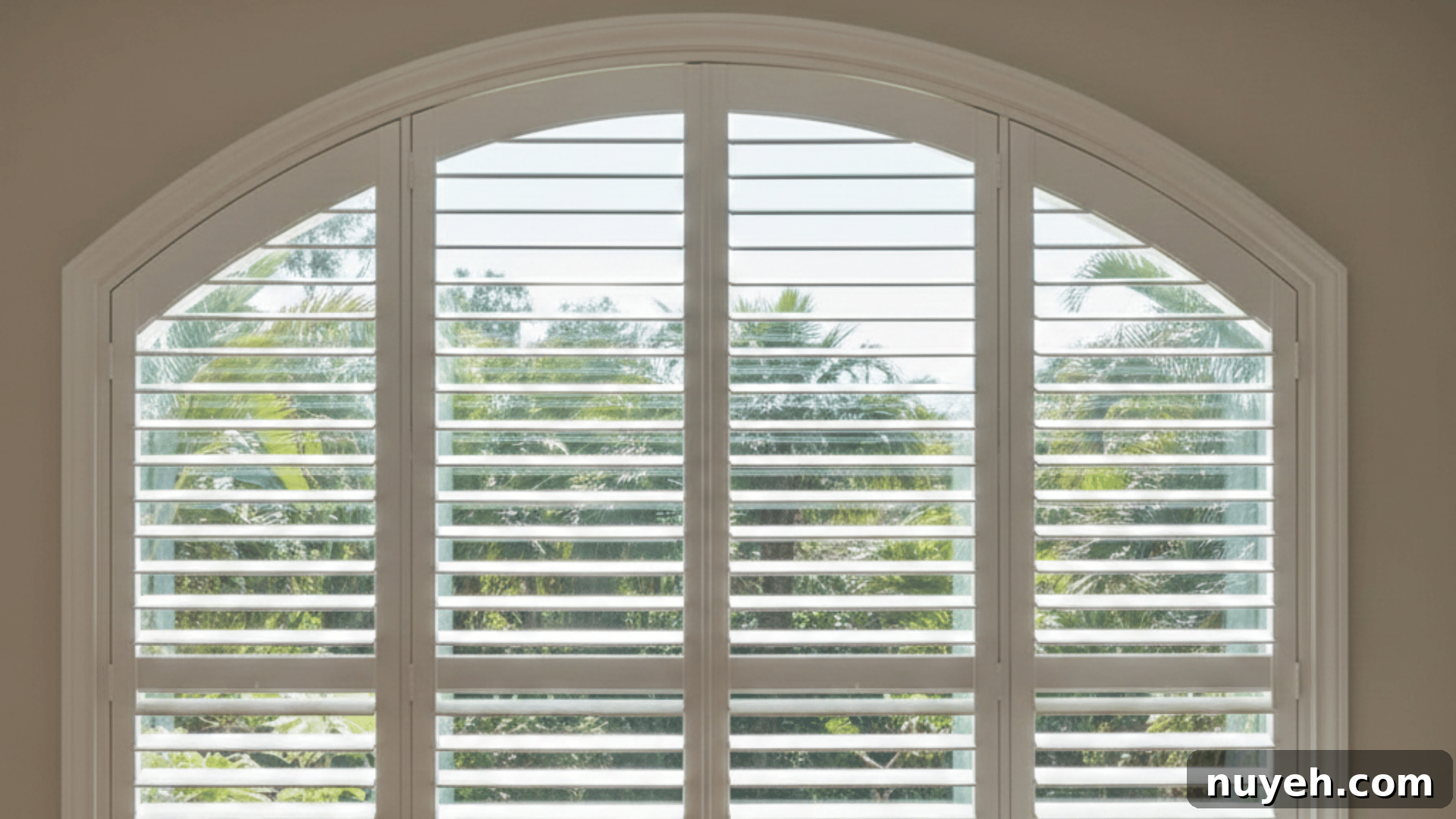
- Characterized by wide, adjustable louvers ideal for controlling light and sightlines.
- Commonly made from wood or composite materials for strength and a refined finish.
- Suit traditional and modern interiors and can add a lasting, high-end appearance to windows.
Interior Shutters
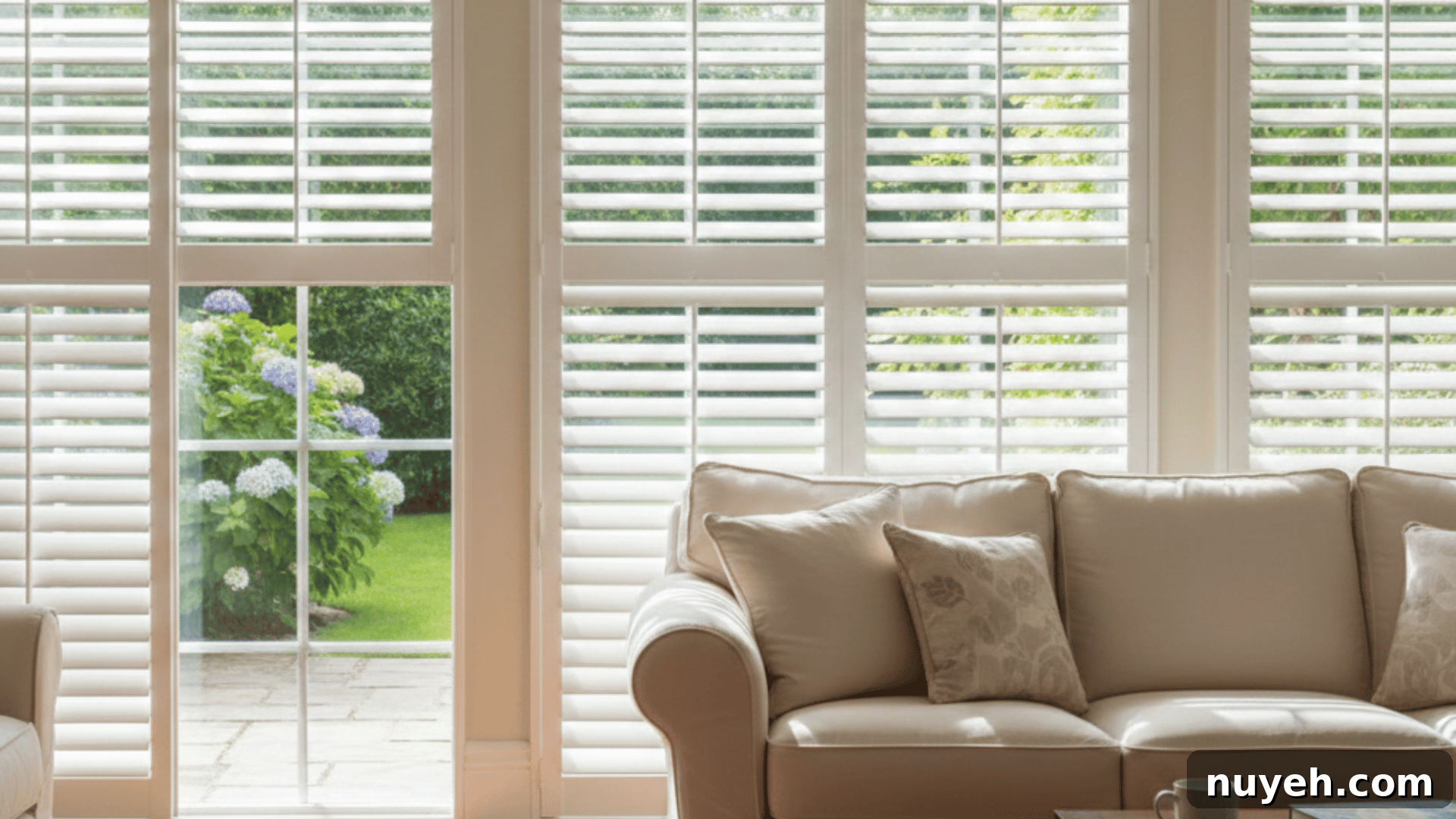
- Installed inside the window frame to provide a neat, integrated look.
- Offer additional privacy and help insulate rooms from temperature changes.
- Available in wood, vinyl, or composite options to suit different budgets and climates.
- Easy to keep clean and typically very durable when maintained properly.
Types of Blinds
Blinds are versatile, affordable, and available in a wide variety of designs to complement many interior styles.
Venetian Blinds
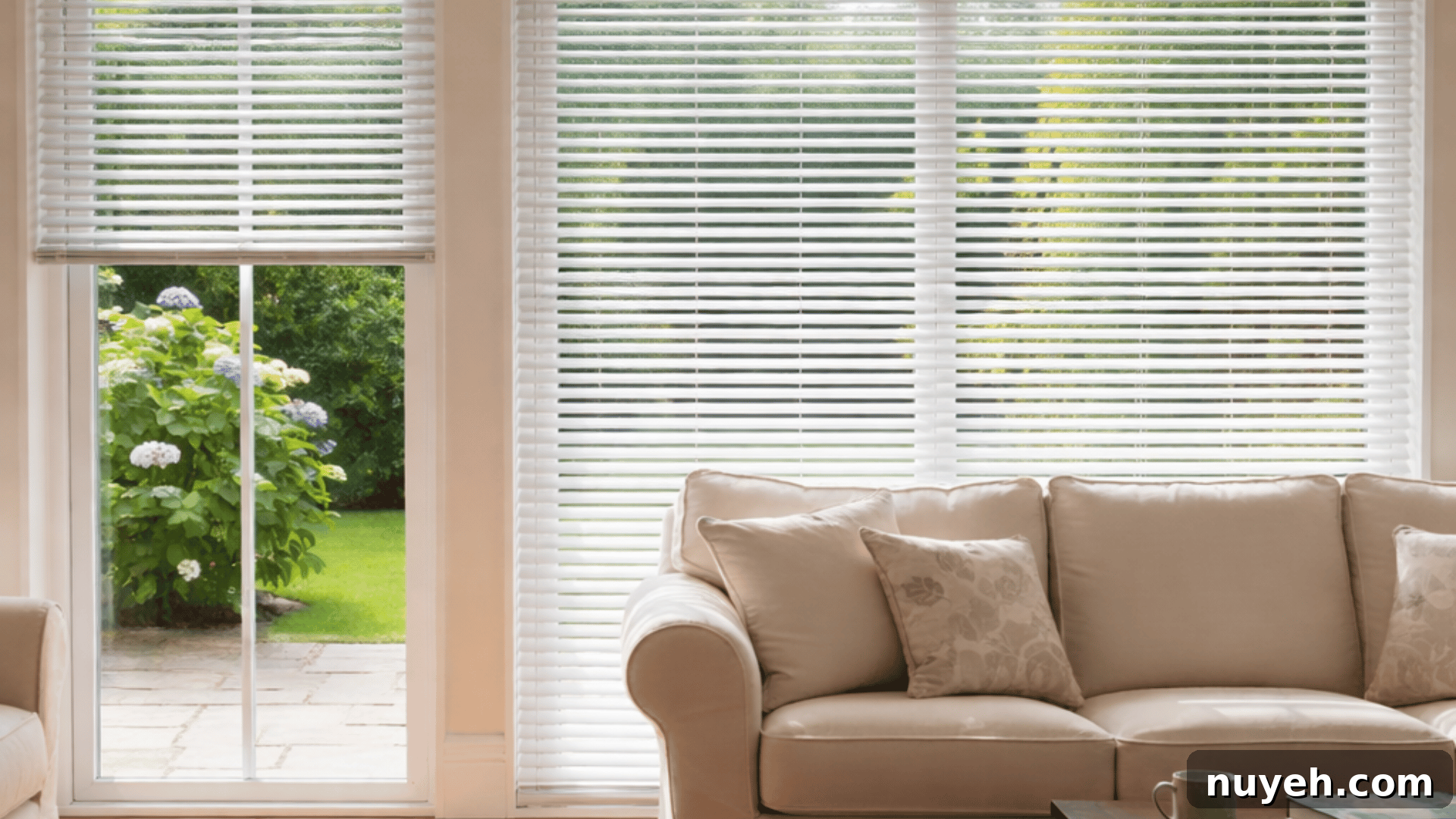
- Horizontal slats can be precisely tilted to control light and privacy.
- When raised, they occupy minimal space and allow maximum daylight.
- Generally cost-effective and available in a range of materials and finishes.
Vertical Blinds
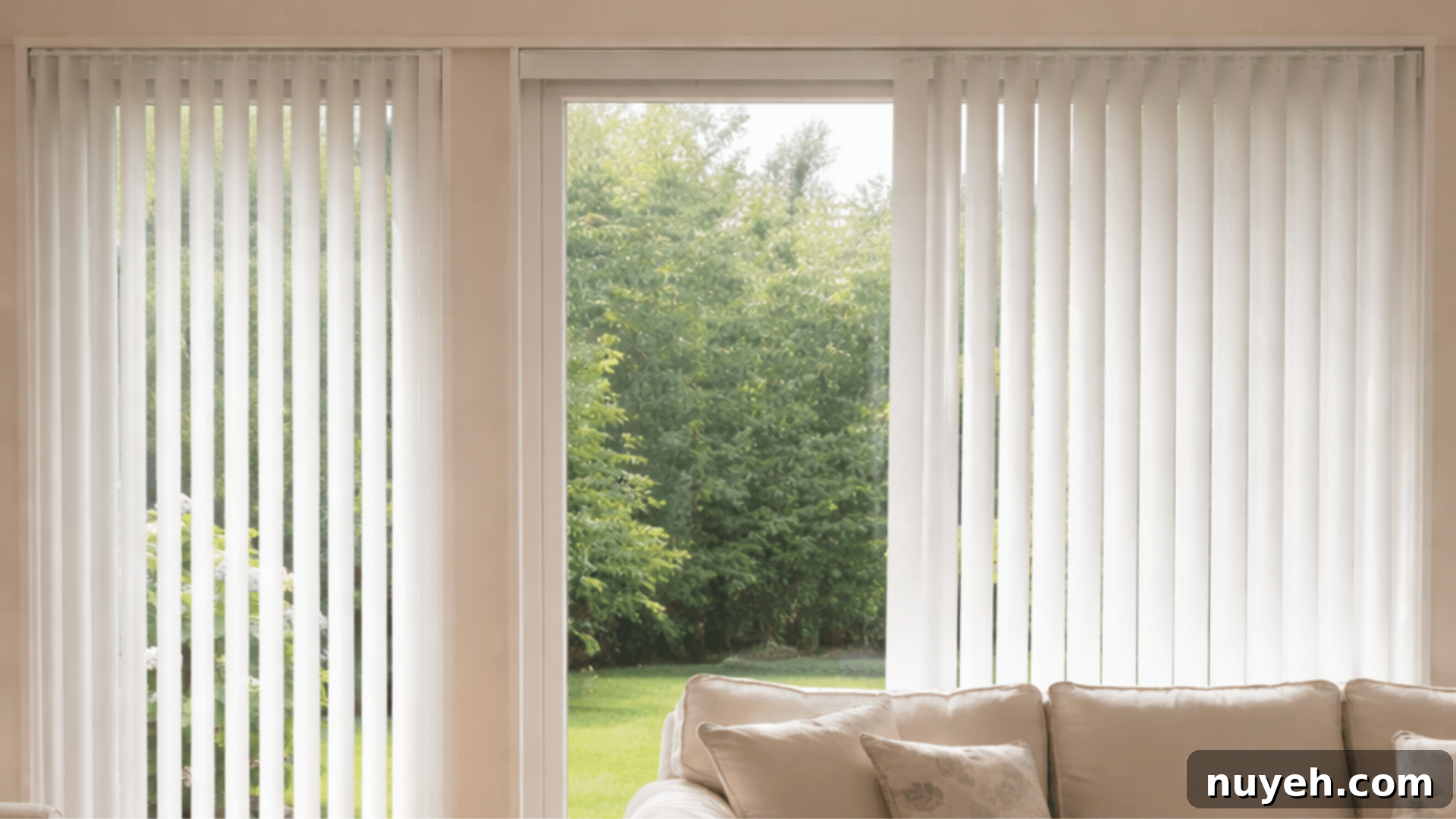
- Best for wide windows and sliding doors, where vertical movement is practical.
- Available in fabric, vinyl, and other materials; fabric versions can improve sound absorption.
- Often offered with motorized controls for convenience on large or hard-to-reach openings.
Roller Blinds
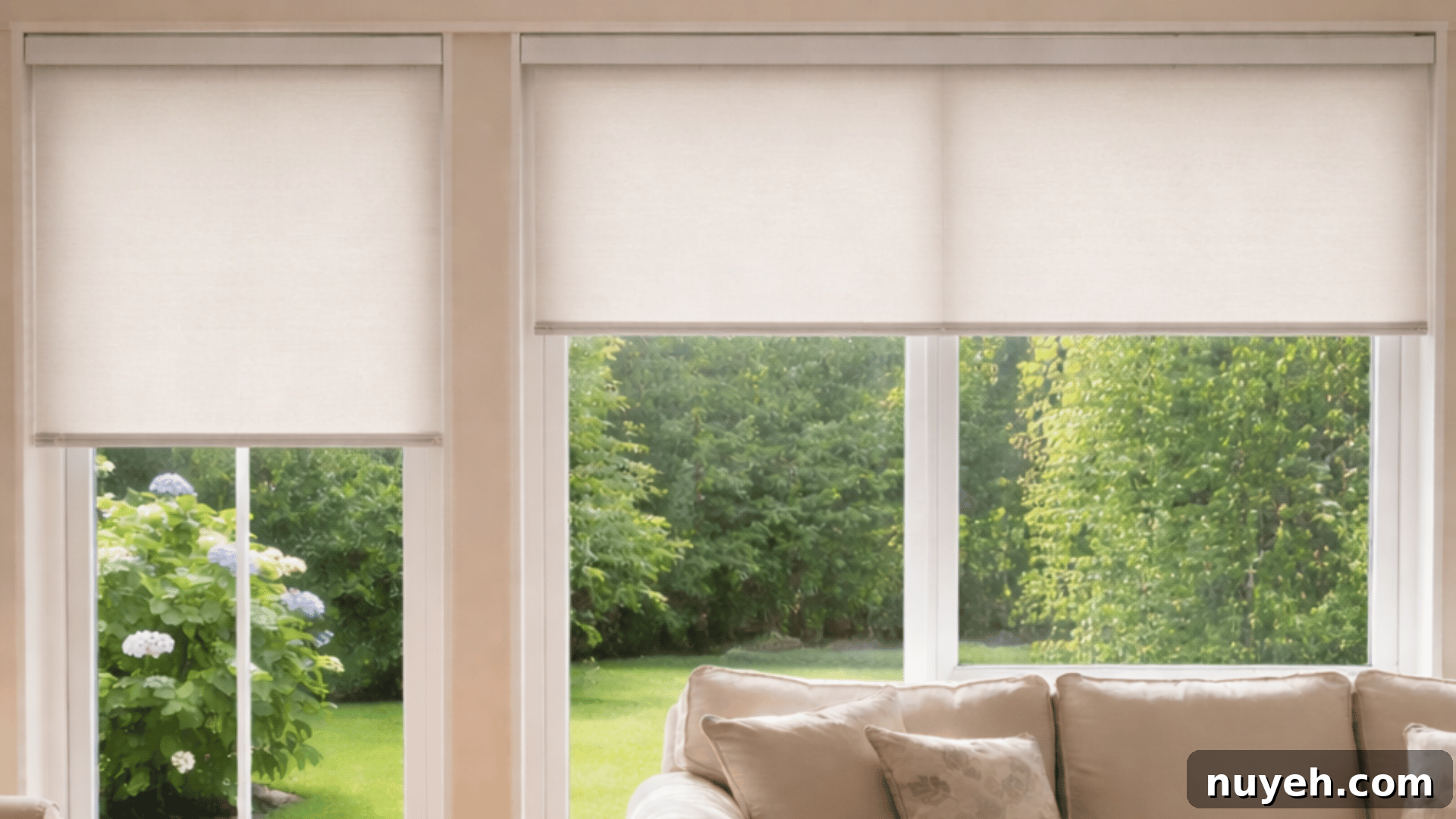
- Constructed from a single fabric panel that rolls up neatly when opened.
- Offer a clean, minimalist look that suits contemporary interiors.
- Compact when raised and available in motorized or cordless models for safety and ease of use.
Key Differences: Shutters vs Blinds
Below are the primary factors to consider when choosing between shutters and blinds.
1. Cost
Shutters are usually a higher upfront investment. Prices commonly range from $200 to $1,500 per window, depending on size, material, and customization. Because of their durability and curb appeal, shutters are often viewed as a long-term upgrade.
Blinds are typically more budget-friendly, with prices from about $20 to $500 per window. They offer a wide range of styles and price points, making them accessible for most budgets.
2. Durability
Shutters tend to last longer, especially wood or composite models that resist wear and handle moisture better than many blind materials. With proper care they can last for decades.
Blinds—particularly fabric or lightweight metal varieties—generally show wear sooner and may need replacement more frequently, though higher-quality wooden blinds can be long-lasting.
3. Maintenance
Shutters are low-maintenance; regular dusting or a quick wipe with a damp cloth keeps them clean. Their solid surfaces make them easier to maintain than slatted or fabric coverings.
Blinds often require more frequent cleaning since dust builds up between slats or on fabric. Still, many blinds are designed for easy cleaning and accessible replacement parts.
4. Style
Shutters add a timeless, substantial look that suits both traditional and modern interiors and often increases perceived home value.
Blinds are highly customizable in color, texture, and functionality. They can range from utilitarian to fashion-forward, allowing more flexibility for changing décor.
5. Energy Efficiency
Shutters typically offer superior insulation because of their solid construction and tighter fit within the window frame, helping reduce heating and cooling needs.
Blinds provide some insulation and excellent light control but usually fall short of shutters in extreme temperature conditions.
Decision Guide: Which One Is Best for Your Home?
| Consideration | Shutters | Blinds |
|---|---|---|
| Homeowner Needs | Great for long-term value, improved insulation, and a polished, permanent look. | Ideal for renters, tight budgets, or projects that need quick, cost-effective updates. |
| Noise Insulation | Provides better sound reduction due to solid panels. | Offers minimal sound insulation, though fabric options help slightly. |
| Curb Appeal & Value | Frequently enhances curb appeal and can add resale value. | Less impact on resale but offers flexibility and style options. |
| Installation | Often requires professional installation for best fit and finish. | Generally easy to install and many models are DIY-friendly. |
| Motorized Options | Less commonly motorized, though custom solutions are available. | Widely available in motorized versions, convenient for large or high windows. |
Conclusion
When deciding between shutters vs blinds, consider your priorities: budget, durability, aesthetic goals, and energy performance. Shutters are a durable, higher-end option that can boost insulation and long-term value. Blinds deliver affordability, a wide range of styles, and ease of installation or replacement.
Both shutters and blinds can dramatically improve a room’s function and appearance. Evaluate the needs of each space—such as exposure, privacy requirements, and design—to determine which window treatment best aligns with your home and lifestyle.