
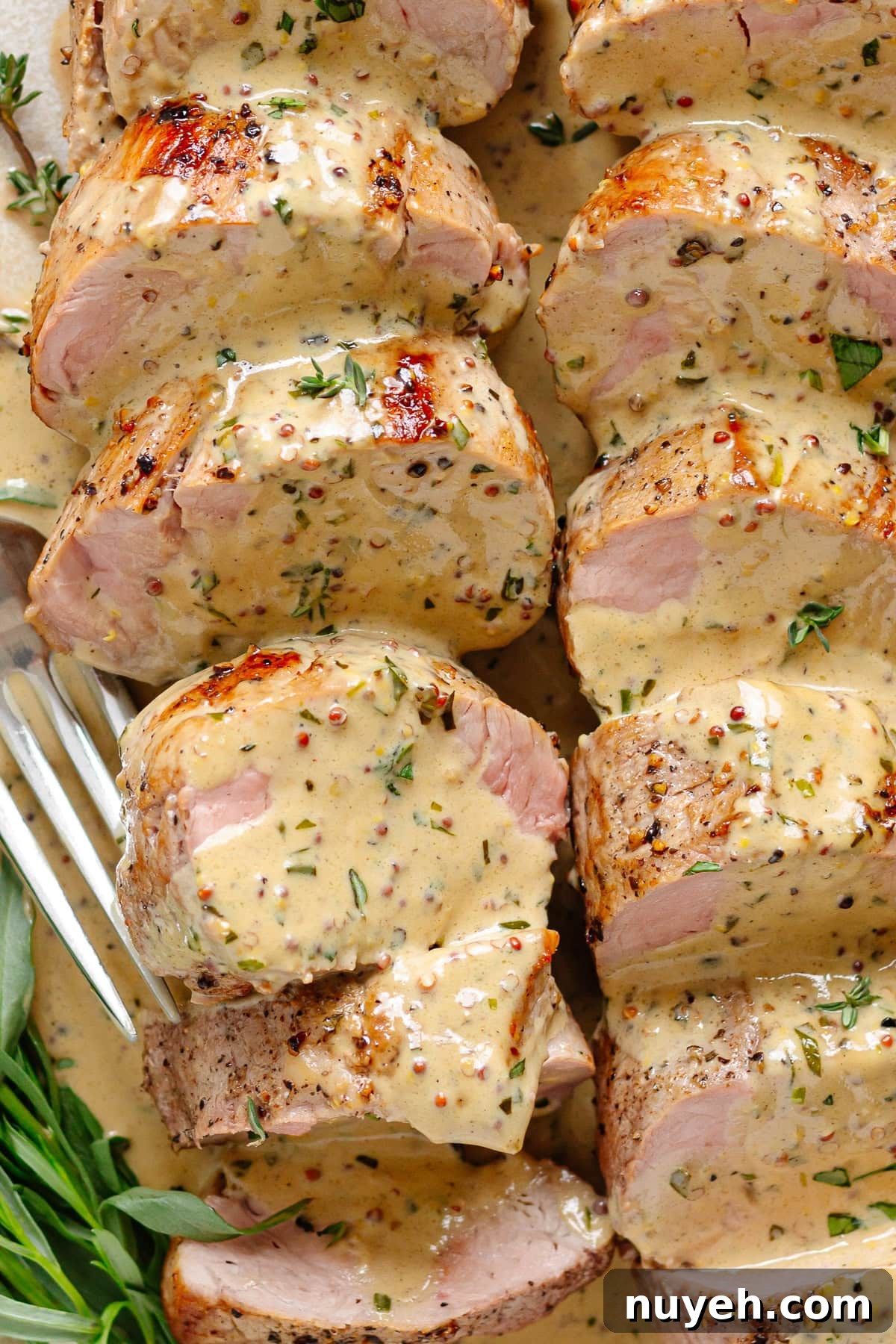
This recipe delivers tender, perfectly cooked pork tenderloin topped with a silky, creamy mustard sauce. It’s simple enough for a weeknight but refined enough to serve for guests or a holiday meal.
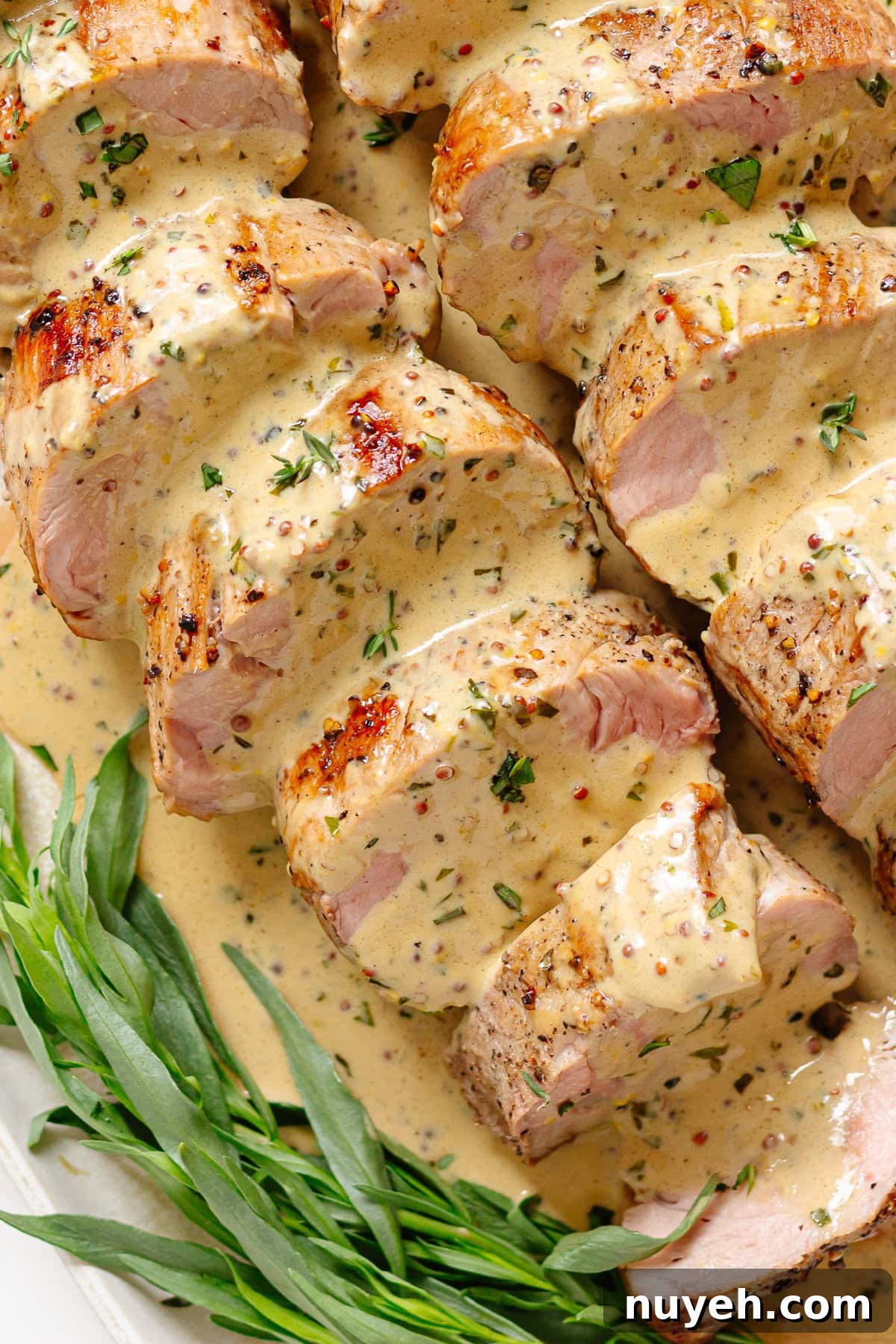
3 Reasons To Love This Recipe
- Effortless and impressive: The method is straightforward, producing restaurant-quality results with minimal fuss.
- One pan to finish: Searing, roasting and pan sauce all happen in the same skillet, keeping cleanup to a minimum.
- Versatile: Works for a casual dinner or a special occasion—easy to scale or pair with seasonal sides.
Ingredient Notes
You’ll need a few simple ingredients to make this pork tenderloin with mustard sauce:
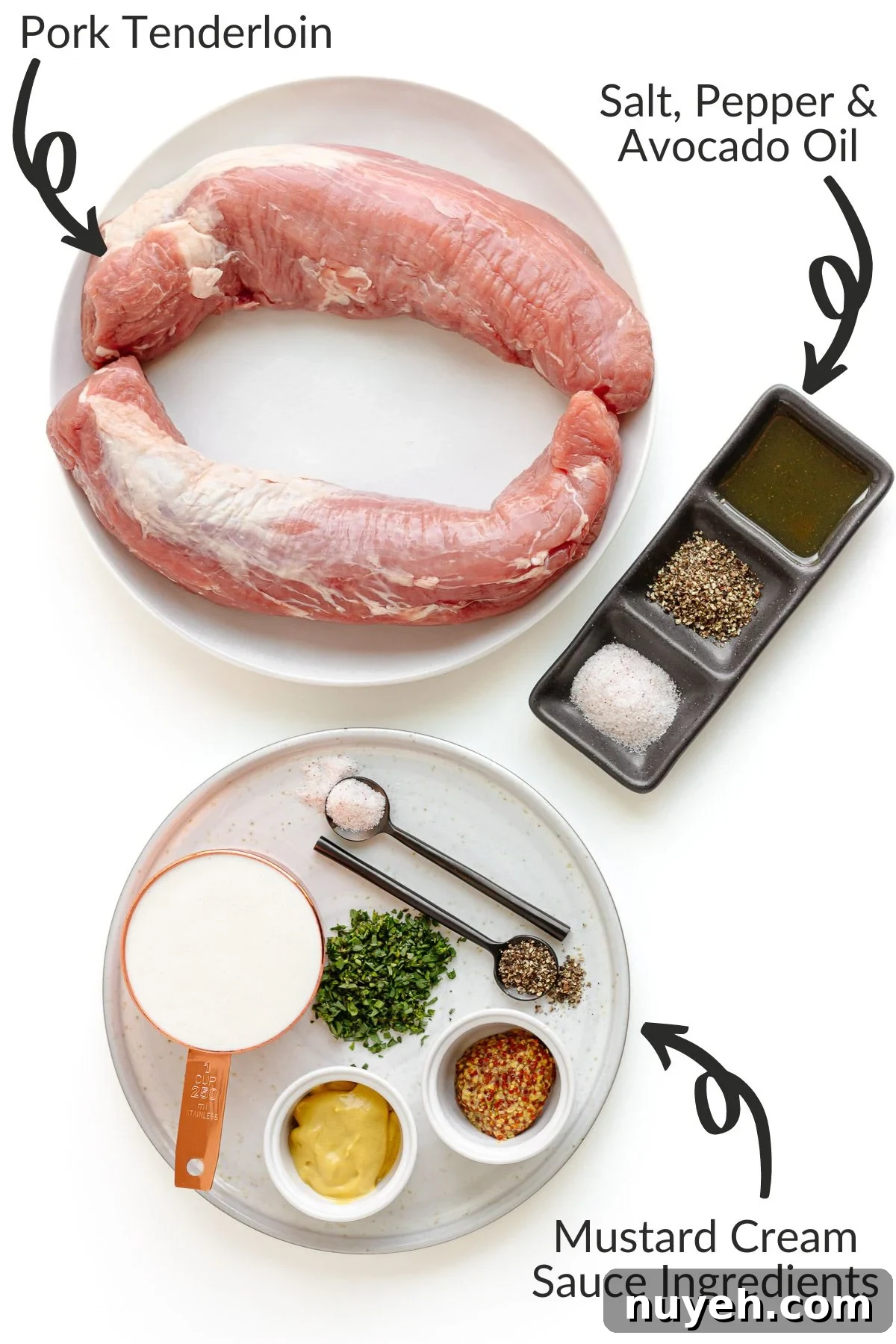
- Pork tenderloin: Recipe uses two tenderloins (about 1 lb / 500 g each). Do not substitute pork loin—the loin is larger and cooks differently.
- Salt & pepper: Simple seasoning lets the pork and mustard sauce shine.
- High-heat oil: Use an oil with a high smoke point for searing, such as avocado, vegetable, or light olive oil.
- Mustard cream sauce: Heavy cream combined with Dijon and whole-grain mustard creates a smooth, tangy sauce. Finish with finely chopped fresh herbs—tarragon gives a classic French flavor, while thyme, parsley, or chives are great alternatives.
See the recipe card below for the full ingredient list and exact amounts.
Equipment You’ll Need
Two helpful tools for this recipe:
- Cast iron skillet: Ideal for searing and oven-roasting in one pan. If you don’t have cast iron, an oven-safe stainless steel skillet will also work.
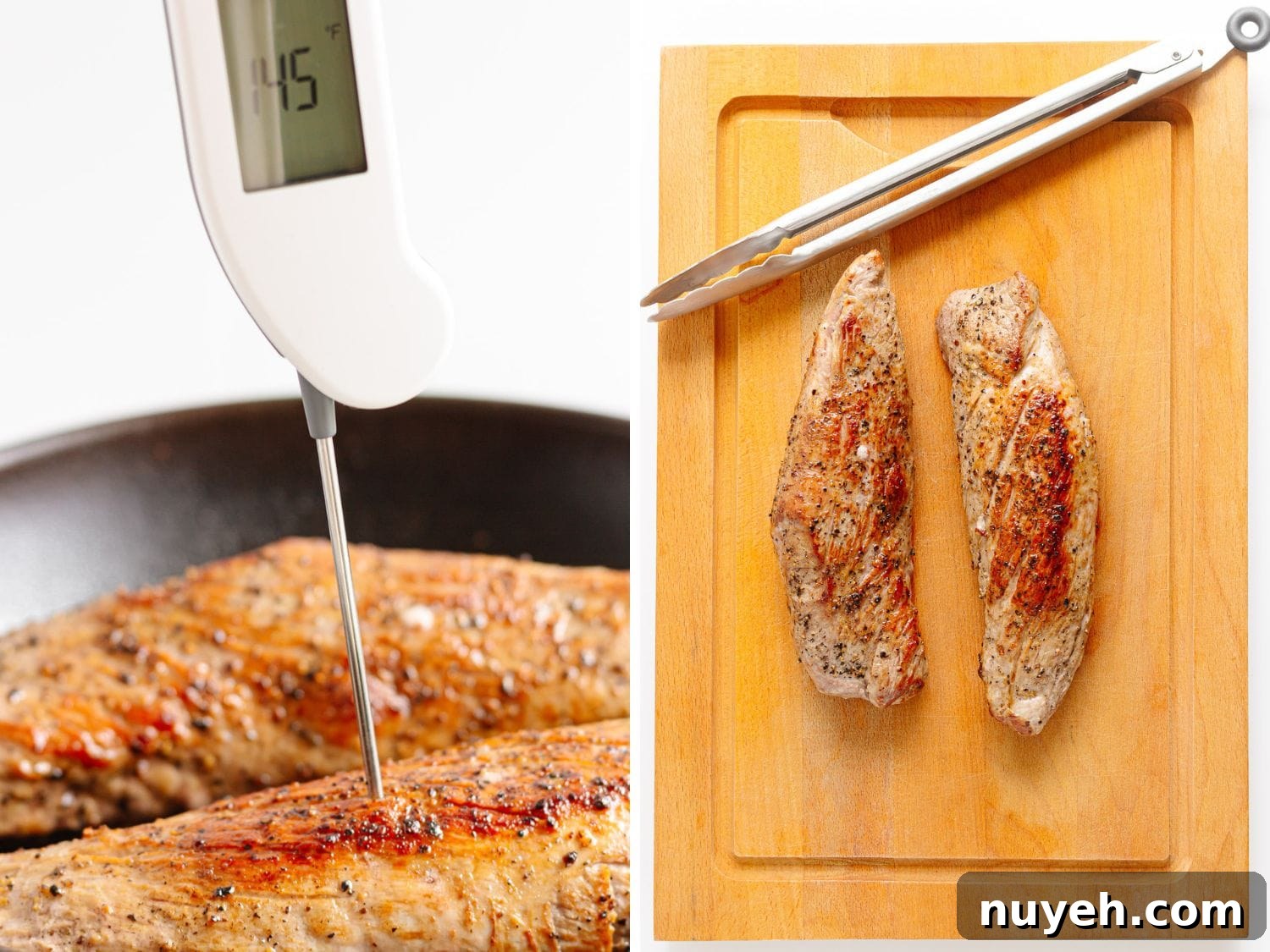
- Digital thermometer: The most reliable way to ensure perfectly cooked pork—aim for an internal temperature of 145°F (63°C).
How To Make Pork Tenderloin With Mustard Sauce
This recipe is straightforward and rewarding—follow the steps below for juicy, flavorful pork and a luscious pan sauce.
STEP 1: Prep the pork tenderloin
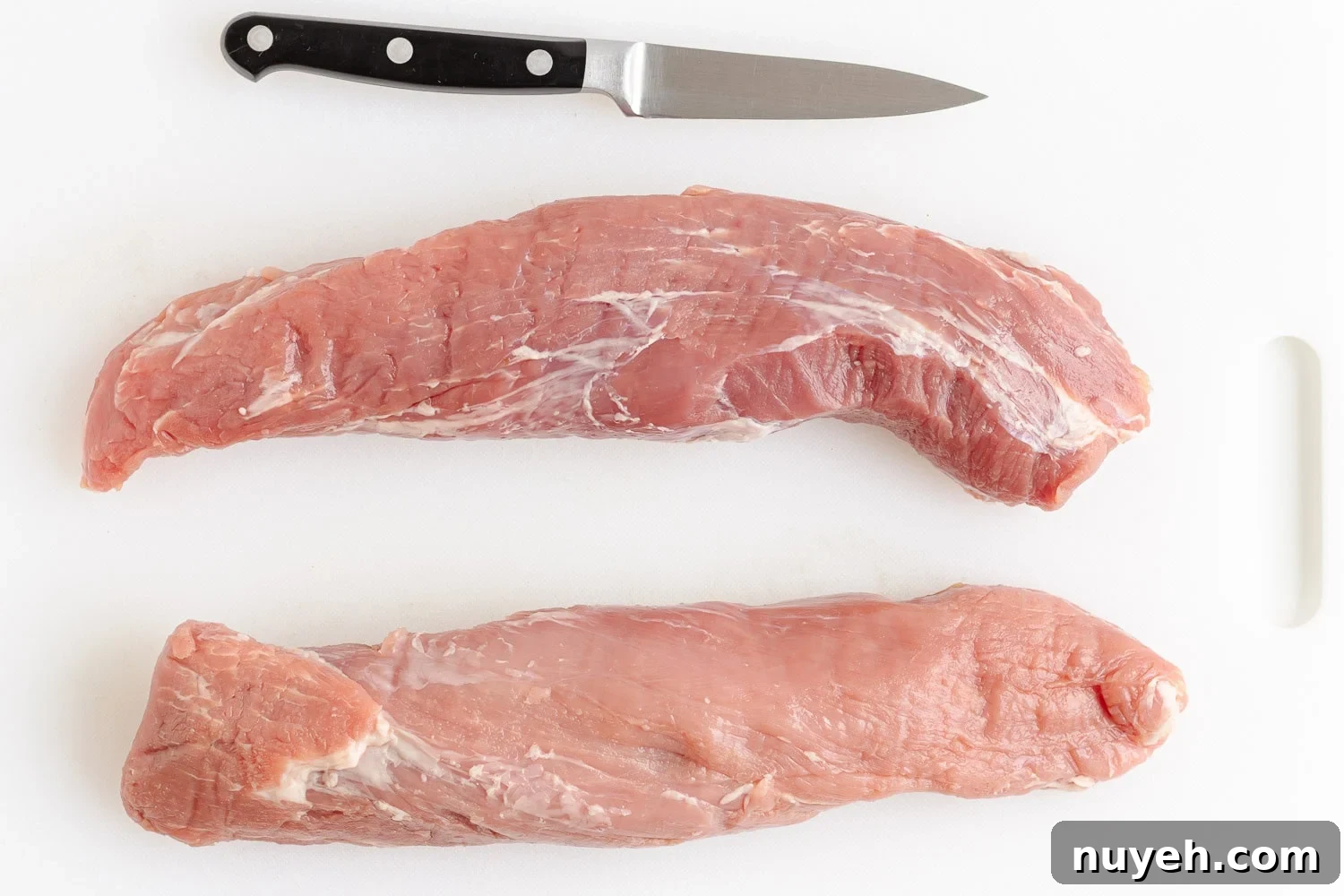
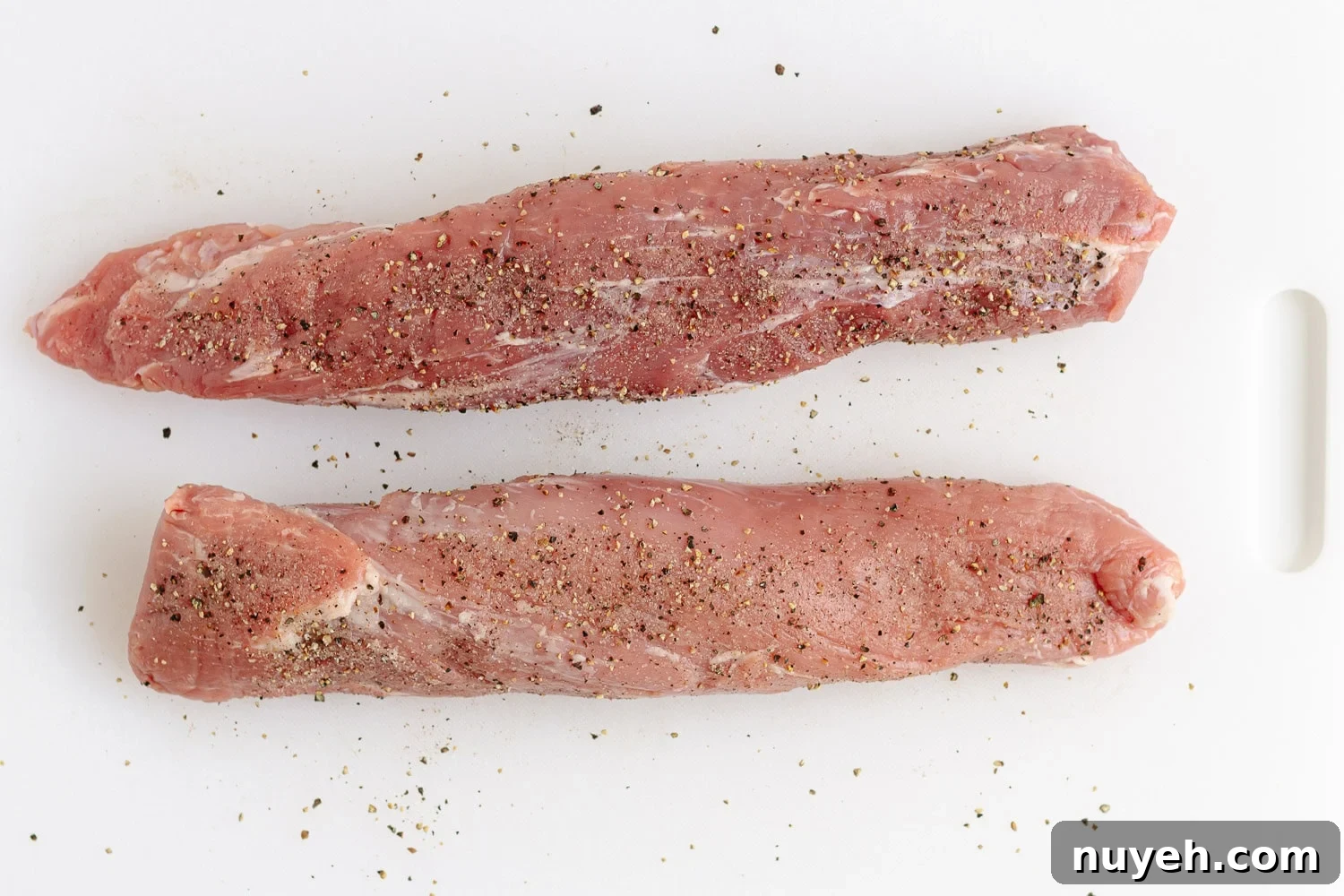
Trim any silver skin and visible fat. Pat the tenderloins dry with paper towels. If the tenderloins are very long, cut them in half so they’re easier to handle in the skillet.
STEP 2: Season the pork
Generously season all sides with salt and freshly ground black pepper.
STEP 3: Sear in a cast iron skillet
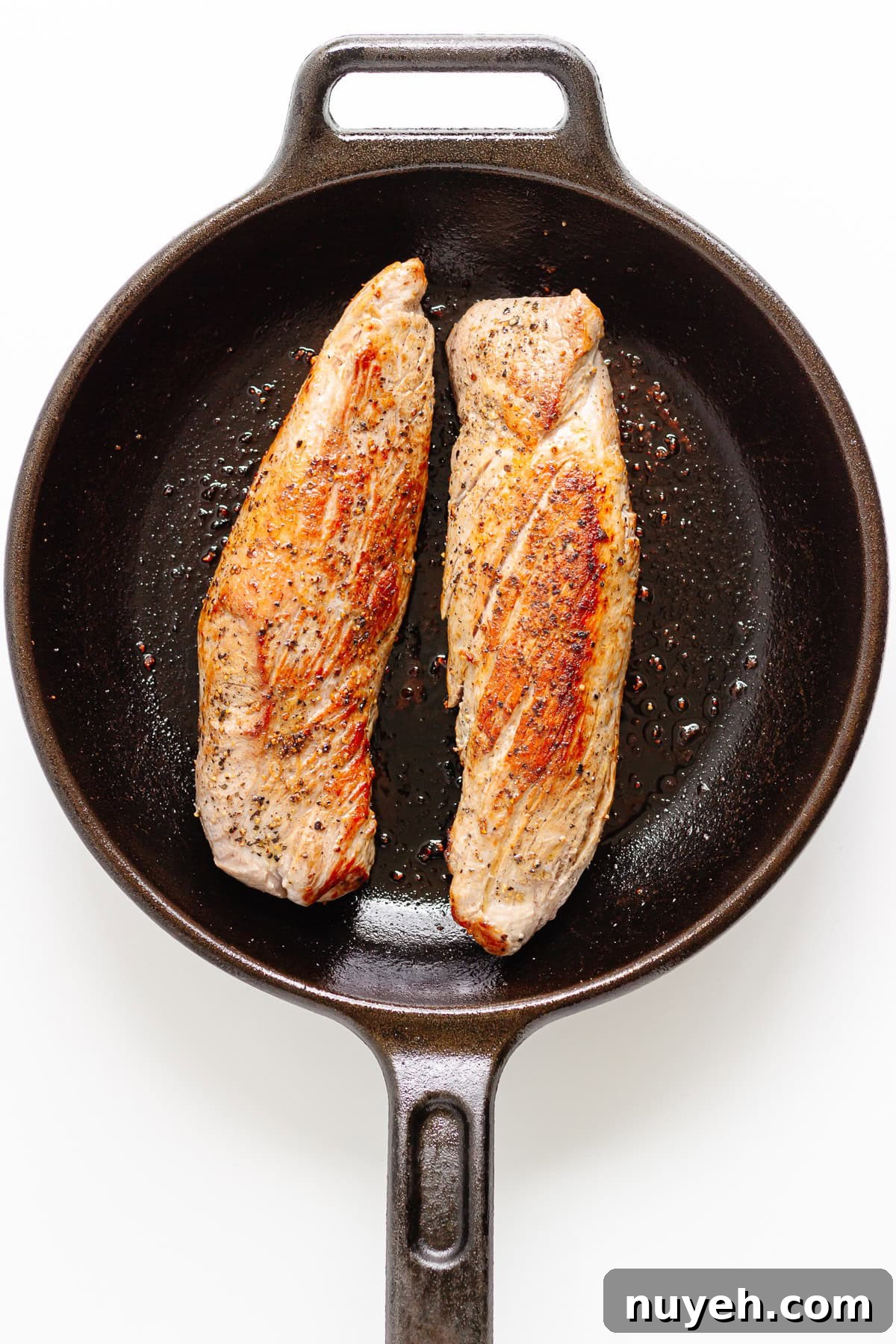
Heat oil over medium-high heat until shimmering. Add the tenderloins and sear until well browned on all sides, about 1–2 minutes per side. Browning builds flavor and gives a nice crust.
STEP 4: Roast in the oven
Transfer the skillet to a preheated 400°F (200°C) oven and roast until the thickest part reaches 145°F (63°C), about 10–20 minutes depending on thickness. Remove the pork to a cutting board and let it rest while you make the sauce.
My Pro Tip
Use a Thermometer
The only reliable way to know the pork is done is to check the internal temperature. Pull the meat at 145°F (63°C) and allow a short rest for carryover cooking; this yields juicy, tender results.
STEP 5: Make the mustard sauce
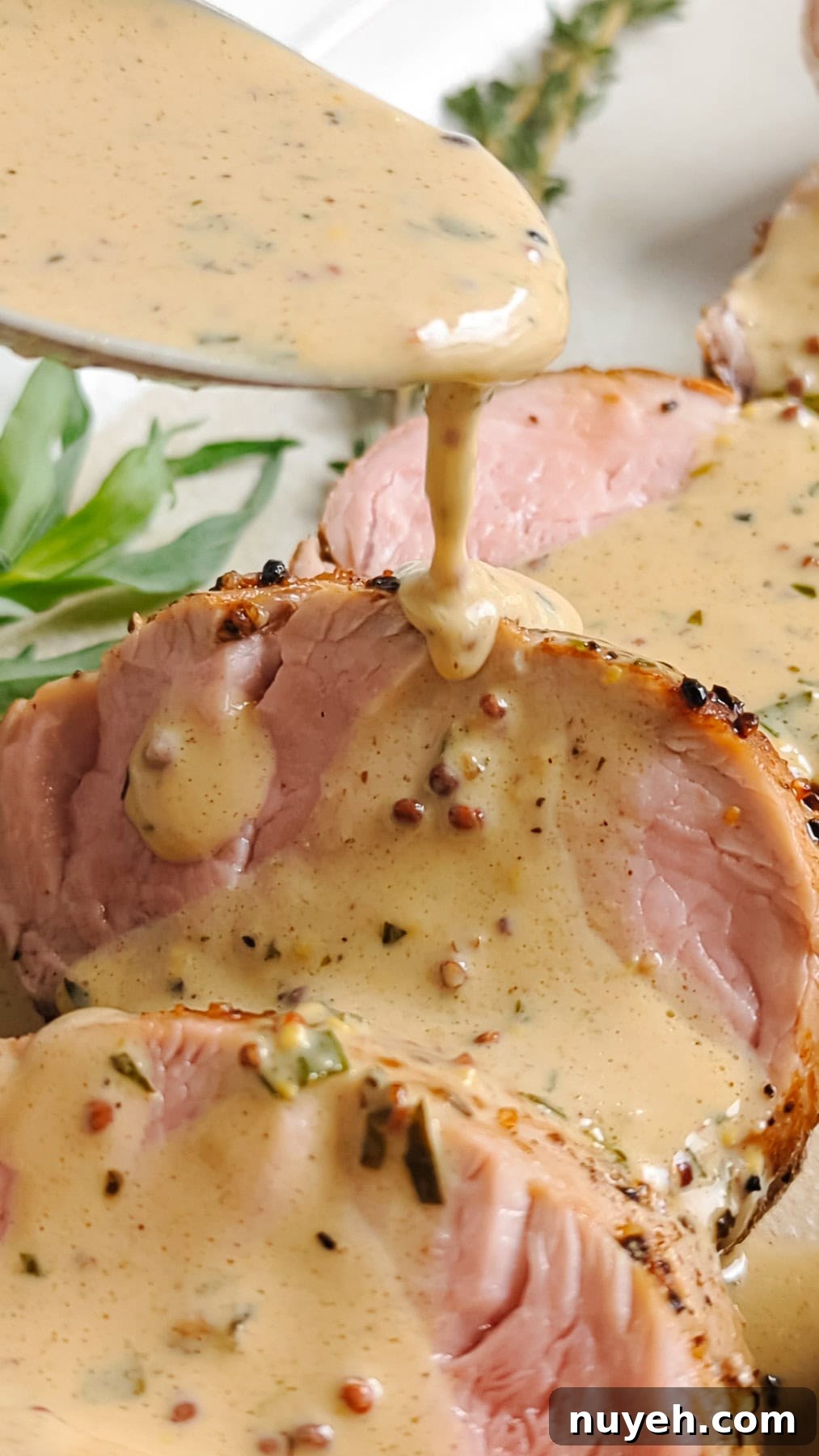
Place the skillet back on the stove over medium heat. Pour in the heavy cream and add Dijon and whole-grain mustard. Scrape up the browned bits from the pan—the fond adds deep flavor. Simmer gently until the sauce thickens slightly. Stir in the chopped fresh herbs and season with salt and pepper to taste. If the sauce becomes too thick as it cools, whisk in a splash of water to loosen it.
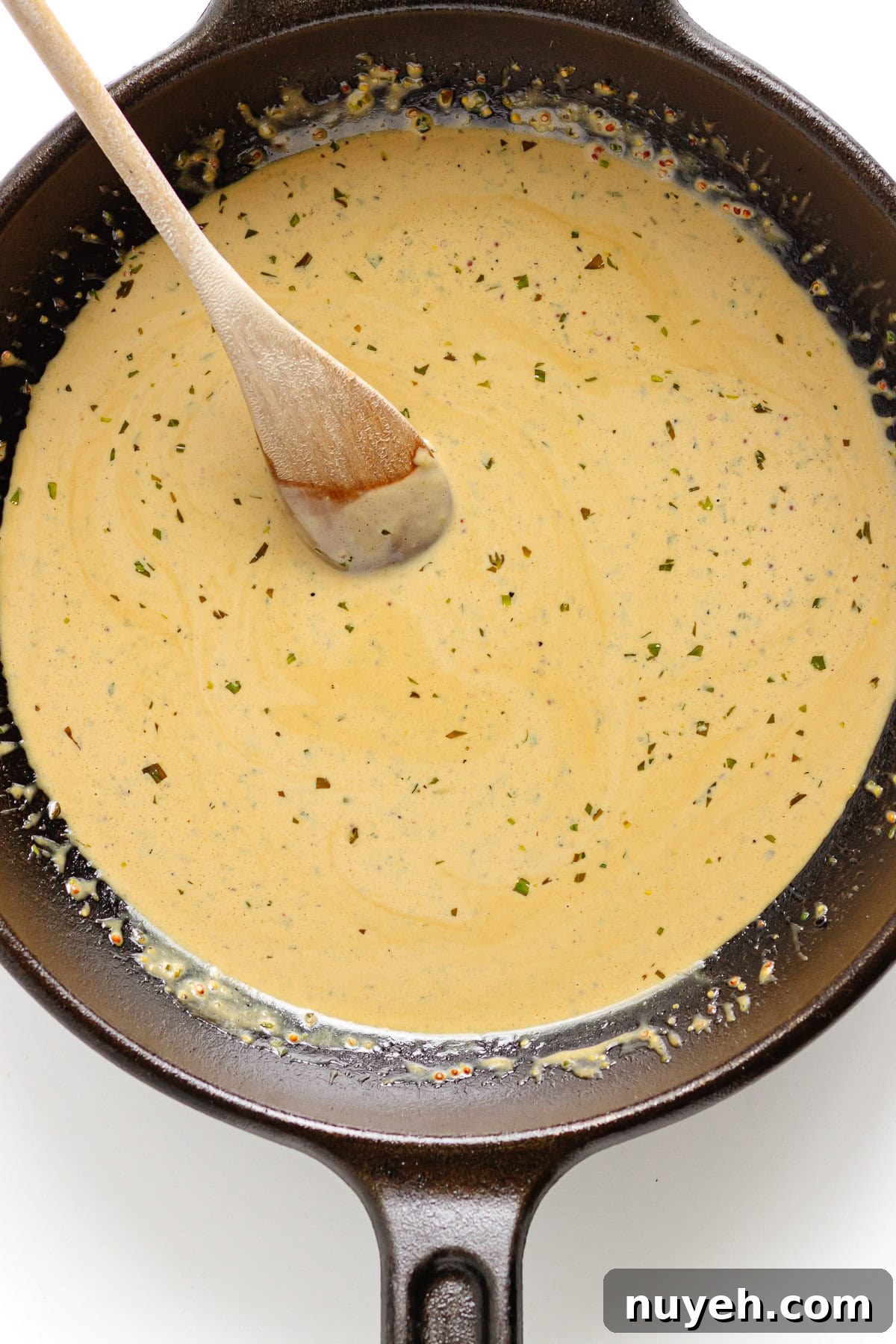
Flavor Tip: Add any resting juices from the cutting board into the sauce for extra richness.
STEP 6: Slice and serve
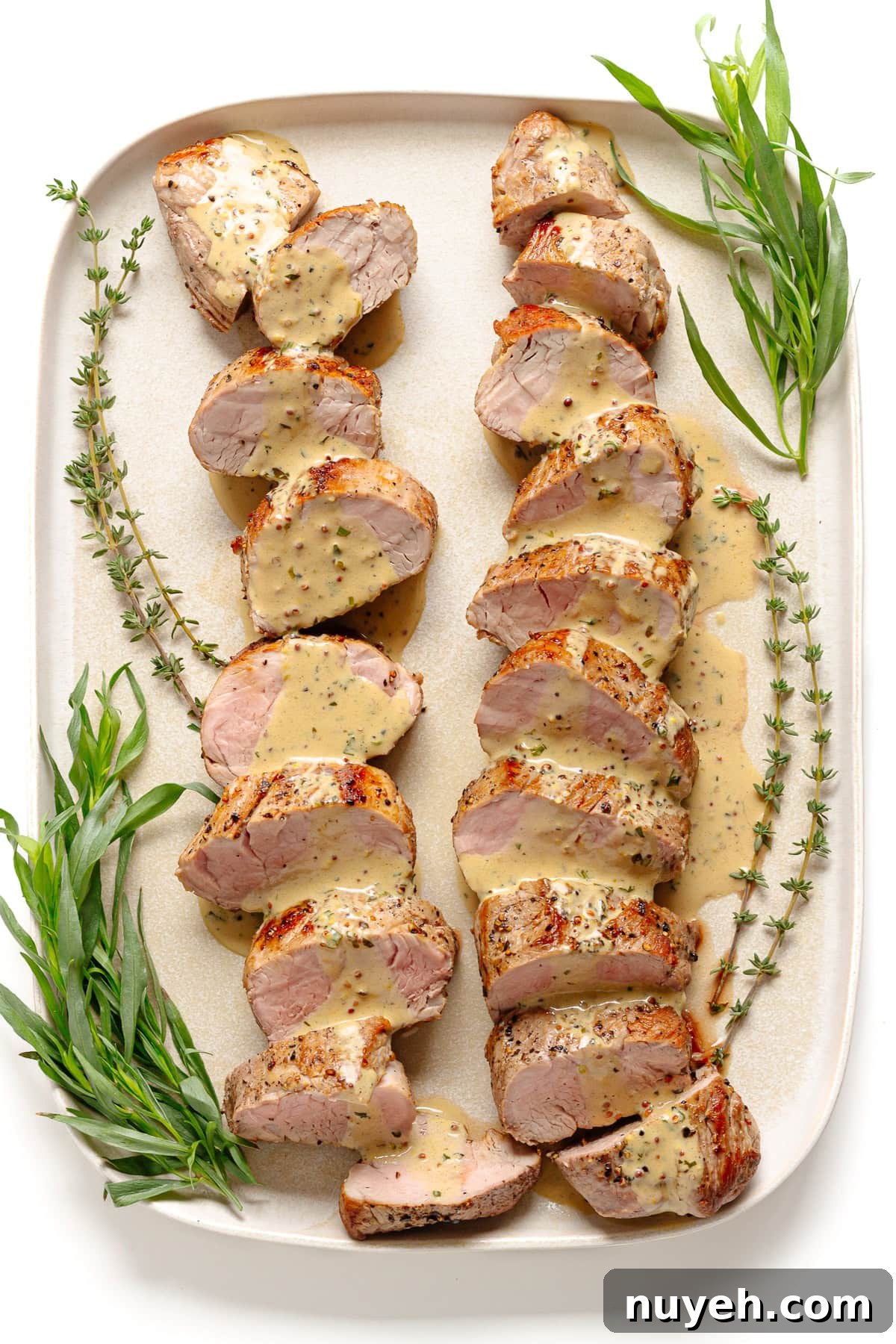
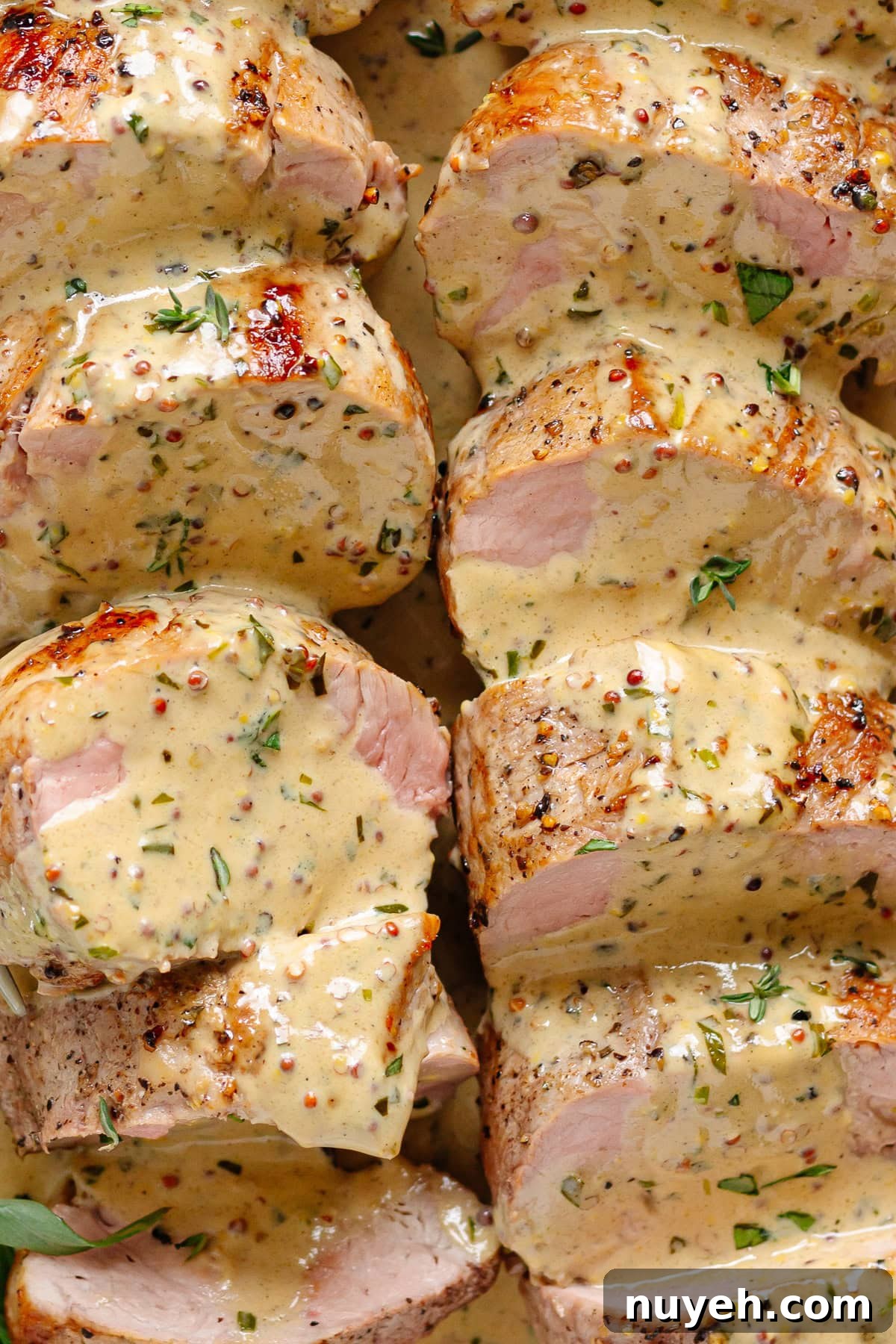
Slice the tenderloin into medallions and spoon the creamy mustard sauce over the top. Garnish with additional herbs if desired.
A Few Tips
Tips For Perfect Pork Tenderloin Every Time
- Bring to room temperature: Let the pork sit at room temperature for 20–30 minutes before cooking for even results.
- Even thickness: Fold or trim tapered ends so the tenderloin cooks evenly.
- Sear in a hot pan: A hot skillet creates a golden crust and flavorful fond for the sauce.
- Don’t overcook: Aim for 145°F internal temperature to avoid dryness.
- Let it rest: Rest the meat 5–10 minutes before slicing so the juices redistribute.
Storage
- To store: Keep leftovers in an airtight container in the refrigerator for 3–4 days.
- To freeze: Freeze cooked pork tenderloin in a freezer-safe container for up to 3 months. The mustard cream sauce is best made fresh; it does not freeze as well.
FAQ
Cast iron retains heat well, helping to build a good sear and then transfer to the oven for even roasting. It also makes it easy to create the pan sauce with the browned bits left behind.
Why sear the pork before roasting?
Searing creates a flavorful crust and helps lock in juices. The browned bits also add depth to the sauce. Combining searing and roasting gives a well-browned exterior and a tender, evenly cooked center.
What to serve with it?
This pork pairs beautifully with mashed potatoes, rice, roasted or steamed vegetables (such as asparagus, green beans, or broccoli), and a simple green salad.
Can I use a different cut of pork?
You can, but cooking time and method may change. Roast until the center reaches 145°F (63°C).
How do I know when the pork is perfectly cooked?
Use a meat thermometer. The safe and ideal internal temperature for pork tenderloin is 145°F (63°C).
More Pork Recipes
Here are a few additional pork dishes to try:

Pork Tenderloin with Mushroom Sauce

Grilled Bratwurst (How To Grill Brats)

Schinkennudeln (Ham and Egg Pasta)
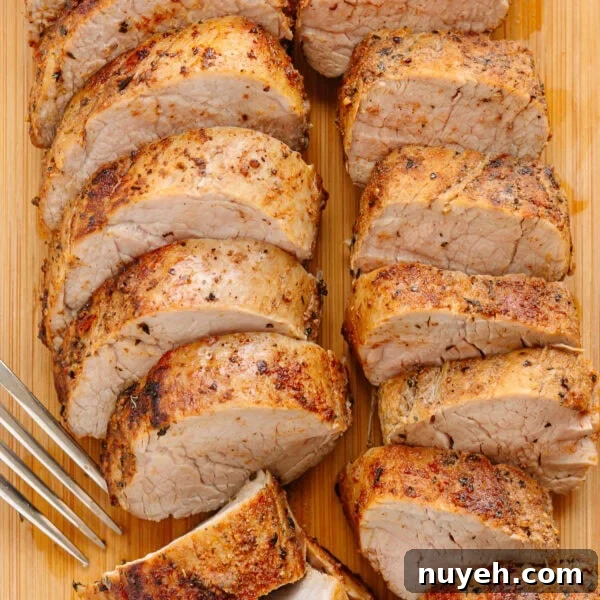
Cast Iron Pork Tenderloin
Would you try this pork tenderloin with mustard sauce? If you make it, please share a comment or a photo — I’d love to hear how it turned out.
Pork Tenderloin With Mustard Sauce
- Author: Vanessa Gilic
- Prep Time: 10 min
- Cook Time: 30 min
- Total Time: 40 min
- Yield: 6 servings
- Category: Main Dish
- Method: Cast Iron Skillet
- Cuisine: American, French
Description
This pork tenderloin with mustard sauce is tender, juicy, and finished with a velvety cream sauce flavored by Dijon and whole-grain mustards plus fresh herbs. It’s quick to prepare and makes a memorable main course.
Ingredients
For the pork tenderloin:
- 2 pork tenderloins (about 1 lb / 500 g each)
- 1 teaspoon salt
- 1 teaspoon freshly ground black pepper
- 2 tablespoons high-heat oil (avocado or similar)
For the mustard sauce:
- 1 cup heavy cream
- 2 tablespoons Dijon mustard
- 1 tablespoon whole-grain mustard
- 1 tablespoon finely chopped fresh herbs (tarragon, thyme, chives, or parsley)
- 1/2 teaspoon salt, or to taste
- 1/2 teaspoon freshly ground black pepper
Instructions
- Prep: Preheat the oven to 400°F (200°C). Trim silver skin and pat the tenderloins dry.
- Season: Season the pork evenly with salt and pepper.
- Sear: Heat oil in a large cast iron skillet over medium-high heat. Sear the pork until browned on all sides, about 2 minutes per side.
- Roast: Transfer the skillet to the oven and roast until the thickest part reaches 145°F (63°C), about 10–20 minutes. Remove to a cutting board to rest.
- Make sauce: Return the skillet to the stove over medium heat. Add cream and both mustards, scraping up browned bits. Simmer until slightly thickened, then stir in herbs and season to taste. If too thick, thin with a little water.
- Slice and serve: Slice the pork and drizzle the mustard cream sauce over the top.
Notes
- Herb options: Tarragon adds a classic flavor; thyme, parsley, or chives also work.
- Roasting time: Use a thermometer for accuracy—thickness and oven differences affect timing.
- Skillet choice: Cast iron is preferred for searing and oven use, but an oven-safe stainless steel skillet is an acceptable substitute.