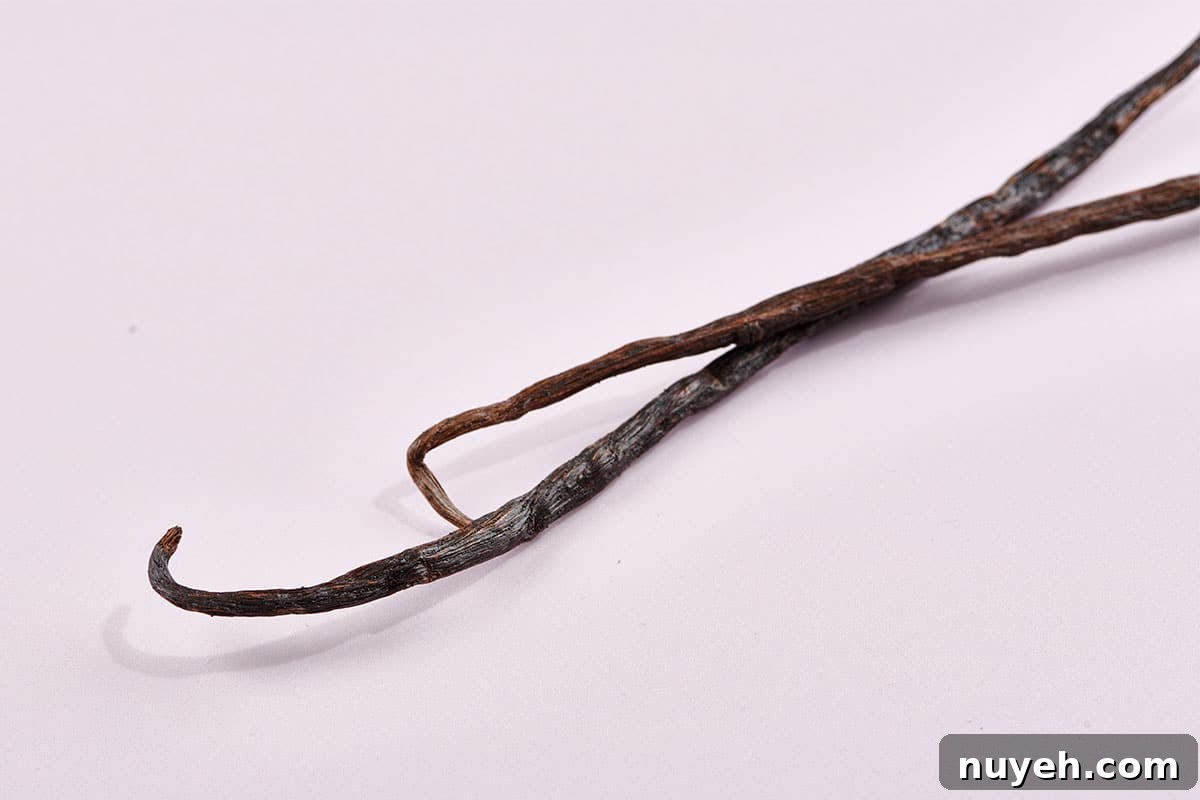
Vanilla beans can seem a little intimidating until you actually use one. Once you do, you’ll wonder why you waited so long. They’re not fussy or difficult — they’re simply the purest expression of vanilla: deep, fragrant, and remarkably versatile. When you know what they add and how to work with them, you’ll reach for beans more often than you expect.
Below is a complete guide to understanding, preparing, storing, and using vanilla beans in the kitchen.
- What Is a Vanilla Bean?
- Vanilla Bean vs. Vanilla Extract — What’s the Difference?
- How to Prepare a Vanilla Bean
- Tips for Buying and Storing Vanilla Beans
- What to Make With Vanilla Beans
- How to Scrape a Vanilla Bean (Recipe)
- More Cooking Tips
What Is a Vanilla Bean?
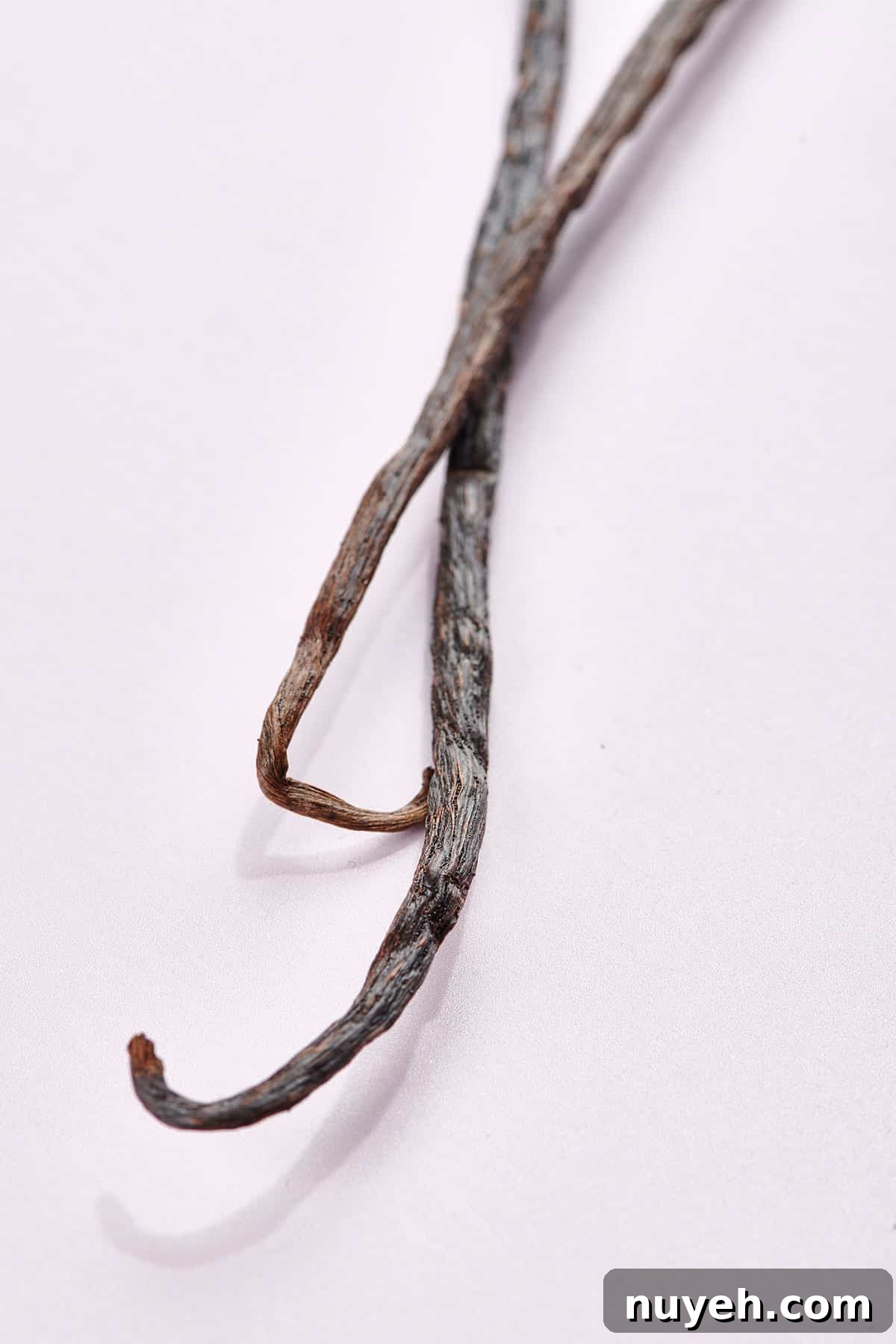
A vanilla bean is the seed pod of the vanilla orchid. From the outside it looks long, dark, and slightly wrinkled — not especially exciting — but inside are thousands of tiny black seeds bursting with aroma. Those tiny seeds and the pod’s oils deliver a level of flavor and complexity that a bottle of extract can only approximate.
Good vanilla beans are pliable, slightly oily, and highly fragrant. If a bean feels stiff and dry it’s past its peak; a soft, aromatic pod is a sign you’re about to add something special to your recipe.
Vanilla Bean vs. Vanilla Extract — What’s the Difference?
Vanilla extract is made by steeping beans in alcohol to pull out the soluble flavor compounds. It’s convenient, reliable, and a great pantry staple. But a whole vanilla bean delivers the full spectrum of vanilla character: richer, more floral, and more nuanced. The tiny black seeds are also attractive in finished dishes and provide concentrated bursts of flavor with every bite.
There’s a visual payoff, too: those specks of vanilla in custards, creams, or frostings signal quality and care, and they make desserts look and taste like something special.
Which Type of Vanilla to Use

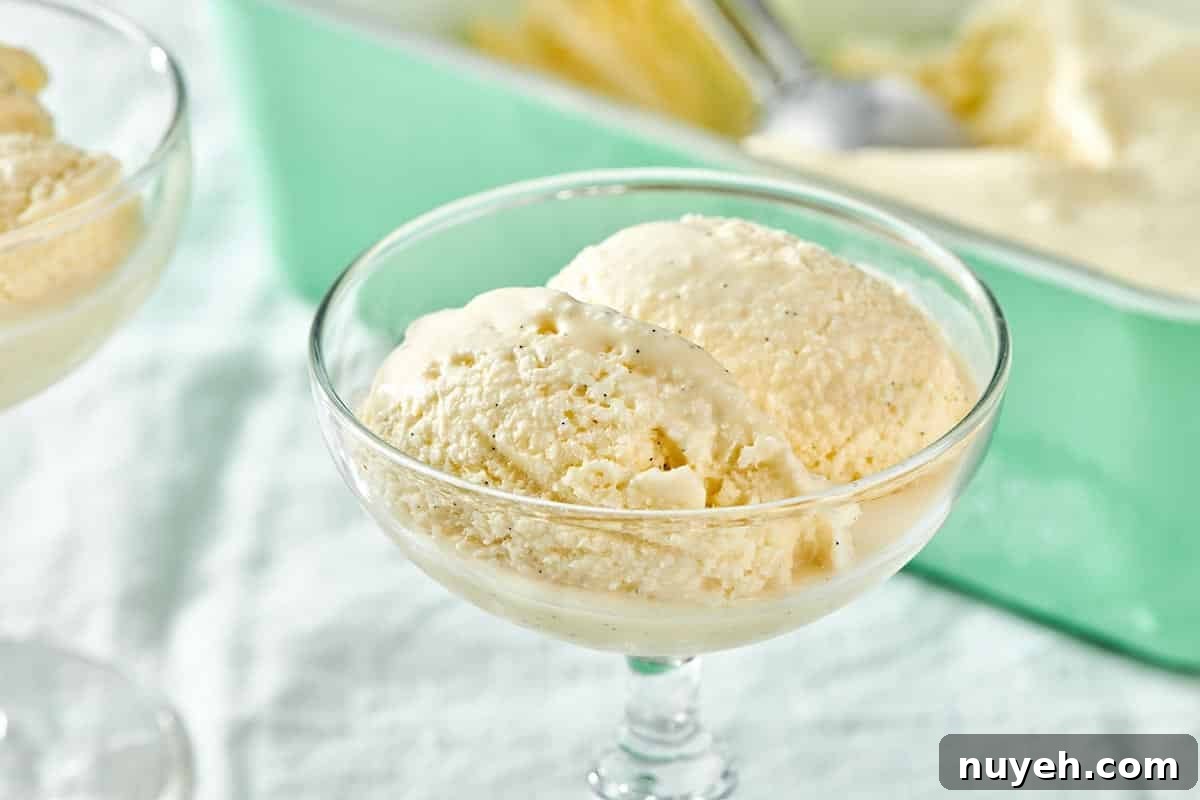
Use a whole bean when: The vanilla is the star — custards, ice cream, crème brûlée, panna cotta, pastry creams, simple syrups, or any infusion where the vanilla should be pronounced and visible.
Use extract when: The vanilla is a background note — cookies, quick breads, and most cake batters, where the flavor blends into a broader profile and the visual specks aren’t important.
How to Prepare a Vanilla Bean
Preparing a vanilla bean is simple and quick. It takes about a minute and requires only a sharp paring knife and a cutting board.
- Lay the bean flat on the cutting board. Hold one end steady with your non-dominant hand. The bean will naturally curl; let it rest comfortably.
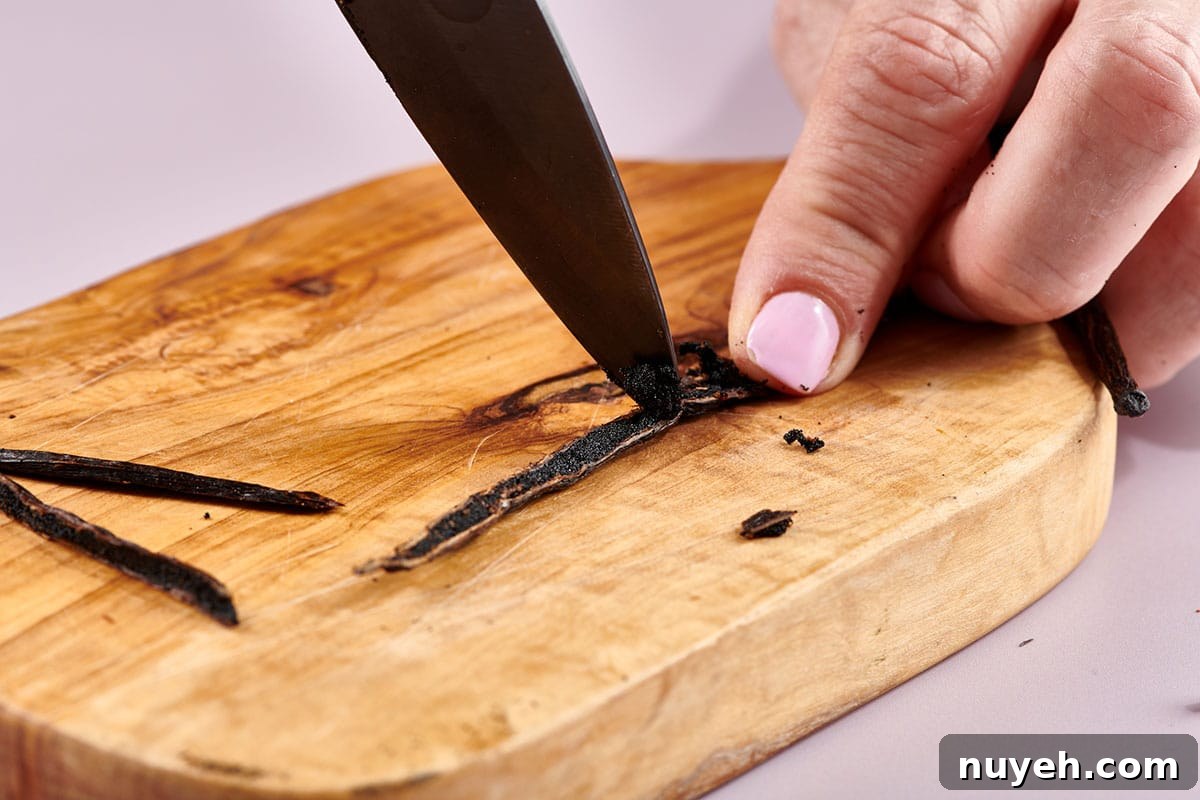
- Make a lengthwise slit. Use the tip of a sharp paring knife to slice down the center of the bean from near one tip to the other. You want to open it like a book, not slice it completely in two.
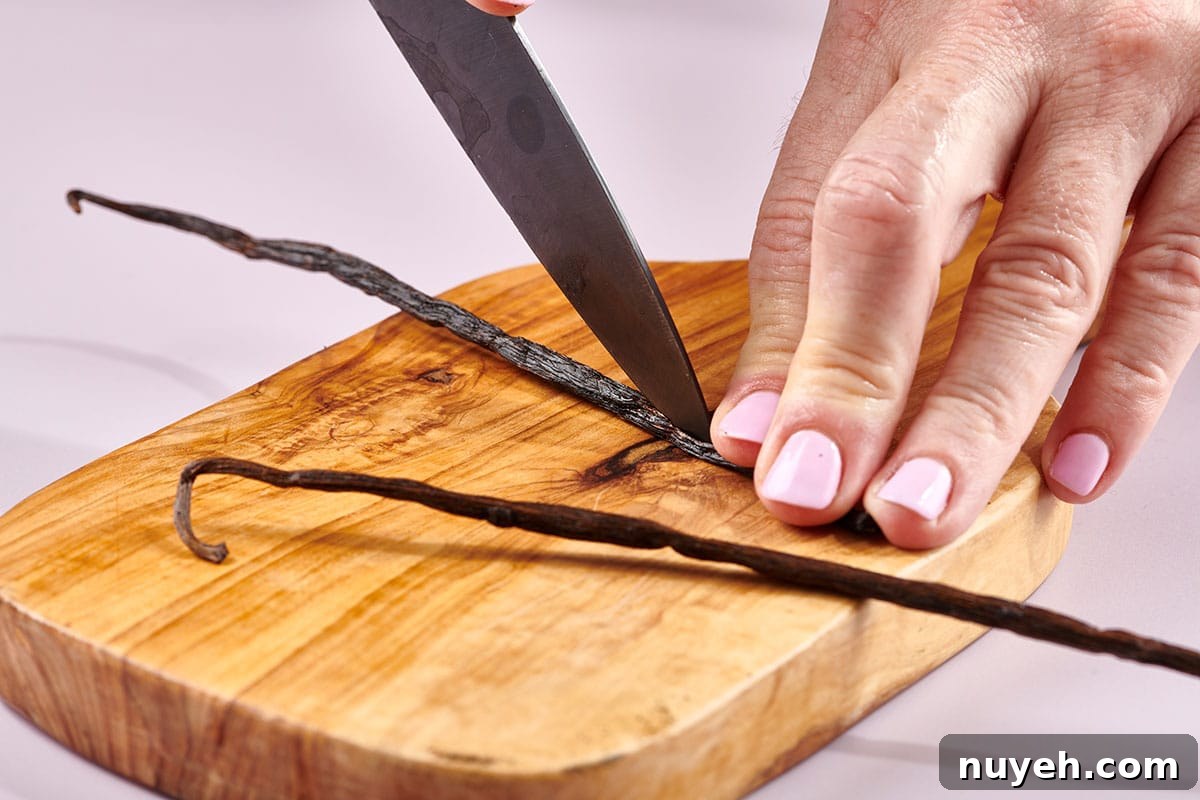
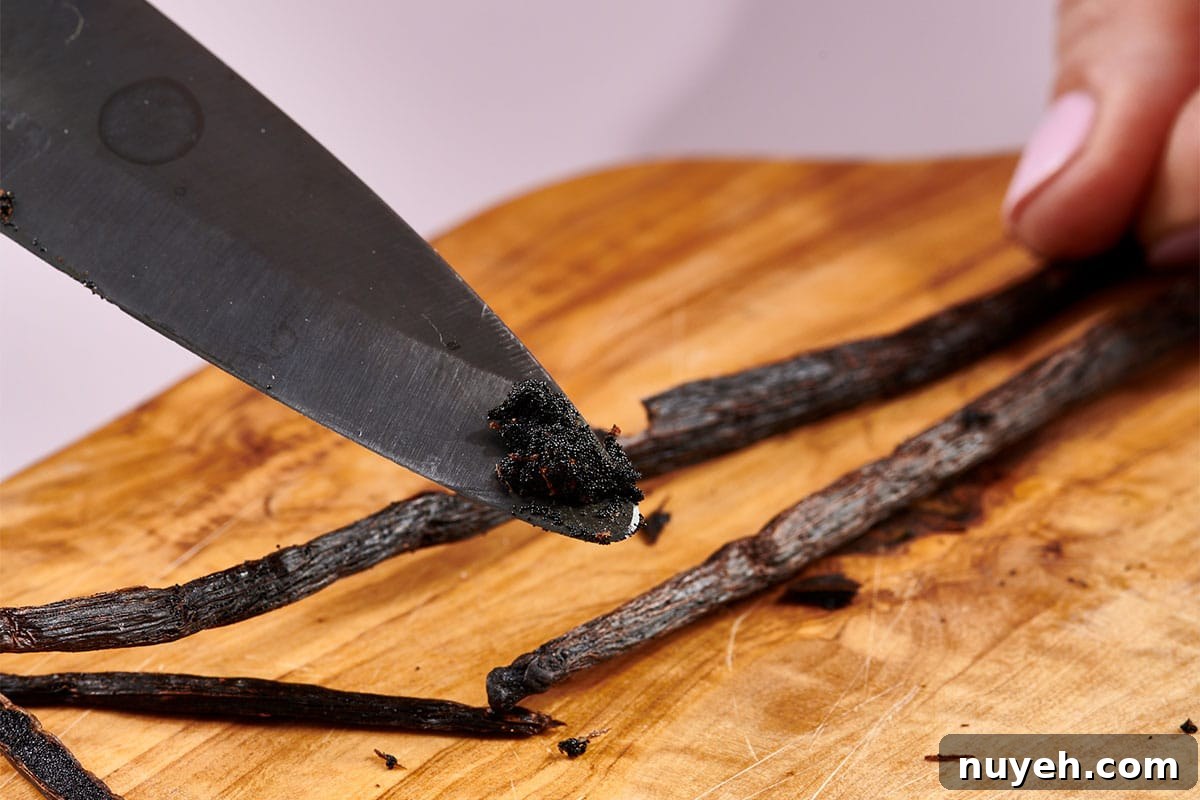
- Scrape the seeds. Hold the split pod open and, using the flat edge or tip of the knife, scrape along the inside of the pod to collect the tiny black seeds on the blade. They form a sticky, fragrant paste.
- Use the seeds and save the pod. Add the seeds to your recipe. Don’t throw away the empty pod — it still has flavor. Put it in sugar to make vanilla sugar or simmer it in milk or cream to infuse custards and sauces.
Tips for Buying and Storing Vanilla Beans
Buy beans from a reliable spice shop or a purveyor known for freshness; avoid small, dried-out pods that are common in inexpensive supermarket jars. Fresh beans don’t have to be prohibitively expensive if you buy small quantities and use them thoughtfully.
Store vanilla beans at room temperature in an airtight container or wrapped in plastic, away from light. Do not refrigerate — cold can dry them out or encourage condensation and mold. Properly stored, they remain usable for months.
If a bean has dried, you can revive it briefly by wrapping it in a damp paper towel for an hour or soaking it in warm water for a short time. It won’t be as potent as a fresh pod, but it will still add valuable flavor.
What to Make With Vanilla Beans
A single scraped vanilla bean elevates many recipes. Here are some of the best uses:
- Vanilla ice cream — classic and transformative when made with real bean seeds.
- Crème brûlée or panna cotta — the suspended seeds are visually appealing and add depth.
- Pastry cream — perfect for tart fillings, éclairs, and cream puffs.
- Whipped cream — scrape half a bean into cream before whipping for an exceptional finish.
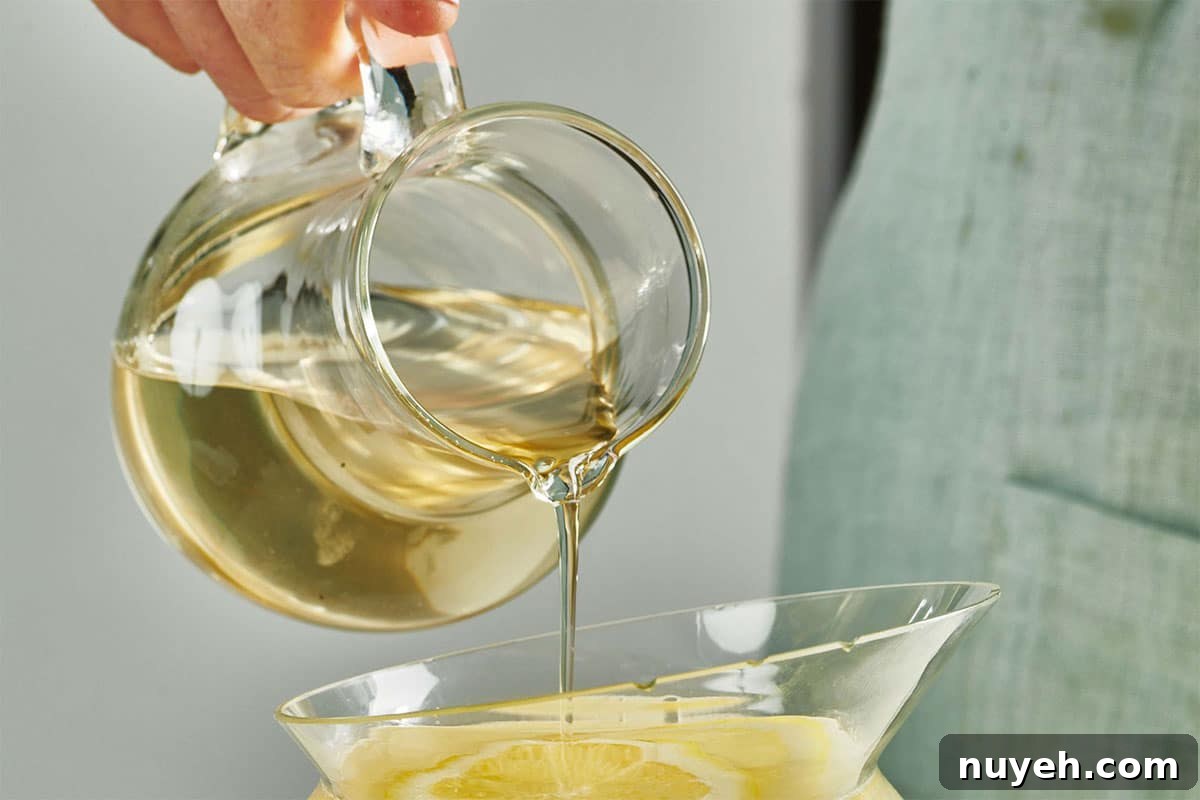
- Simple syrup — simmer a pod with sugar and water to make a vanilla syrup for cocktails, lemonade, or coffee.
Vanilla Sugar
Vanilla sugar is easy to make and delicious. Place an empty scraped pod into a jar of sugar, seal it, and let it sit for one to two weeks. Use that sugar in shortbreads, cookies, cakes, whipped cream, or coffee. If your recipe already calls for vanilla extract, taste and reduce or omit the extract depending on how fragrant your vanilla sugar is.
How to Scrape a Vanilla Bean
Equipment
- Sharp paring knife
- Cutting board
Ingredients
- 1 whole vanilla bean
Instructions
- Place the vanilla bean on a cutting board and hold it flat with your non-dominant hand.
- With the tip of a sharp paring knife, make a lengthwise slit down the center from just below the tip to just above the end. Open it like a book; don’t cut completely through.
- Open the bean and hold it steady. Use the flat edge or tip of the knife to scrape firmly along the interior, collecting the sticky black seeds onto the blade. Repeat on the other half if necessary.
- Scrape the seeds off the knife and add them to your recipe.
- Save the empty pod: tuck it into a jar of sugar to make vanilla sugar, or simmer it in milk or cream to infuse flavor for custards and sauces.
Notes
Yield
The seeds from one vanilla bean are commonly considered roughly equivalent to 1 teaspoon of pure vanilla extract, though many cooks find the bean delivers a deeper, more complex flavor.
Tip
Work slowly and scrape thoroughly — the tiny seeds are sticky and cling to the pod, so making a second pass with the blade is often worth the extra effort.
More Cooking Tips
- Easy Cream of Tartar Substitute
- How to Tell If an Egg Is Bad
- How to Cut Cake Cleanly (Without the Mess)
- What Is Marsala Wine and How to Use It in Cooking?
- Tips for Cooking With Mangosteens