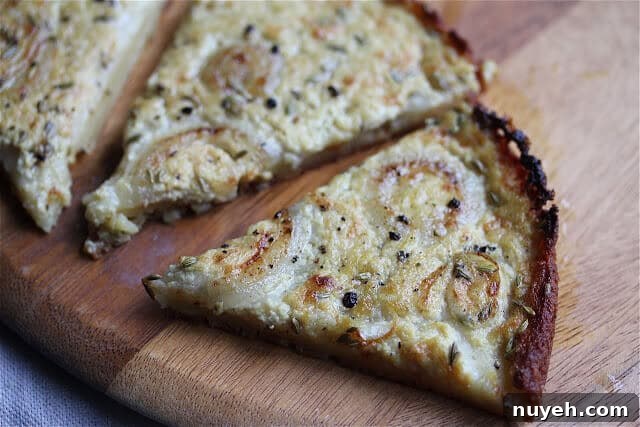
Farinata, Socca or Chickpea Pizza is naturally gluten-free.
When my youngest son was diagnosed with a wheat allergy, I began searching for gluten-free dishes that would feel familiar and comforting. One of those recipes I wanted to try for a long time is a simple, savory flatbread known variously as farinata, socca, cecina or fainá. I often call it Chickpea Pizza because its texture and sliceable form can feel like pizza, even though it contains no tomato sauce or cheese. The traditional version uses just chickpea flour, water and olive oil, but small regional variations add onions, rosemary or fennel for extra flavor.
Recently I followed a recipe adapted from Elizabeth David’s collected writings. David was an influential food writer who popularized Mediterranean cooking in the English-speaking world. Her notes on farinata mention regional styles: in Oneglia the batter is scattered with finely sliced onions before baking, while in Savona it’s sometimes topped with rosemary. She also warns that if the cake is thicker than about 1¼ inches it can become heavy, and she recommends modest seasonings—sometimes a few fennel seeds for fragrance.
I had never used pure chickpea flour before, though I’ve cooked with whole chickpeas many times. Chickpea flour (also known as besan or farina di ceci) is widely available at ethnic grocers and in many supermarkets. For this recipe I bought chickpea flour and kept the ingredient list short: chickpea flour, water, olive oil, a little salt, thinly sliced onion, fennel seeds and freshly ground pepper. The result is fragrant and savory: a crisp, golden exterior with a tender, slightly creamy interior.
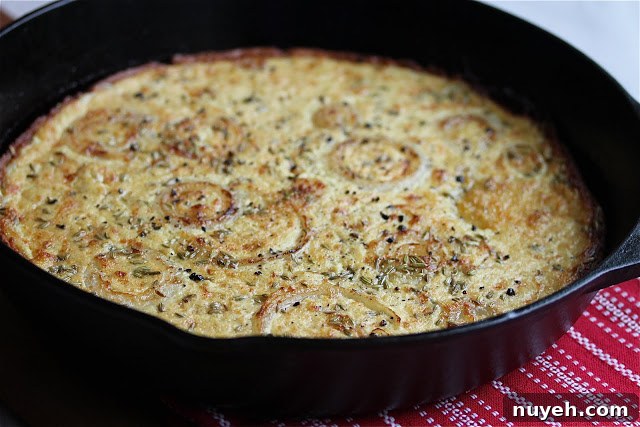
Farinata, Socca or Chickpea Pizza
This version is adapted from Elizabeth David’s notes. I baked the batter in a cast iron pan rather than a shallow earthenware dish. I reduced the salt from the original recipe, and followed the suggestion to add thinly sliced onions and a touch of fennel seed. The finished farinata is crisp along the bottom and edges, with a chewy interior and a creamy top.
Recipe Details
- Course: Side dish / appetizer
- Prep time: 15 minutes
- Cook time: 50 minutes
- Resting time: 4 hours (minimum)
- Total time: about 1 hour 5 minutes plus resting
- Serves: 6
Ingredients
- 1/2 pound (about 225 g) chickpea flour
- 1 1/2 teaspoons salt (adjust to taste)
- 1 1/2 pints water (allow 2–3 tablespoons less if desired)
- 4 tablespoons olive oil, plus extra to coat the pan
- 1/2 onion, very thinly sliced
- 1 1/2 teaspoons fennel seeds
- Freshly ground black pepper
Instructions
- Place the chickpea flour in a bowl. Add the water gradually, stirring well until the mixture is smooth and has the consistency of pancake batter. Stir in the salt. Cover and let the batter rest at room temperature for at least 4 hours or overnight. This resting time improves the texture and flavor.
- When you are ready to bake, preheat the oven to 425°F (220°C). Put enough olive oil in an 11-inch (28 cm) cast iron pan to coat the surface well and place the pan in the oven to warm the oil briefly.
- Stir the rested batter, then pour it into the hot, oiled pan, blending the oil and batter together. Scatter the thinly sliced onions evenly over the surface and sprinkle the fennel seeds on top.
- Bake for about 50 minutes, until the top is golden and a crisp crust forms on the edges and bottom. The center should remain slightly tender.
- Remove from the oven, season with freshly milled black pepper, cut into wedges and serve hot. Farinata is best eaten the day it’s made, while still warm and crisp.
Notes and Tips
- Thickness: Aim for a relatively thin cake under about 1¼ inches to keep the texture light rather than dense.
- Variations: Replace or add rosemary instead of fennel for a different aroma, or omit onions for a plainer version.
- Pan choice: A heavy cast iron pan gives a superior crust, but a shallow baking dish will also work.
- Storage: Leftovers can be refrigerated and gently reheated, though freshly baked farinata has the best texture.
Nutrition (approximate per serving)
Calories: 234 kcal • Fat: 11 g • Carbohydrates: 22 g • Protein: 8 g • Fiber: 4 g • Sodium: 606 mg