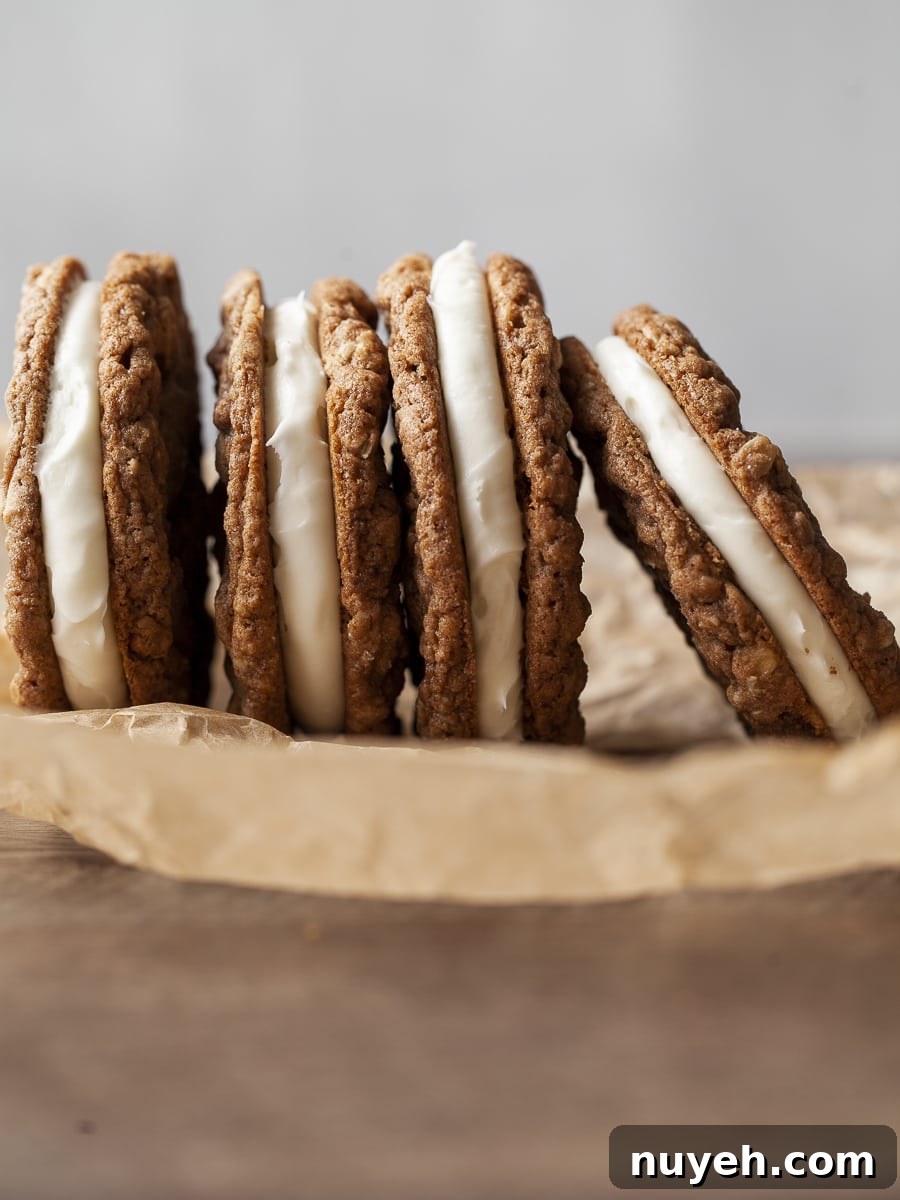
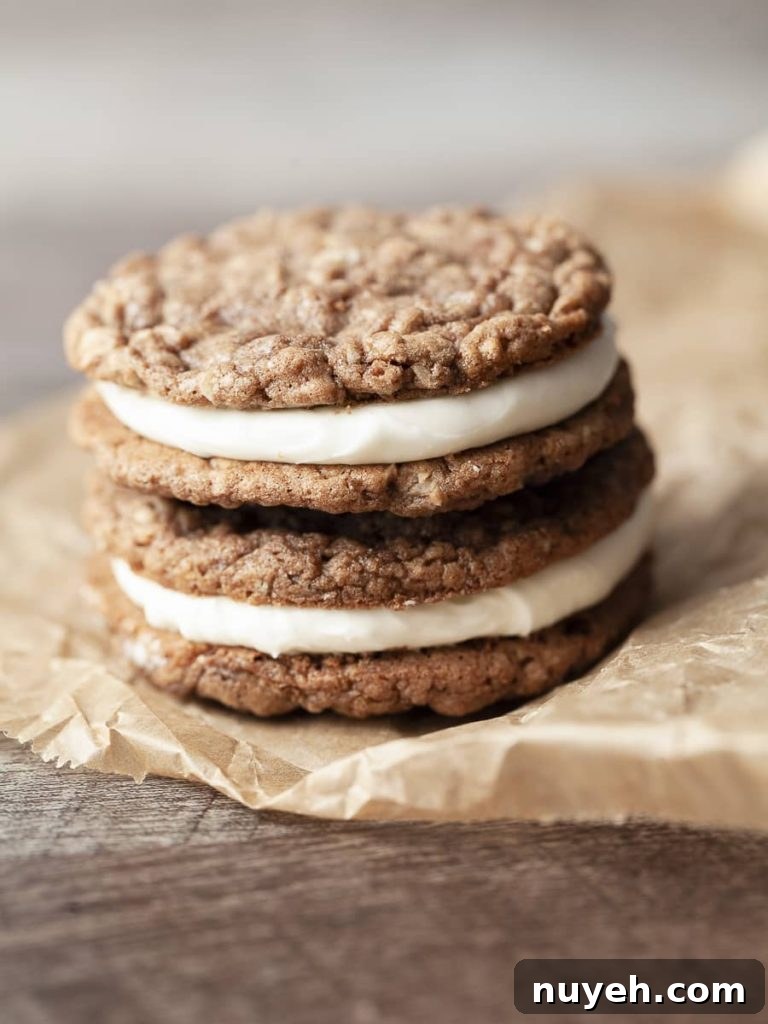
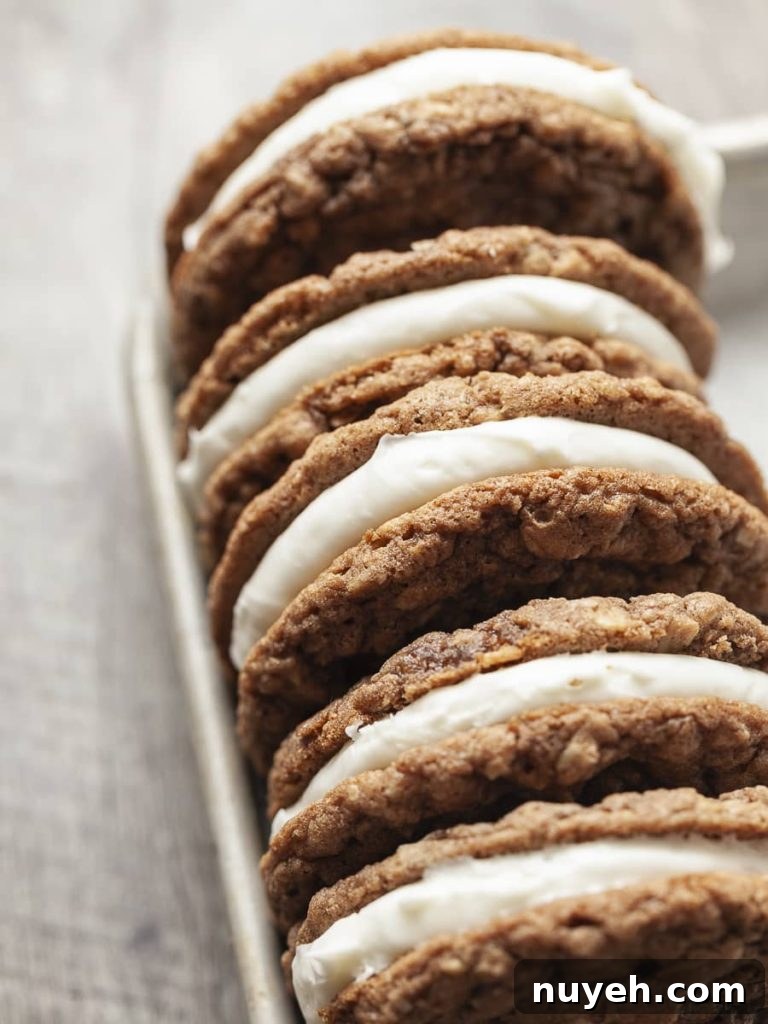
These homemade soft and chewy Gluten Free Oatmeal Cream Pies are classic sandwich cookies reinvented. Tender, slightly chewy oatmeal cookies spiced with cinnamon are paired with a light marshmallow-vanilla buttercream to create a nostalgic treat. These gluten-free oatmeal cream pies may even rival the store-bought versions.
The recipe begins with thin, chewy oatmeal cookies that are hearty and perfectly balanced. The filling combines marshmallow fluff with a butter-and-shortening base for a stable, pillowy frosting that pipes beautifully.
If you enjoy sandwich cookies or variations on filled cookies, try other gluten-free options such as gluten-free chocolate whoopie pies or cheesecake-filled chocolate cookies.
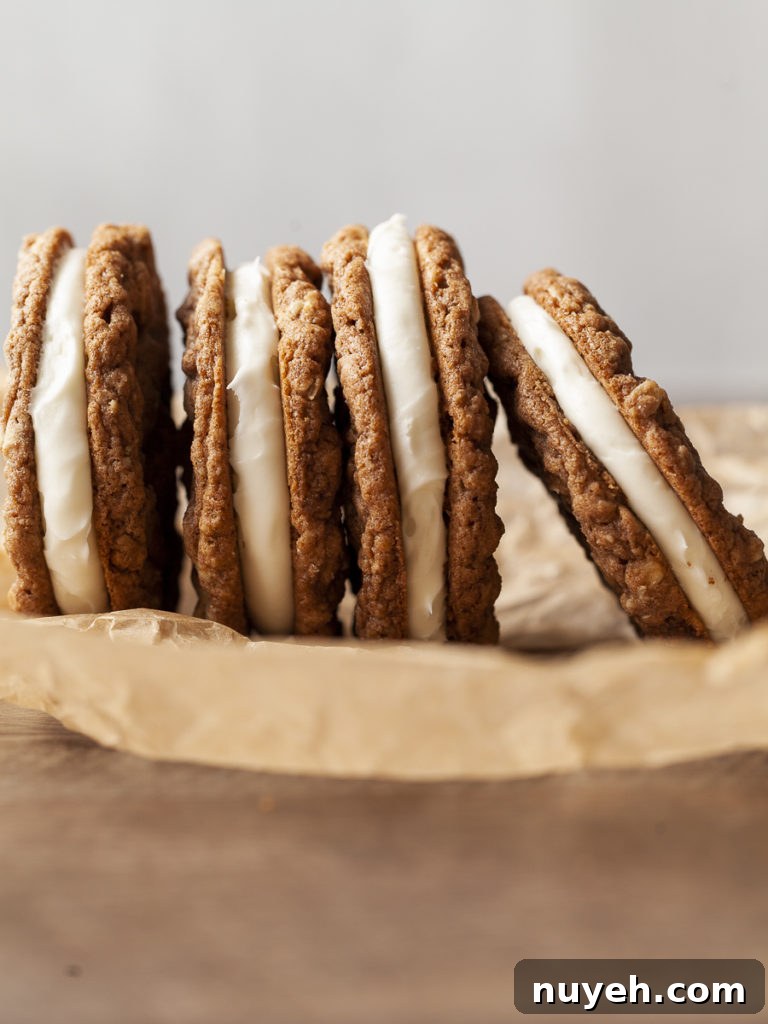
Recipe Ingredient Notes
Gluten-Free Flour: Use a reliable multi-purpose gluten-free flour blend. Blends vary: some are formulated to mimic wheat flour closely and will produce a thinner, more spread cookie, while others are denser and yield a thicker cookie. Adjust expectations based on your blend.
Old-Fashioned Oats: This recipe uses old-fashioned (rolled) oats for texture. If you use gluten-free quick oats, skip the step that calls for pulsing the oats in a food processor; quick oats break down faster and can become too fine if processed.
Important about oats: Oats are naturally gluten free but are often processed near wheat. If you need a strict gluten-free diet, buy certified gluten-free oats.
Cocoa Powder: A small amount of Dutch-processed unsweetened cocoa deepens the cookie color and adds subtle flavor.
Marshmallow Fluff/Creme: Both marshmallow cream and marshmallow fluff work well for the filling; choose the one you prefer.
Shortening: Vegetable shortening gives the filling a stable, pipeable texture. If you prefer, you can substitute all butter, but the filling may be softer and less stable at room temperature.
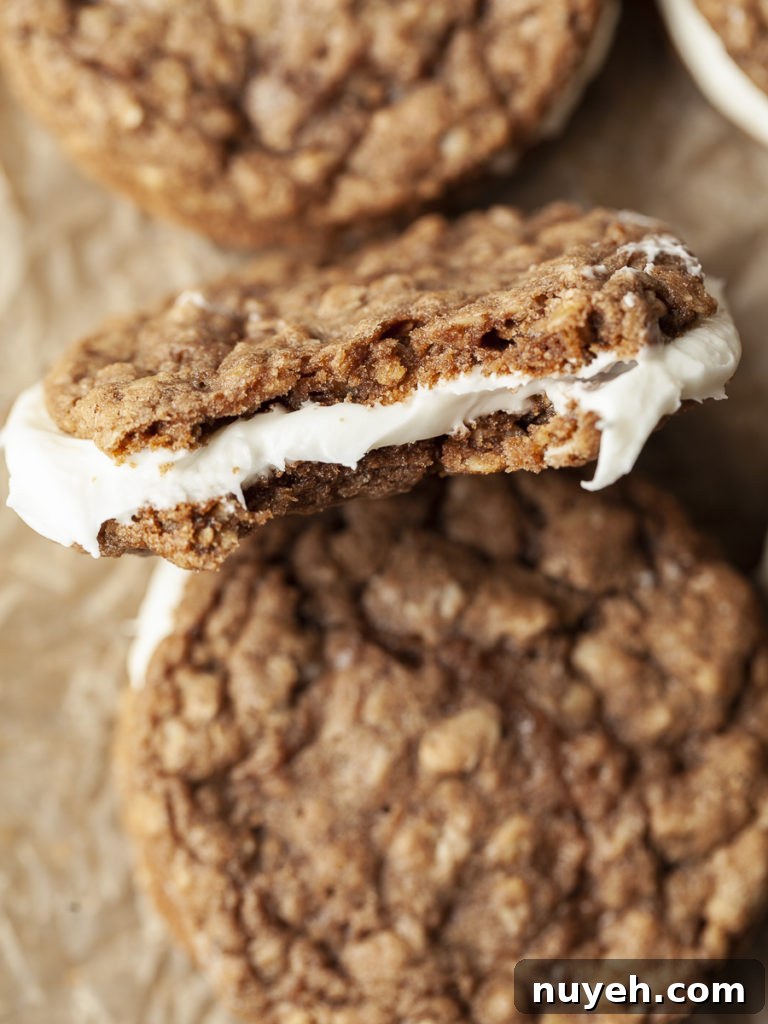
Thin and Chewy Gluten Free Oatmeal Cookies
The dough is straightforward. If you choose to brown the butter for a nutty note, add 1 tablespoon of water to the dough later to compensate for moisture loss in browning. The dough should rest in the refrigerator for 30–45 minutes to hydrate the oats and make scooping easier. If preparing ahead, scoop portions before chilling — chilled dough can become firm and difficult to portion.
- In a medium saucepan, melt the butter. Transfer it to a mixing bowl and let it cool for 5–10 minutes.
- Place the old-fashioned oats in a food processor and pulse 5–10 times to break them up slightly. They should be broken but not ground to flour. If using quick oats, skip pulsing.
- In a small bowl, sift together the gluten-free flour blend, cocoa powder, baking powder, baking soda, kosher salt, ground cinnamon, and ground cloves (optional).
- Add the brown sugar to the cooled melted butter and whisk at medium speed until light and fluffy, about 2–3 minutes.
- Turn off the mixer and scrape down the bowl. Add the egg and mix until fully combined.
- Slowly add the sifted dry ingredients to the wet ingredients and mix just until combined. Fold in the pulsed oats until evenly incorporated.
- Transfer the dough to an airtight container and refrigerate for at least 30–45 minutes to rest and hydrate.
- After chilling, preheat the oven to 350°F (175°C) and line a baking sheet with parchment paper. Use a medium cookie scoop (about 1 tablespoon) to portion the dough; the recipe yields approximately 16–18 cookies.
- Place up to nine dough balls on a baking sheet, leaving room to spread. Bake for 10–11 minutes; remove when the cookies still look slightly underbaked so they remain soft as they cool.
- Use a round cookie cutter slightly larger than the baked cookie to nudge each cookie into a neat circle while still warm. Cool 5–10 minutes on the pan, then transfer to a wire rack to finish cooling.
- Repeat with the remaining dough and allow all cookies to cool completely before filling.
- Important: Make sure the cookies are fully cool before sandwiching to prevent the filling from melting.
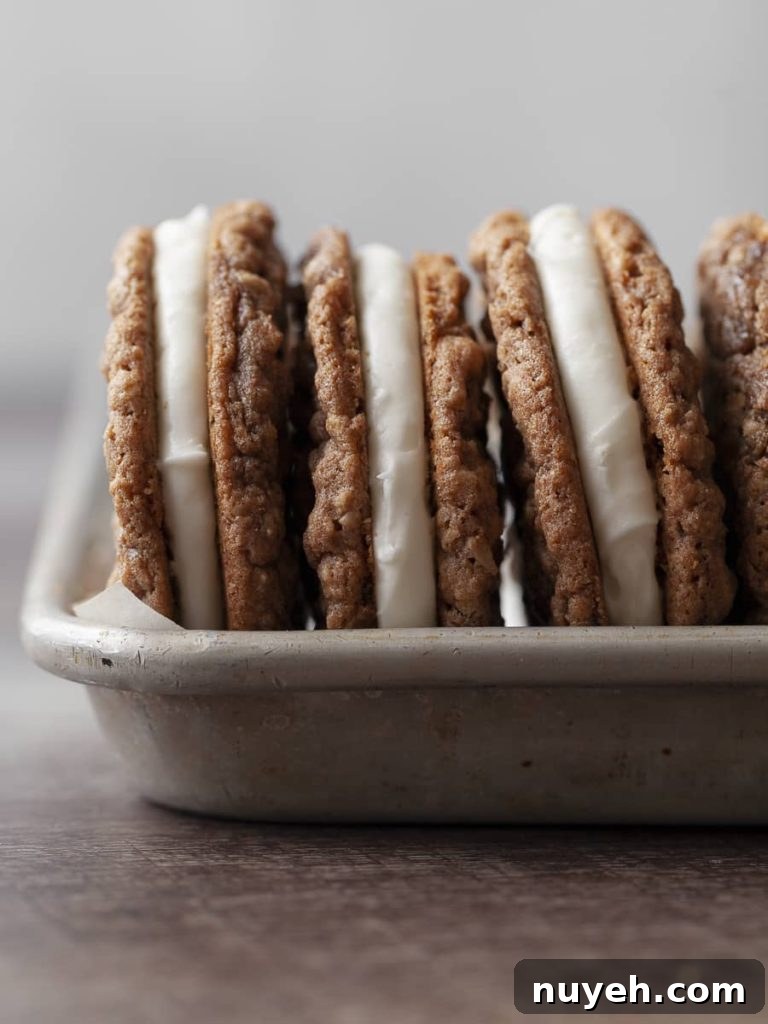
How to sandwich cookies
Fit a piping bag with a star tip for a decorative finish, or use a small scoop or offset knife to spread the filling. Arrange half the cookies flat-side up on parchment. Pipe or spoon filling onto each, leaving about 1/4 inch space around the edge, then top with a second cookie and press gently to seal without squeezing filling out.
You can eat them immediately or refrigerate for 15–20 minutes to set the filling for a tidier sandwich. Store the cookies in an airtight container in the refrigerator for up to five days, or wrap individually and freeze for up to three months. Thaw at room temperature before serving; do not microwave.
These homemade oatmeal cream pies are perfect in lunchboxes and as an afternoon treat.
FAQ for Gluten Free Oatmeal Cream Pies
Can this recipe be made vegan?
It can be adapted to be dairy-free by using plant-based butter. The egg has not been extensively tested in vegan form, but a flax egg (1 tablespoon ground flaxseed mixed with 2½ tablespoons water) can often replace one egg in cookie recipes. Results may vary.
Can I freeze the assembled cookies?
Yes. Wrap each sandwich individually in plastic wrap and place in an airtight container or freezer bag. Thaw at room temperature when ready to enjoy. Avoid microwaving frozen sandwiches.
Why are my cookies crispy?
Overbaking causes a crispy, hard texture. Remove the cookies when they still appear slightly underbaked; they will finish setting as they cool for a soft, chewy result.
What about leftover filling?
Store leftover marshmallow filling in the refrigerator for up to seven days or freeze for longer storage. Thaw and re-whip for a few minutes before using. The filling also works well in cupcake centers or as a frosting on other cakes.
Note about Salt in my Recipes
I develop recipes using kosher-style coarse salt. Salt varieties vary in crystal size and salinity, so adjust amounts if you use a different brand or table salt.
Baking in grams
I prefer baking by weight because it yields more consistent results. A digital kitchen scale is the most accurate way to measure dry and wet ingredients, especially when working with gluten-free flours that weigh differently from wheat flour. For small amounts, use a precision scale. Measuring cups are convenient but less precise for reliable results.
Note about Ovens and Oven Temperatures
All recipes are tested in a conventional oven with the rack in the middle position. If you bake with convection, decrease baking temperatures or time slightly, as convection can dry out baked goods. Oven temperatures can vary; an oven thermometer helps ensure accurate temperatures.
Substitutions and Modifications
Changing ingredients or techniques may alter texture and flavor. When substituting flours, fats, or sweeteners, expect different spread, chew, and moisture levels. Test small batches first if you plan major changes.
More Gluten-Free Cookies to Try
-
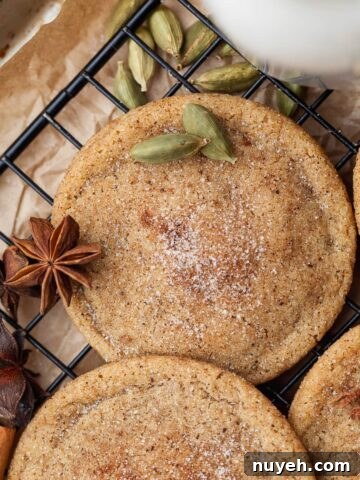
 Gluten Free Chai Sugar Cookies
 -
Gluten Free Oatmeal Cranberry Cookies
-
Gluten Free Oreo Chocolate Chip Cookies
-
Gluten Free Thumbprint Cookies



📖 Recipe
Gluten Free Oatmeal Cream Pies
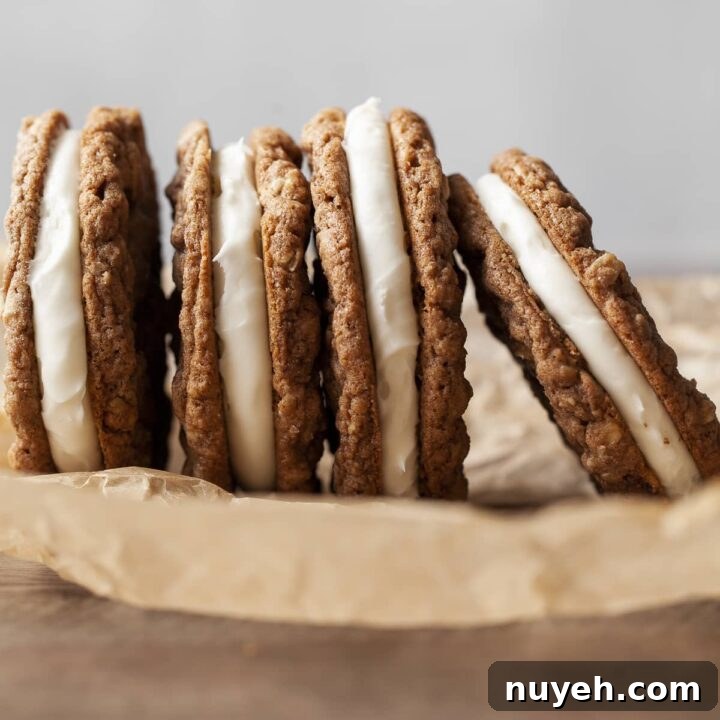
Soft and chewy gluten-free oatmeal cookies sandwiched with a marshmallow vanilla buttercream create a nostalgic, irresistible dessert.
20 minutes
20 minutes
2 hours
2 hours 40 minutes
Ingredients
Gluten Free Oatmeal Cookies
- 113 grams unsalted butter (melted)
- 200 grams light brown sugar
- 1 large egg
- 145 grams gluten-free multipurpose blend
- 4 grams unsweetened Dutch-process cocoa powder
- 1 teaspoon ground cinnamon
- 1/4 teaspoon ground cloves (optional)
- 1/2 teaspoon (3 grams) baking soda
- 1/2 teaspoon (2 grams) baking powder
- 3/4 teaspoon (3 grams) kosher salt
- 115 grams gluten-free old-fashioned oats
Marshmallow Cream Pie Filling
- 7.5 oz marshmallow fluff/creme (1 jar)
- 200 grams powdered sugar
- 113 grams unsalted butter, room temperature
- 50 grams all-vegetable shortening
- 1 teaspoon vanilla
- 1 teaspoon milk (dairy-free is fine)
Instructions
Make the oat cookie dough
- Melt the butter and let it cool 5–10 minutes.
- Pulse the old-fashioned oats briefly in a food processor to break them up slightly (skip if using quick oats).
- Sift the flour, cocoa, baking powder, baking soda, salt, cinnamon, and cloves into a bowl.
- Whisk the brown sugar into the cooled melted butter until light and fluffy, about 2–3 minutes.
- Scrape the bowl, add the egg, and mix until combined.
- Gradually mix in the dry ingredients until just combined, then fold in the oats.
- Chill the dough in the refrigerator for 30–45 minutes.
Bake the cookies
- Preheat oven to 350°F (175°C). Line a baking sheet with parchment paper.
- Scoop dough with a 1-tablespoon scoop. Place up to nine dough balls per sheet, leaving room to spread.
- Bake 10–11 minutes, removing when slightly underbaked so cookies stay soft after cooling.
- While still warm, press each cookie into a neat round with a slightly larger cutter. Cool on the pan 5–10 minutes, then transfer to a wire rack to finish cooling.
- Allow cookies to cool completely before filling.
Make the marshmallow filling
- In a mixer fitted with a paddle, beat butter and shortening until light and fluffy, scraping as needed.
- On low speed, add powdered sugar gradually until incorporated. Add vanilla and milk and beat one minute.
- Add marshmallow fluff and beat at medium-high for about 3 minutes, until fluffy and pipeable.
Pipe or spread filling onto half the cooled cookies, top with remaining cookies, and press gently. Chill 15–20 minutes if you prefer a firmer finish.
Notes
Cookie texture: Remove cookies from the oven while slightly underbaked for a soft, chewy result. Overbaking yields a crunchy cookie.
Oats: If using quick oats, do not pulse; they will become too fine. For strict gluten-free needs, use certified gluten-free oats.
Nutrition Information
Yield: 12 | Serving size: 1 | Calories (approx.): 409
Calories are an estimate.