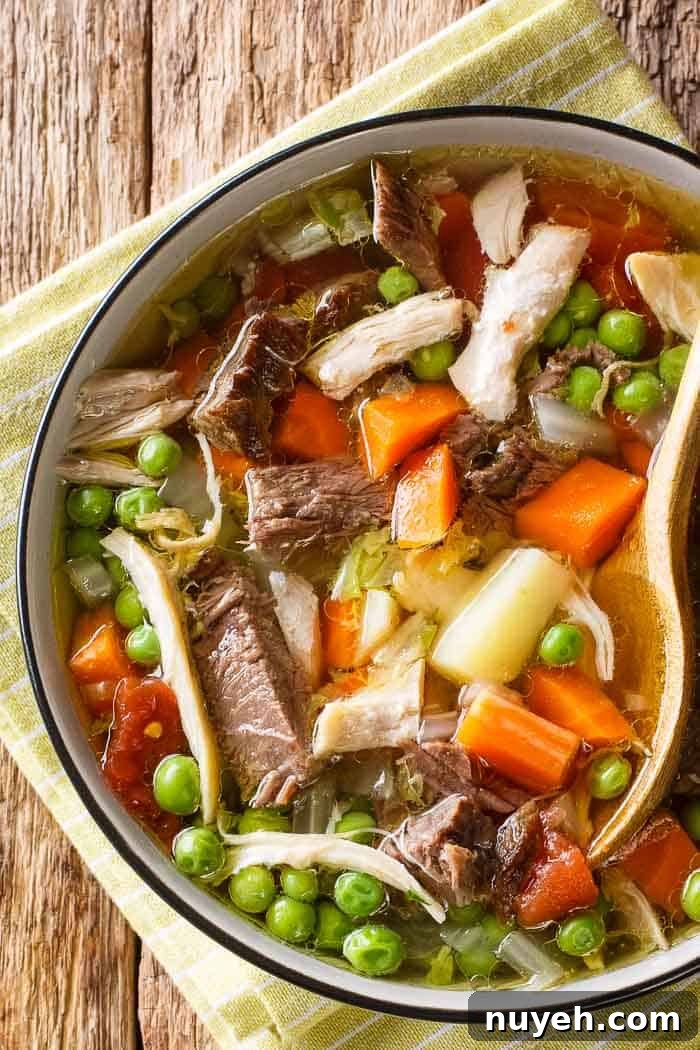
This Green Bay Booyah recipe is a loud shout-out to my Wisconsin people!
I may not be from Green Bay itself, but I grew up less than an hour away in Waupaca. My family ties to Green Bay run deep: my sister lived there for years, my dad had a shop, and I’ve eaten more Booyah than I can count. Writing this recipe brings back a rush of hometown memories—it’s comfort food that tastes like community, autumn fairs, and kitchen kettles bubbling for hours.
I moved away from Wisconsin at 20 and spent many years in Southern California before settling in Northern Virginia. Life has taken me far from the small towns and chilly lakes, but Wisconsin will always be home. Booyah is one of those regional treasures that carries the state with it: rich, simple, and made to share.
If you meet someone from the Midwest, you’ll often recognize that grounded friendliness right away. We tend to value family, tradition, and neighborliness. And if you’re from Wisconsin, you probably know how to Booyah.
What does Booyah mean?
Booyah is more than a stew—it’s an event and a tradition. In the Upper Midwest, Booyah refers to a thick, slow-cooked stew often made in huge kettles for community gatherings. Classic Booyah is built on long simmering times, multiple cooks, and lots of conversation (and usually a few beers). The end result feeds many people and rewards the time and effort with deep, layered flavors.
You can use “Booyah” as a noun or a verb: you can make Green Bay Booyah, or you can Booyah—meaning to gather, cook, and share this special stew.
Who invented Booyah?
The origin of Booyah is unclear and part of its charm. One story credits a Green Bay schoolteacher who cooked a huge pot of soup to raise funds for books; when a reporter asked the soup’s name, the teacher said “bouillon,” which the paper printed phonetically as “Booyah.” Another tale recalls a boy who replicated his mother’s chicken soup using roasted chicken and garden vegetables, creating a large kettle stew that fed a crowd. Regardless of the exact beginning, Booyah grew from practical, communal cooking into a beloved regional custom.
What’s the main ingredient of a Booyah?
The constant in most Booyah recipes is roasted chicken. Many versions also include beef and pork—oxtail, short ribs, or pork shoulder are common—to deepen the broth. Bones are often left in during the long simmer to build a rich, silky mouthfeel. Vegetables like cabbage, carrots, rutabaga, potatoes, peas, celery, and onions round out the pot, making Booyah hearty, balanced, and deeply comforting.
Green Bay Booyah Recipe – a stovetop version
Traditional Booyah can be a two-day, communal project cooked in large kettles. This stovetop version scales that tradition for a home kitchen while keeping the essential flavors: roasted meat, long-simmered broth, and a mix of garden vegetables. It still takes time and patience, but it’s designed so you can make a true, crowd-worthy Booyah at your stove.
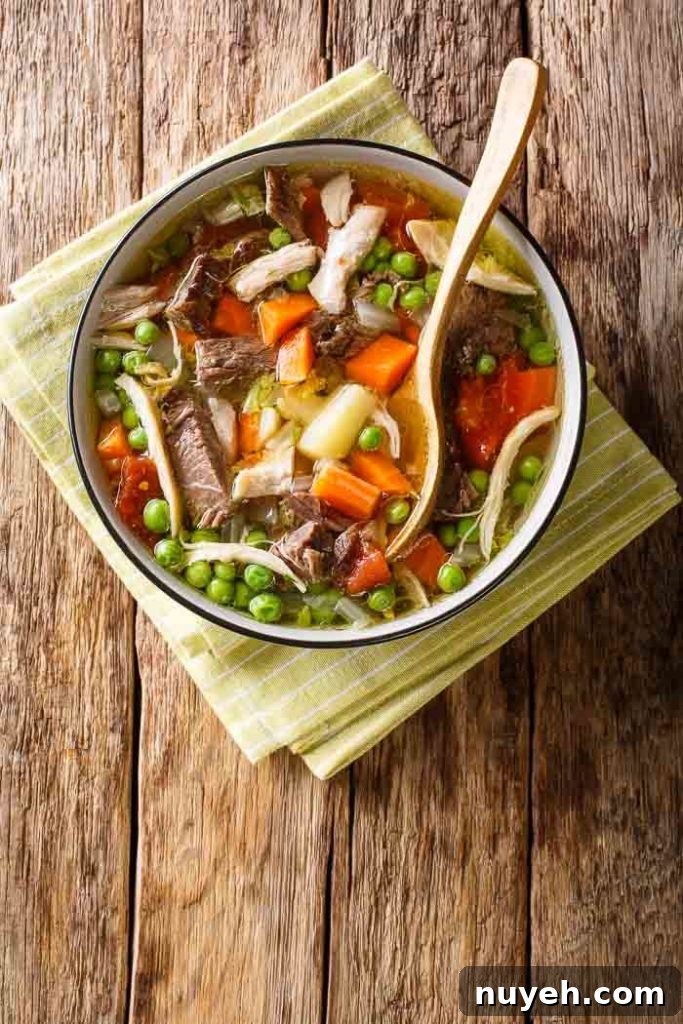
Green Bay Booyah Recipe
Once you’ve had Green Bay Booyah, you’ll understand why it’s the kind of recipe that becomes a seasonal tradition. This stovetop version is scalable, so you can make enough for family or for a larger gathering.
Ingredients
- 1 tablespoon plus 2 teaspoons ghee or canola oil, divided
- 3 lb bone-in chicken thighs
- 3 lb bone-in beef short ribs
- 1 lb pork shoulder
- 9 cups low-sodium chicken broth
- 3 whole garlic cloves
- 2 bay leaves
- 2 yellow onions, chopped
- 2 celery stalks, chopped
- 3 large carrots, chopped
- 4 cups shredded green cabbage
- 2 (14.5-oz) cans diced tomatoes (fire-roasted if you like)
- ½ of one rutabaga, peeled and cut into bite-sized pieces (about ¾ lb)
- 1 lb red potatoes, cut into bite-sized pieces
- 1 cup frozen peas
- 1–2 teaspoons coarse salt, to taste
- ½ teaspoon freshly ground black pepper
- 1 tablespoon freshly squeezed lemon juice (adjust to taste)
Instructions
- Preheat a large Dutch oven over medium heat. Add 2 teaspoons of oil and sauté the chopped onions, celery, and carrots until soft, about 5 minutes. Remove the softened vegetables and set aside.
- Increase heat to medium-high. Add the remaining tablespoon of oil and brown the chicken pieces, then the beef short ribs, then the pork shoulder in batches, browning on all sides. Browning adds flavor, but you can skip this step if desired.
- Return all the browned meat to the pot. Add the chicken broth, whole garlic cloves, and bay leaves. Bring to a boil, then reduce to a simmer and cook for about two hours, until the meat is tender and falling from the bones.
- Carefully remove the meat from the pot. Discard the bones and large pieces of fat. Pull or cut the meat into bite-sized pieces and return it to the pot.
- Remove and discard the garlic cloves and bay leaves. Add the reserved onion/carrot mixture, cabbage, diced tomatoes, rutabaga, and potatoes to the broth. Simmer until the vegetables are tender, about 30 minutes.
- Stir in the frozen peas and cook a few more minutes until heated through. Season with coarse salt and freshly ground black pepper. Finish with the lemon juice, taste, and adjust salt, pepper, or lemon to your preference.
Nutrition Information (per serving)
Yield: 12 servings • Serving Size: 1
Calories: 830 • Total Fat: 53g • Saturated Fat: 20g • Trans Fat: 2g • Unsaturated Fat: 32g • Cholesterol: 294mg • Sodium: 824mg • Carbohydrates: 21g • Fiber: 4g • Sugar: 6g • Protein: 71g
Nutrition estimates provided by Nutritionix.
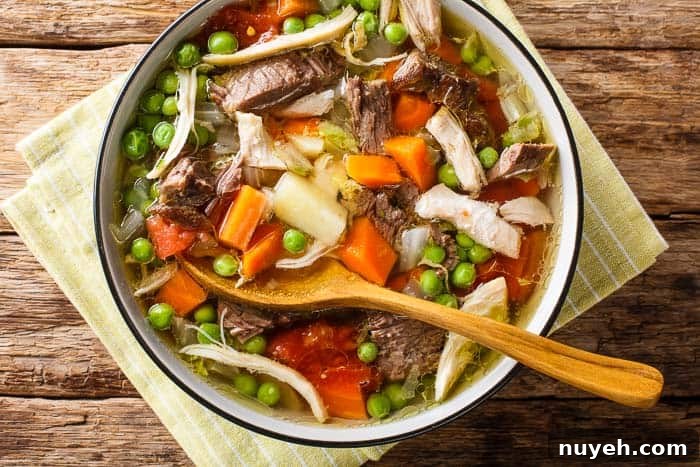
Looking for more hearty soup recipes?
- Lobster Bisque with Old Bay Oyster Crackers
- Lentil Soup with Parmesan and Smoked Sausage
- Chicken Tortilla Soup with Hatch Chiles
- Loaded Potato Soup (easy — no peeling required)
- Avgolemono Soup (Greek lemon-egg chicken soup)
- 6-Ingredient Italian Sausage Stew